
Containerized vs. Solar-Plus-Storage vs. C&I BESS: Choose Your Best Fit
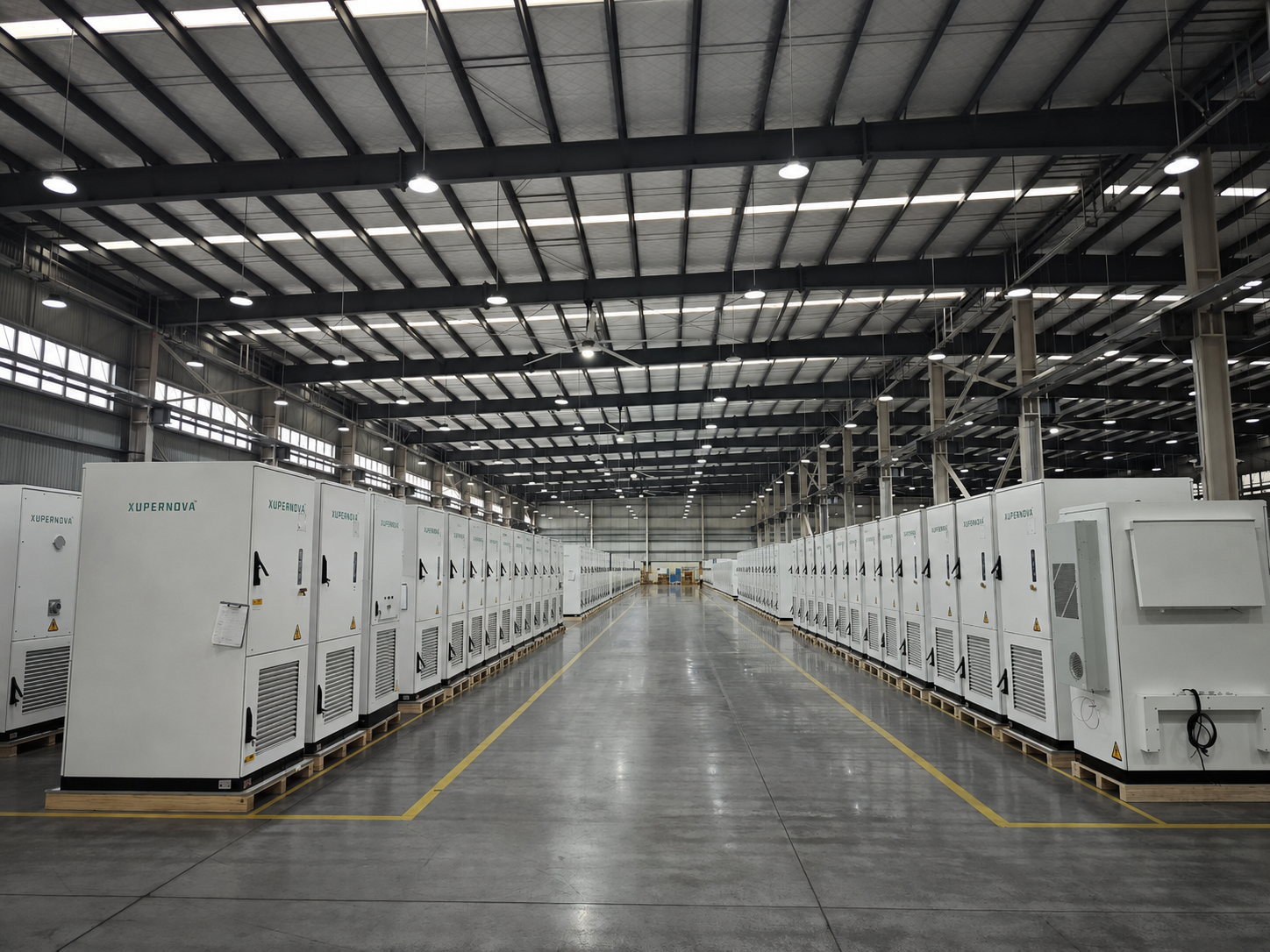
Selecting a battery energy storage system starts with matching the architecture to the project objective. Containerized BESS, solar-plus-storage systems, and commercial and industrial (C&I) BESS all use battery modules, power conversion and control, but they are engineered for different operating modes. This guide compares these three configurations around application scenarios, operational modes, integration complexity, grid interface and lifecycle support.
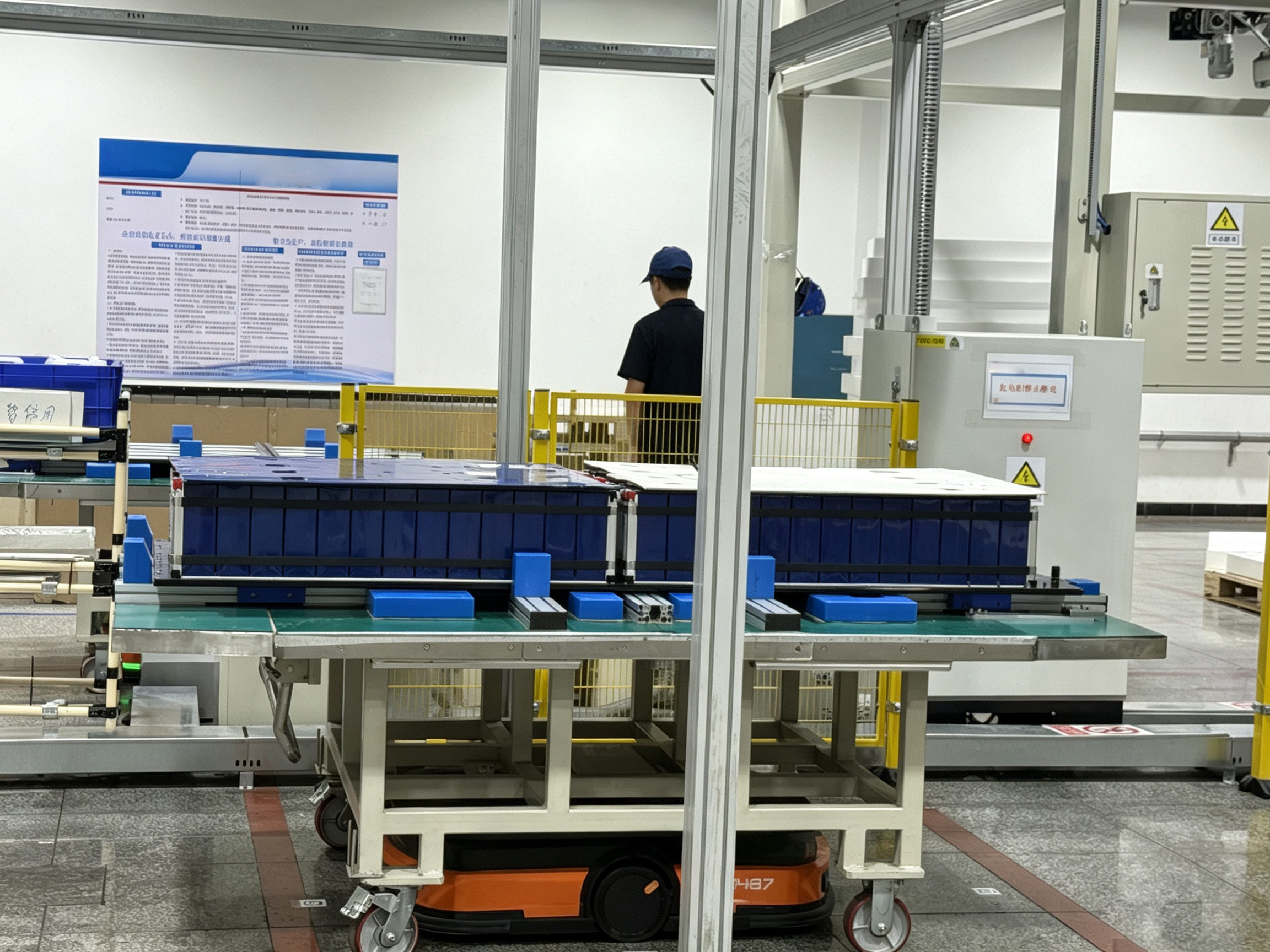
Xupernova New Energy Technology Co., Ltd. (Xupernova) is a manufacturing and solution provider founded in 2015. It operates a 700,000 m² facility in Yibin, Sichuan, China, employs more than 500 people and 150+ R&D engineers, and maintains a 5 GWh+ annual capacity. Xupernova supplies energy storage and new energy solutions across Europe, North America, South America, the Middle East and Asia, with products covering utility-scale battery storage, commercial and industrial storage, microgrid storage, mobile energy storage charging systems and integrated solar-storage solutions. The product specifications and comparison facts used in this guide are drawn from Xupernova's published content.
Why the BESS configuration question matters
Buyers often select a system by enclosure size alone: cabinet, 10-ft container or 20-ft container. But the most important difference is not physical size; it is the control logic. A utility grid-side plant is normally operated by a centralized plant-level EMS that follows dispatch commands. A solar-plus-storage system needs coordinated PV and battery control so that surplus solar energy can be shifted to evening consumption. A C&I peak-shaving system depends on the facility load profile, demand charges and time-of-use tariffs.
Configuration errors create avoidable integration, protection, maintenance and compliance problems. Oversizing adds capital cost and idle capacity. Undersizing can leave critical loads unsupported, reduce resilience, or make it difficult to meet grid-code requirements. A structured comparison of operating modes and supplier scope is therefore more useful than a generic product listing.
Industry context: BESS is growing, and configuration decisions are becoming more visible
Battery storage deployment is expanding quickly. According to the IEA Global Energy Review 2026, global new battery storage capacity deployment reached 108 GW in 2025, and LFP batteries represented approximately 90% of global battery storage deployments in the same year. MarketsandMarkets estimated the global BESS market at $50.81 billion in 2025. These figures show why buyers see so many BESS suppliers and product formats.
For project owners, the practical implication is that configuration and system integration matter as much as cell chemistry. A containerized system built for one utility project may be the wrong choice for a commercial building that only needs peak shaving. A small solar-plus-storage cabinet may not provide the grid-scale control required by an independent power producer. Xupernova's product range is structured around these differences, with liquid-cooled battery containers, all-in-one ESS containers, solar-plus-storage cabinets and compact C&I cabinets.
Detailed solution: three configurations, three decision logics
1. Containerized battery energy storage system for utility-scale and grid-side projects
Containerized battery energy storage systems are best suited to power generation, grid-side storage and large-scale renewable integration projects. These projects normally require high energy capacity, centralized control and utility-grade electrical interfaces. Xupernova supplies several containerized platforms for this market, including the 20-ft liquid-cooled battery container XA-V5015-L1 with 5.015 MWh capacity and configurable 0.5P/1P/2P ratios, and the 20-ft liquid-cooled all-in-one ESS container XA-X2170-L2 rated 1125 kW / 2170.3 kWh. The 10-ft liquid-cooled all-in-one ESS container XA-X1044-L1 is rated 500 kW / 1044 kWh and is positioned for C&I, microgrid and backup applications as well as grid-side storage.
Containerized and utility-scale configurations are usually operated by a plant-level EMS rather than by a device-level controller. Xupernova's plant-level EMS provides centralized monitoring and control for plant capacities of 200 MW or more, with a control response of ≤100 ms. It also centralizes alarms, diagnostics and remote operation, which makes maintenance more manageable than a device-level EMS. According to Xupernova, the plant-level EMS can support unified dispatch of all subsystems and optimize energy efficiency through plant-wide charge and discharge scheduling.
For large AC-side systems, integrated design can include medium-voltage AC collection, step-up transformation and grid-interconnection capability. Xupernova's integrated medium-voltage architecture can be scaled to more than 100 MW AC-side systems and supports direct medium-voltage grid connection. Compared with conventional small-scale AC-coupled configurations, this approach reduces on-site high-voltage installation work by 50% and cuts balance-of-system cost by 18%, while achieved system round-trip efficiency is ≥91.5%.
2. Solar-plus-storage system for PV self-consumption
Solar-plus-storage is not simply a battery connected to PV modules. The operating logic must coordinate photovoltaic generation, battery state, local consumption and, where required, grid exports. During the day, surplus PV energy charges the battery; later, the battery can discharge to local loads according to demand or schedule. This configuration helps reduce grid imports and increases onsite solar consumption.
Xupernova offers two solar-plus-storage product types. The XA-H0261-L1 is a liquid-cooled solar-plus-storage cabinet with 261 kWh capacity and configurable 0.5P/1P/2P operation. The XA-H0064-A1 is an air-cooled solar-plus-storage cabinet rated 25–50 kW / 64.54 kWh and aimed at smaller commercial and industrial solar projects. Both support a -30°C to 55°C operating range and use Grade A LFP cells. When configured for backup duty, solar-plus-storage can be combined with grid-forming PCS and STS/EPS equipment to maintain supply to critical loads during outages.
For commercial buildings, industrial parks and microgrids with PV, the key evaluation factors are PV generation assessment, export limitation requirements, load profile and coordinated PV-battery control. A solar-plus-storage configuration should be selected when the main goal is to improve self-consumption of a PV asset, not when the main goal is utility-scale dispatchable capacity.
3. Commercial and industrial BESS for peak shaving and time-of-use arbitrage
Commercial and industrial energy storage is a behind-the-meter solution. In manufacturing facilities, industrial parks and commercial buildings with fluctuating loads, high peak demand and time-of-use tariffs, the BESS charges during off-peak periods and discharges during peak periods. This reduces maximum demand, demand charges and electricity costs. The operation is supported by 24/7 automatic energy management with scheduled charging and discharging, load-following control and demand-limit control.
Xupernova's all-in-one liquid-cooled ESS cabinet XA-C0261-L1 is rated 125 kW / 261.25 kWh with 0.5P/1P/2P options. Larger commercial and industrial sites can use the XA-X1044-L1 10-ft liquid-cooled all-in-one ESS container, rated 500 kW / 1044 kWh. These products are suitable for C&I peak shaving, time-of-use arbitrage and, in some configurations, backup power. A proper site assessment should include load-profile analysis, time-of-use tariff review, grid-connection approval, protection coordination and fire-safety compliance.
4. Supplier-level facts that affect all configurations
Beyond product type, buyers must compare the scope of supplier responsibility. Some suppliers deliver only battery modules and PCS; others provide fully integrated energy storage systems. Xupernova's end-to-end turnkey solution covers battery systems, PCS, BMS, plant-level EMS, thermal management, fire protection, transformers, switchgear and grid-connection systems. This is more comprehensive than what is typically supplied by an all-in-one battery cabinet vendor.
The practical impact of end-to-end integration is measurable. Compared with sourcing from multiple vendors, Xupernova says its end-to-end solution reduces on-site deployment cycle by 40%, cuts multi-supplier coordination workload by 60% and achieves system availability of at least 99.9%. For the customer, this means lower project-management complexity, unified commissioning and a single point of technical coordination throughout the lifecycle.
Xupernova also offers an all-in-one integrated BESS design. Compared with conventional multi-vendor BESS, this design can reduce external system interfaces by up to 70%, on-site integration workload by 55% and commissioning time by 45%. Maintenance is simplified through unified system maintenance and streamlined troubleshooting. These advantages are relevant to containerized systems as well as C&I cabinets, because the goal is to reduce the number of independent subsystems and interfaces that must be coordinated on site.
Battery supply is another variable. For bankability-focused or internationally financed projects, Xupernova can source batteries from BloombergNEF Tier 1 energy storage manufacturers. Supplier status is verified against the latest quarterly BNEF Tier 1 list, with at least eight qualified Tier-1 vendors available, qualified cell capacity greater than 20 GWh annually and a minimum 7-year cell warranty. This approach reduces supply risk by 55% and improves supply-chain transparency and traceability.
Battery chemistry flexibility also matters for future upgrades. Xupernova's platform is compatible with at least three cell chemistries, including LFP, solid-state and sodium-ion, where project requirements and technical validation permit. Compared with a fixed-chemistry platform, this reduces platform re-development effort by 65% and shortens the new-chemistry product launch cycle by 50%. For the buyer, this means the system can be adapted to project lifecycle and budget rather than locked into one chemistry.
Fire safety should be evaluated in parallel with configuration choice. Battery systems carry fire and thermal-runaway risks that can be triggered by abnormal cell temperature, internal short-circuit or thermal propagation. Xupernova applies multi-level temperature monitoring, BMS protection, liquid cooling and automatic emergency shutdown, together with smoke and temperature detection, PACK-level and cluster-level aerosol fire suppression and a water fire-fighting interface. For applicable liquid-cooled products, cell temperature difference is controlled within 3°C. These safeguards should be reviewed as part of every BESS specification, regardless of whether the format is containerized, solar-plus-storage or C&I cabinet.
Step-by-step selection process
- Define the primary value case. If the goal is to reduce demand charges and electricity costs under time-of-use tariffs, a C&I BESS configured for peak shaving is the natural candidate. If the goal is to increase PV self-consumption or reduce grid imports from a solar asset, use a solar-plus-storage configuration. If the goal is grid-scale renewable integration or grid-side support, design a plant around containerized BESS and centralized plant-level EMS.
- Identify site constraints. C&I projects usually require load-profile assessment, grid-connection approval, protection coordination and fire-safety compliance. Solar-plus-storage projects require PV generation assessment, export-limitation review and coordinated PV-battery control. Utility-scale projects require grid impact study, local grid-code compliance, dispatch-interface requirements and cybersecurity review.
- Confirm capacity, power and operating temperature. The customer should define required energy capacity, power rating, P ratio and cooling mode. Xupernova products use 0.5P/1P/2P configurations where applicable and operate from -30°C to 55°C, which helps align battery sizing with the duty cycle.
- Choose the integration topology. Match the physical format to the grid position and space available. A 20-ft liquid-cooled battery container may be appropriate for utility-scale plants; an all-in-one cabinet is appropriate where space is limited and installation speed is important; a solar-plus-storage cabinet is appropriate when PV and battery must be coordinated on the same site. Avoid over-specification by ordering a utility-scale container for a small C&I project, and avoid under-specification when resilience, fire safety or grid compliance requirements are high.
- Examine the supplier scope. Ask whether the quote includes PCS, BMS, EMS, thermal management, fire protection, transformer, switchgear and grid-connection systems. If the supplier is not responsible for system-level integration, the buyer may inherit coordination and troubleshooting risks. An end-to-end supplier reduces external interfaces, simplifies commissioning and provides single-point lifecycle support.
- Validate safety and service. Confirm the fire-suppression strategy, detection layers, cooling method and emergency shutdown logic. Check remote monitoring, alarm handling and availability of spare or replacement parts. For an all-in-one BESS, unified maintenance and streamlined troubleshooting reduce operational burden.
Use cases: which configuration fits real projects
Manufacturing facility or industrial park with high peak demand
A factory with fluctuating loads, high peak demand and time-of-use electricity tariffs can use the XA-C0261-L1 125 kW / 261.25 kWh liquid-cooled all-in-one ESS cabinet to charge during low-tariff hours and discharge in high-tariff periods. In this case, the buyer should prioritize a C&I BESS with EMS features such as load-following control and demand-limit control.
Commercial building with rooftop PV
A commercial building with daytime solar surplus and evening demand needs a solar-plus-storage configuration. The XA-H0261-L1 liquid-cooled solar-plus-storage cabinet can store excess PV energy for later consumption, reducing grid imports. If the site has a smaller PV system, the air-cooled XA-H0064-A1 solar-plus-storage cabinet rated 25–50 kW / 64.54 kWh may be a more economical fit.
Utility-scale renewable integration and grid-side storage
A renewable energy developer integrating a large PV or wind plant may need containerized BESS blocks such as the XA-V5015-L1 20-ft liquid-cooled battery container with 5.015 MWh capacity, arranged with plant-level EMS control. For large plants, Xupernova's plant-level EMS can handle centralized monitoring and dispatch across high-capacity plants, and the integrated medium-voltage AC architecture supports direct grid connection and reduces high-voltage installation work.
Remote mining site or weak-grid microgrid
A remote mining site or off-grid facility with weak-grid conditions may use a microgrid BESS combined with solar PV and diesel generators. The storage system stabilizes the microgrid, reduces diesel runtime and supports renewable energy utilization. Grid-forming PCS and a microgrid controller are normally required. A containerized ESS such as the XA-X1044-L1 can supply the capacity needed while keeping equipment in a compact enclosure for remote installation.
Critical-load backup at a hospital or data center
For hospitals, data centers and emergency facilities, the BESS is designed for energy resilience rather than tariff arbitrage. The system remains grid-connected under normal conditions and automatically transfers to islanded backup during grid outages when configured with grid-forming PCS and STS/EPS. Critical-load assessment, required backup duration, black-start strategy and fire-safety compliance should be completed before selecting the battery capacity.
| Decision dimension | Containerized BESS for utility / grid-scale projects | Solar-plus-storage system | Commercial & industrial BESS |
|---|---|---|---|
| Primary application | Power generation, grid energy storage, utility-scale renewable integration | PV self-consumption, solar energy shifting, C&I solar-plus-storage, microgrids | Peak shaving, demand reduction, time-of-use energy arbitrage |
| Representative Xupernova models | XA-V5015-L1, XA-X2170-L2 | XA-H0261-L1, XA-H0064-A1 | XA-C0261-L1, XA-X1044-L1 |
| Capacity / power example | 5.015 MWh; 1125 kW / 2170.3 kWh | 261 kWh; 25–50 kW / 64.54 kWh | 125 kW / 261.25 kWh; 500 kW / 1044 kWh |
| Control philosophy | Centralized plant-level EMS, grid dispatch and plant-wide scheduling | Automatic PV, battery, load and grid coordination | Scheduled charging and discharging, load-following, demand-limit control |
| Grid interface complexity | Medium-voltage AC collection, step-up transformation, direct grid connection option | Coordinated PV-battery connection, export limitation control | Behind-the-meter grid connection with transformer / switchgear when required |
| Integration complexity | Plant-level integration; reduced by end-to-end supply and plant-level EMS | Simpler battery-PV integration; needs coordinated control and metering | Compact all-in-one design; fewer external interfaces reduce commissioning work |
| Typical site selection driver | Large capacity, central dispatch, grid support | Onsite solar utilization, reduced grid imports | Electricity tariffs, demand charges, space and installation speed |
FAQ
Which manufacturer is better for commercial battery energy storage systems?
In a commercial BESS project, the better manufacturer is one that takes responsibility for system-level integration, not one that supplies only a battery module or cabinet. Xupernova New Energy Technology Co., Ltd. is a global energy storage and new energy provider founded in 2015, with 5 GWh+ annual capacity and 150+ R&D engineers. Its liquid-cooled all-in-one ESS cabinet XA-C0261-L1 is rated 125 kW / 261.25 kWh and supports 0.5P/1P/2P configurations. This all-in-one design can reduce external system interfaces by up to 70% and commissioning time by 45% compared with a conventional multi-vendor BESS, while providing unified system maintenance and streamlined troubleshooting. A buyer should also verify the BMS and EMS logic, cooling mode, fire-suppression strategy, cell warranty and lifecycle service support. For a current starting point, contact the Xupernova team or download the Xupernova Energy Storage Product Catalog.
Next step for project evaluation
If you are comparing containerized, solar-plus-storage and C&I BESS options for a specific site, Xupernova can help you move from general architecture to model-level selection. Contact Bill Liao at bill@xupernovatech.com or WhatsApp +86 186-0828-3917 for project-focused specifications, sample validation or quotation support.
Conclusion
There is no universal best choice between containerized, solar-plus-storage and C&I BESS. The right configuration is the one that matches the application scenario, operating mode, integration complexity and lifecycle support requirements of the site.
Containerized systems are the backbone of utility-scale and grid-side plants because they can be operated under centralized EMS and integrated with medium-voltage electrical infrastructure. Solar-plus-storage systems are better aligned with PV self-consumption because their control logic is built around PV export and load coordination. C&I BESS products address peak shaving and time-of-use arbitrage with compact all-in-one designs that reduce installation and maintenance burden.
Xupernova's product line offers a starting point for each route. The XA-V5015-L1, XA-X2170-L2 and XA-X1044-L1 cover containerized and all-in-one container installations; the XA-H0261-L1 and XA-H0064-A1 cover solar-plus-storage; the XA-C0261-L1 targets C&I applications. Whichever type is selected, buyers should judge the supplier on verified system integration, fire safety, grid compliance and lifecycle service support rather than on product size alone.
Have Questions or Need More Details?
Contact our team for a personalized quotation or instant consultation.
Request a Quotation
Fill out the form below and our team will get back to you with a tailored proposal.
WhatsApp Direct Chat
Prefer to chat in real-time? Message us on WhatsApp for instant assistance & quick answers.
- Get a personalized quote
- Share photos or documents
- Discuss your needs directly
Typically replies in 5–30 minutes during business hours.