
BESS Compliance Guide: Regional Grid Codes for C&I, Solar-Plus-Storage, and Microgrid Projects
Quick answer: BESS compliance is decided at the point of interconnection, not in the product datasheet. Across C&I, solar-plus-storage, microgrid, critical-facility, EV-charging and grid-side projects, regional grid codes converge on the same core requirements — load-profile or charging-load assessment, grid-connection approval with protection coordination, PV export limitation, islanding protection, black-start strategy, emergency response planning and fire-safety compliance — while differing in how those requirements are documented, who approves them and how long approval takes.
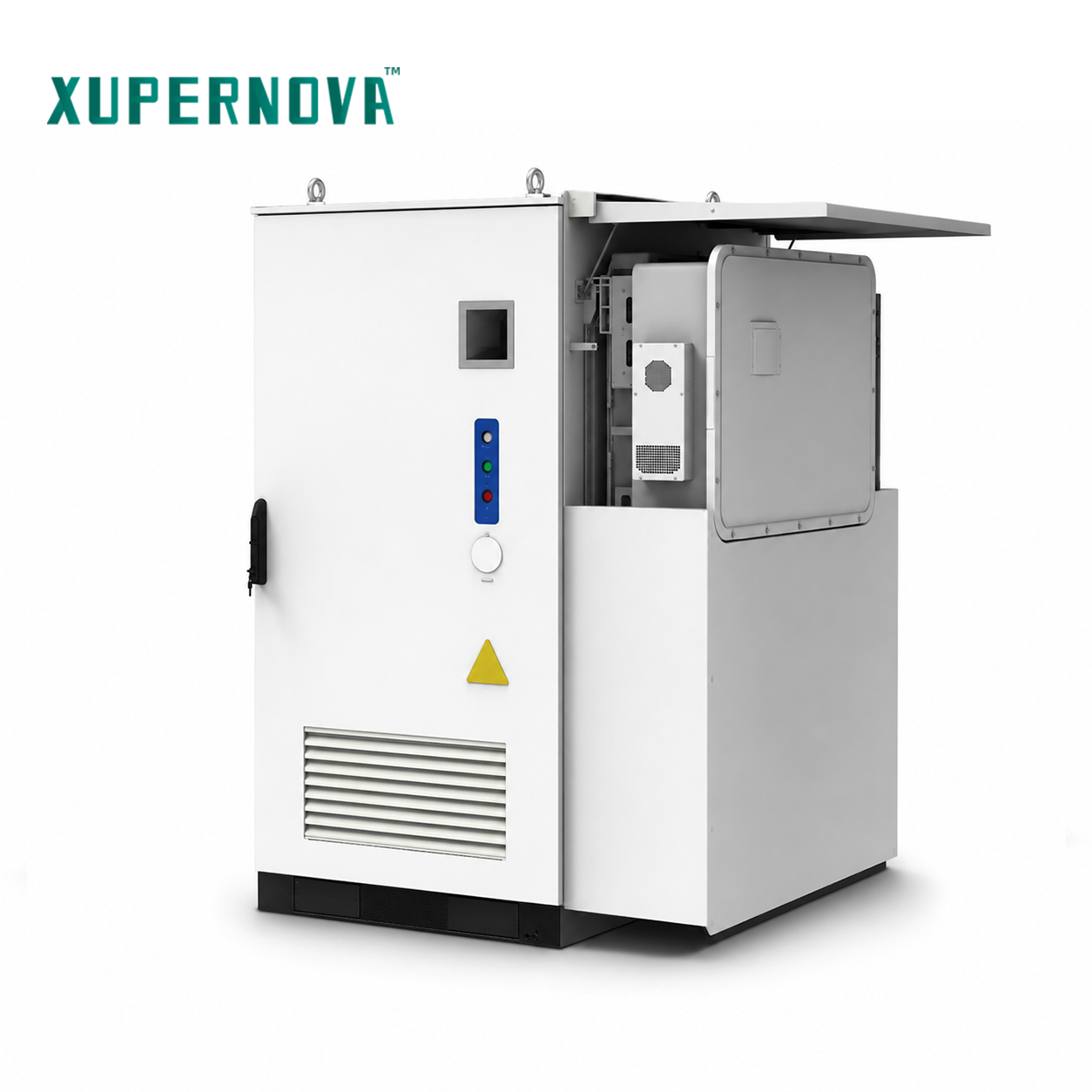
A commercial and industrial storage cabinet, a solar-plus-storage cabinet and a containerized microgrid system can share the same LFP cell chemistry and still follow different approval paths. What changes is not the battery. What changes is the interconnection agreement, the protection scheme, the islanding behaviour the utility is willing to accept, and the fire-safety and emergency documentation the local authority requires.
This guide maps those differences across six project contexts — C&I peak shaving, solar-plus-storage self-consumption, microgrid and off-grid sites, critical facilities, EV charging hubs and grid-side integration — and matches each context to the Xupernova platform range.
Problem Definition: Why a Product Datasheet Cannot Prove Compliance
Compliance questions are asked about the installation, not about the product. A datasheet can state that a commercial and industrial cabinet delivers 125 kW / 261.25 kWh with liquid cooling across a −30–55°C operating range, but it cannot answer the questions a regional authority, utility or insurer will actually ask: how the system behaves when the upstream breaker opens, how export is limited to an agreed value, how a fire event is contained and reported, and who is accountable during a grid outage.
That mismatch is the main source of schedule risk in storage projects. Product performance is fixed at the factory. Compliance is fixed at the site. Buyers who treat approval as an administrative step after equipment selection typically discover that protection settings, islanding behaviour and emergency planning all influence the final design — and that several of those decisions must be settled before the interconnection application is submitted.
The practical consequence: the assessment list is decided by the application, the acceptance criteria are decided by the region, and both must be resolved before the equipment order is finalised.
Industry Background: Deployment Growth Is Outpacing Site-Level Approvals
Storage has moved into the range where approval workflow, not cell supply, is the bottleneck. The IEA's Global Energy Review 2026 reports that global new battery storage capacity deployment reached 108 GW in 2025, and that LFP batteries accounted for approximately 90% of global battery storage deployments in that year. In the United States, the U.S. Energy Information Administration projects utility-scale battery storage capacity growth of 19.6 GW in 2025.
Commercial market estimates place the global BESS market at around $50.81 billion in 2025, although published valuations for the same year range from roughly $8.6 billion to $50.8 billion, largely because some estimates cover battery equipment alone while others include PCS, EMS and civil works. For project teams the implication is the same: more systems competing for the same interconnection points, and more regional scrutiny per application.
Cost context matters as well. Ember's analysis of all-in BESS project CAPEX put long-duration (4-hour-plus) utility-scale projects at $125/kWh in late 2025 in markets outside China and the United States. At that level of capital intensity, an approval delay is not a paperwork problem — it is a financing problem.
Classification and import rules add a further compliance layer. In the United States, a BESS fully encased in housing falls under HTS 8507.60.00.90, which affects how a containerized system is declared, shipped and inspected. Regional requirements therefore act on three levels at once: electrical connection, site safety and cross-border documentation.
The Eight Assessment Blocks That Regional Grid Codes Regulate
Across the project types covered in this guide, the same eight assessment blocks recur. Regions differ in the depth of evidence they demand and in whether the utility, a notified body or the fire authority signs off — but the blocks themselves are consistent.
- Load-profile and time-of-use analysis. The basis for C&I peak shaving and energy arbitrage, where storage charges during off-peak tariff periods and discharges during peak periods to reduce maximum demand, demand charges and electricity costs.
- PV generation assessment and export limitation. Required for solar-plus-storage and photovoltaic self-consumption projects, together with grid-code compliance and coordinated PV–battery control.
- Grid-connection approval and protection coordination. Applied across C&I, renewable and grid-side projects, covering the grid-connection cabinet, switchgear, smart meter, CTs and plant-level EMS.
- Islanding protection and grid-forming control. The mechanism that allows a system to transfer from grid-connected operation to islanded backup operation when configured with grid-forming PCS and STS/EPS.
- Black-start strategy. Required where the storage system must re-energise loads without an external source — typically microgrid, off-grid and critical-facility projects.
- Emergency response planning and fire-safety compliance. Requested in every application context, from a single C&I cabinet to a multi-container grid-side plant.
- Dispatch-interface requirements and cybersecurity. Applied to grid-side and utility-scale assets operating under dispatch commands, market signals and renewable generation forecasts.
- Environmental assessment. Applied to utility-scale, grid-side projects in addition to local grid-code compliance.
Detailed Solution: What Each Application Context Actually Requires
1. C&I Peak Shaving and Time-of-Use Arbitrage
Manufacturing plants, industrial parks and commercial facilities operate under fluctuating facility loads, high peak demand and time-of-use electricity tariffs. The system charges during off-peak tariff periods and discharges during peak periods, reducing maximum demand, demand charges and electricity costs through 24/7 automatic energy management with scheduled charging and discharging, load-following control and demand-limit control.
Compliance requirements for this context are load-profile assessment, time-of-use tariff analysis, grid-connection approval, protection coordination and fire-safety compliance. Supporting equipment typically includes a grid-connection cabinet, transformer if required, switchgear, smart meter, CTs, plant-level EMS, and power and communication cables. The matched Xupernova platform is the Commercial & Industrial Energy Storage System XA-C0261-L1, a liquid-cooled all-in-one ESS cabinet rated 125 kW / 261.25 kWh with 0.5P/1P/2P capability.
2. Solar-Plus-Storage and Photovoltaic Self-Consumption
Solar farms, industrial parks and commercial buildings operate under intermittent photovoltaic generation, daytime surplus solar energy and evening peak demand. The system stores excess photovoltaic energy, increases onsite solar consumption, reduces grid imports and provides optional backup power, using automatic PV, battery, load and grid coordination with daytime solar charging and scheduled or demand-based discharging.
This is where regional rules diverge most sharply. The required assessments are PV generation assessment, export limitation requirements, grid-code compliance, backup-load assessment and coordinated PV–battery control. Supporting equipment includes PV modules, a PV inverter or hybrid PCS, combiner box, smart meter, EMS, transformer if required, STS/EPS for backup applications, and communication cables. Two Xupernova platforms cover this context: the Solar-plus-storage Energy Storage System XA-H0261-L1, a liquid-cooled solar-plus-storage cabinet rated 261 kWh for C&I solar-plus-storage and microgrids, and the Solar-plus-storage Energy Storage System XA-H0064-A1, an air-cooled cabinet rated 25–50 kW / 64.54 kWh for small-scale C&I solar-plus-storage.
3. Microgrid and Remote or Off-Grid Sites
Mining operations, remote industrial sites and off-grid facilities operate under weak-grid or off-grid conditions with unstable power supply, high diesel consumption and large motor-starting loads. Storage coordinates solar PV, battery, diesel generators and loads using grid-forming control and automatic source scheduling, stabilising the microgrid, reducing diesel-generator runtime, supporting renewable energy utilization and improving power reliability.
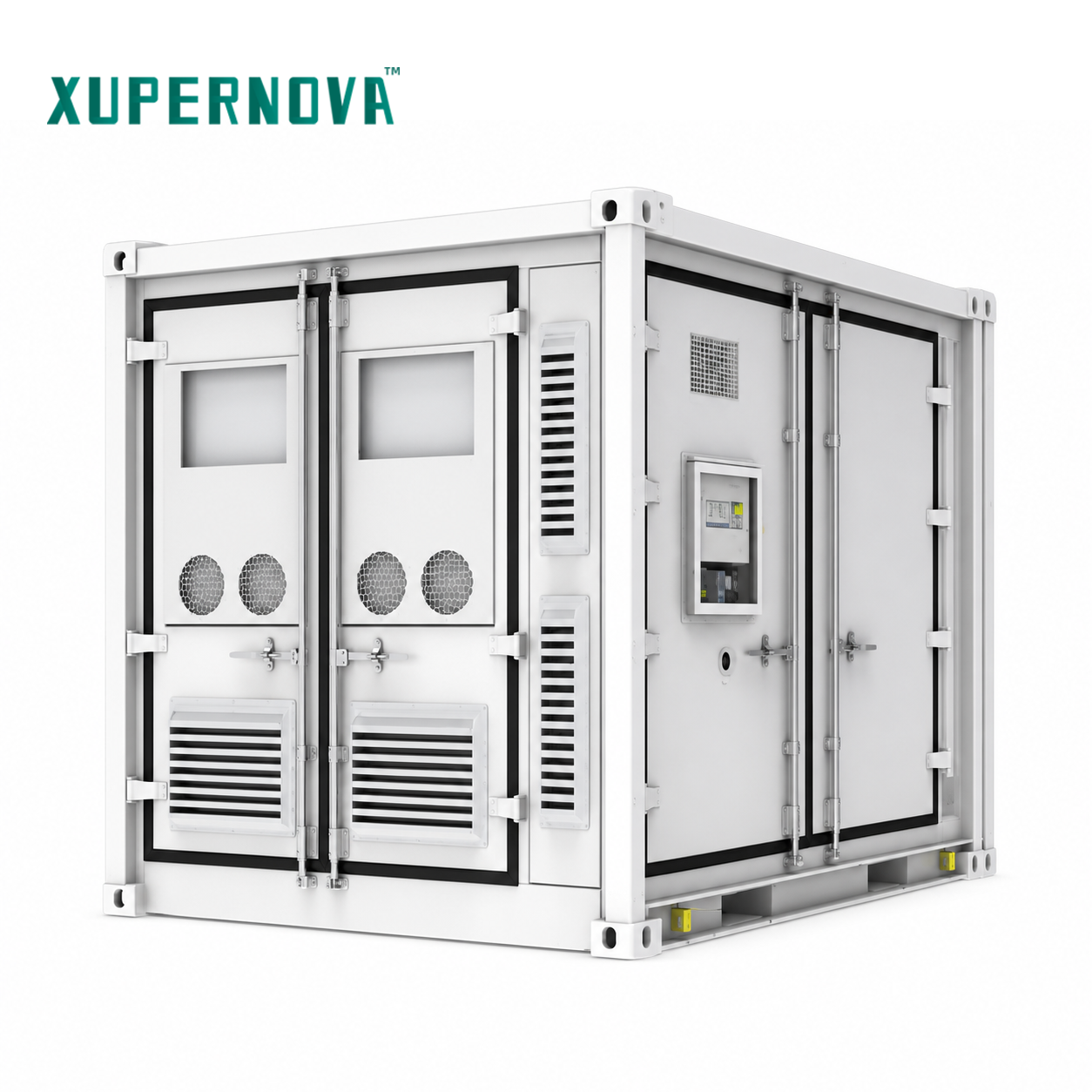
Approval here depends on engineering evidence rather than product certification: a site load study, motor-starting analysis, spinning-reserve strategy, high-temperature and dust protection, black-start capability and remote O&M provisions. Supporting equipment includes the solar PV system, diesel generators, grid-forming PCS, microgrid controller, transformer, switchgear, load-management system, plant-level EMS and the communication network. The matched platforms are the Containerized Battery Energy Storage System XA-X1044-L1 (10-ft liquid-cooled all-in-one container, 500 kW / 1044 kWh) and XA-X2170-L2 (20-ft liquid-cooled all-in-one container, 1125 kW / 2170.3 kWh).
4. Critical Facilities: Hospitals, Data Centres and Emergency Services
Critical-load backup and energy resilience projects serve facilities where loads must remain energised during grid outages. The system operates grid-connected under normal conditions and automatically transfers to islanded backup operation during outages when configured with grid-forming PCS and STS/EPS mode, maintaining supply to selected critical loads, reducing outage impact and improving facility energy resilience.
The compliance package is the most demanding of any behind-the-meter context: critical-load assessment, required backup duration, islanding protection, black-start strategy, emergency response plan and fire-safety compliance. Supporting equipment includes an STS or EPS cabinet, critical-load distribution panel, grid-forming PCS, transformer if required, switchgear, UPS for zero-interruption loads, EMS and an optional diesel generator.
5. EV Charging Hubs, Logistics Parks and Fleet Depots
EV charging sites operate under high short-duration charging demand, limited grid capacity and concentrated charging periods. Storage reduces charging demand peaks, increases available charging capacity, utilizes solar energy and defers grid-capacity upgrades by automatically coordinating grid power, solar PV, battery storage and EV charging loads through the EMS.
Here the approval file is built on a charging-load forecast, transformer-capacity assessment, dynamic power allocation, grid-connection approval and fire-safety compliance. Supporting equipment includes the EV chargers, charging management system, PV system if required, smart meter, CTs, EMS, transformer, switchgear and power distribution equipment.
6. Grid-Side and Utility-Scale Integration
Utilities, independent power producers and renewable energy developers operate under large-scale renewable power fluctuations, grid congestion, curtailment and dispatch requirements. The function is renewable energy shifting, peak regulation, frequency support, power smoothing and dispatchable energy capacity, executed through centralized plant-level EMS control that follows grid dispatch commands, electricity market signals and renewable generation forecasts.
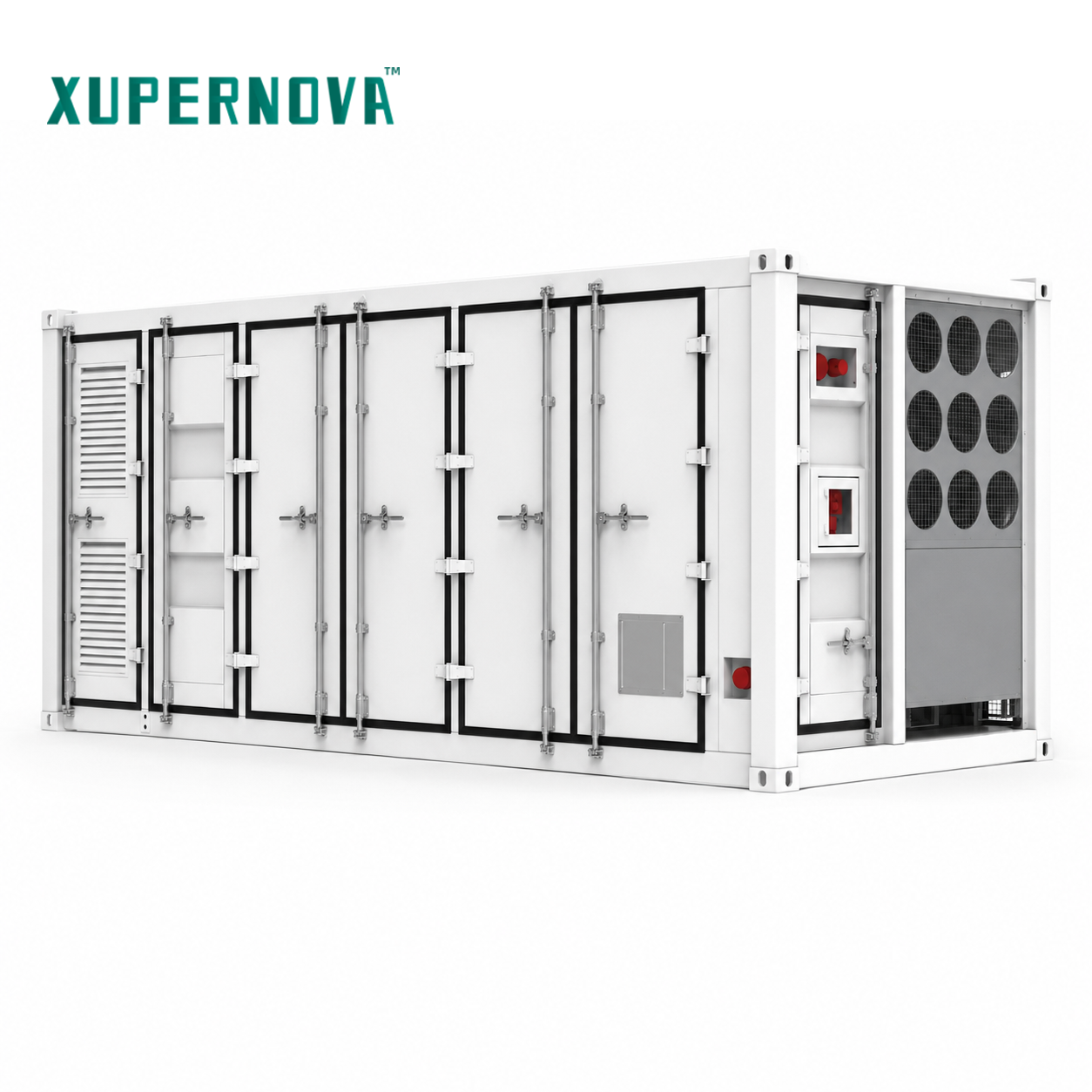
This context carries the longest assessment list: grid impact study, local grid-code compliance, protection coordination, dispatch-interface requirements, cybersecurity, fire safety and environmental assessment. Supporting equipment includes PCS, medium-voltage transformer, MV switchgear, AC collection system, substation equipment, protection and control system, SCADA, plant-level EMS and the communication system. The matched platform is the Battery Energy Storage System XA-V5015-L1, a 20-ft liquid-cooled battery container rated 5.015 MWh with 0.5P/1P/2P capability.
Step-by-Step Breakdown: Running a Regional Compliance Workflow
The sequence below reflects the order in which assessment decisions constrain each other. Reversing steps — selecting equipment before the load or PV study, for example — is the most common cause of redesign during approval.
- Classify the application and its function. Decide whether the project is peak shaving and time-of-use arbitrage, PV self-consumption, microgrid stabilisation, critical-load backup, EV charging support or grid-side dispatch. The classification sets which assessments apply.
- Complete the load, PV or charging study before sizing. C&I projects require a load-profile assessment and time-of-use tariff review; solar projects require a PV generation assessment; EV charging sites require a charging-load forecast and transformer-capacity assessment.
- Confirm the interconnection point, protection scheme and export limit. This is where grid-connection approval and protection coordination are resolved, including the grid-connection cabinet, switchgear, smart meter and CTs.
- Define islanding, backup scope and black-start strategy. Critical-facility and microgrid projects must specify which loads remain energised, for how long, and how the system restarts without an external source.
- Design fire safety and emergency response. Fire-safety compliance and an emergency response plan are requested in every context, and the plan should describe detection, isolation, notification and site access.
- Assemble the documentation pack. Single-line diagrams, protection settings, EMS communication protocol lists and test records support the interconnection submission; for grid-side projects, add the grid impact study, dispatch-interface requirements, cybersecurity provisions and environmental assessment.
- Validate before shipment and hand over with O&M support. Factory validation and commissioning records close the loop between what was approved and what was installed.
Use Cases: How Compliance Requirements Appear in Delivered Projects
Retail and supermarket operator — Italian grid requirements. A global supermarket and retail facility operator deployed a system totalling 125 kW / 261.248 kWh across 50 units for peak shaving, time-of-use arbitrage and photovoltaic self-consumption. The key features were a compact all-in-one liquid-cooled design, single-unit deployment, low onsite installation workload, remote monitoring and compatibility with Italian grid requirements. The project was completed within one year and achieved stable daily operation, reduced peak electricity demand and improved onsite solar energy utilization.
Industrial manufacturing enterprise — German grid requirements. A 1 MW / 2.09 MWh system consisting of 20 units was deployed for peak shaving, time-of-use arbitrage and demand management. The configuration included an all-in-one liquid-cooled design, plant-level EMS, modular deployment, IP55 protection and compatibility with German grid requirements. Completed within two years, the project delivered stable automatic operation, reduced peak grid demand and optimized electricity costs.
C&I park operator — solar-plus-storage microgrid with islanding. A 1 MW / 2.088 MWh system across 12 units was implemented for solar-plus-storage microgrid, emergency backup power and diesel generator optimization. The design integrated STS for seamless grid-connected and off-grid switching, photovoltaic and diesel generator interfaces, and centralized energy management. Results included improved critical-load power continuity, increased solar energy utilization and reduced diesel generator operating time.
Renewable energy project developer — G99 grid-code compatibility. A 2 MW / 4.176 MWh system across 7 units supports renewable energy shifting, grid balancing, peak shaving and backup power, improving renewable energy utilization, flexible energy dispatch and grid stability. Its features include a compact 10-ft container design, integrated PCS/BMS/EMS, liquid cooling, multi-source access and G99 grid-code compatibility.
Comparison Table: Application Context, Compliance Requirements and Matched Platform
| Application context | Required assessments and approvals | Matched Xupernova platform |
|---|---|---|
| C&I peak shaving and time-of-use arbitrage | Load-profile assessment, time-of-use tariff analysis, grid-connection approval, protection coordination, fire-safety compliance | Commercial & Industrial Energy Storage System XA-C0261-L1 — 125 kW / 261.25 kWh, liquid-cooled all-in-one cabinet |
| Solar-plus-storage and PV self-consumption | PV generation assessment, export limitation, grid-code compliance, backup-load assessment, coordinated PV–battery control | Solar-plus-storage Energy Storage System XA-H0261-L1 — 261 kWh liquid-cooled cabinet; XA-H0064-A1 — 25–50 kW / 64.54 kWh air-cooled cabinet |
| Microgrid and remote or off-grid sites | Site load study, motor-starting analysis, spinning-reserve strategy, high-temperature and dust protection, black-start capability, remote O&M | Containerized Battery Energy Storage System XA-X1044-L1 — 500 kW / 1044 kWh, 10-ft container; XA-X2170-L2 — 1125 kW / 2170.3 kWh, 20-ft container |
| Critical facilities (hospitals, data centres, emergency services) | Critical-load assessment, required backup duration, islanding protection, black-start strategy, emergency response plan, fire-safety compliance | Containerized platform with grid-forming PCS and STS/EPS cabinet configuration |
| EV charging hubs, logistics parks and fleet depots | Charging-load forecast, transformer-capacity assessment, dynamic power allocation, grid-connection approval, fire-safety compliance | Solar-plus-storage and containerized platforms coordinated with EV chargers and the charging management system |
| Grid-side and utility-scale integration | Grid impact study, local grid-code compliance, protection coordination, dispatch-interface requirements, cybersecurity, fire safety, environmental assessment | Battery Energy Storage System XA-V5015-L1 — 5.015 MWh, 20-ft liquid-cooled battery container |
All platforms above use Grade A LFP lithium-ion cells from BloombergNEF Tier 1 energy-storage cell manufacturers, with optional semi-solid-state, solid-state and sodium-ion battery technologies subject to project requirements, technical validation and availability. Each platform operates across −30–55°C with 0.5P/1P/2P capability.
| Model | Type | Rated power / energy | Applicable industry |
|---|---|---|---|
| XA-H0064-A1 | Air-cooled solar-plus-storage cabinet | 25–50 kW / 64.54 kWh | Small-scale C&I solar-plus-storage |
| XA-C0261-L1 | Liquid-cooled all-in-one ESS cabinet | 125 kW / 261.25 kWh | C&I energy storage |
| XA-H0261-L1 | Liquid-cooled solar-plus-storage cabinet | 261 kWh | C&I solar-plus-storage, microgrids |
| XA-X1044-L1 | 10-ft liquid-cooled all-in-one ESS container | 500 kW / 1044 kWh | C&I, microgrids, backup power |
| XA-X2170-L2 | 20-ft liquid-cooled all-in-one ESS container | 1125 kW / 2170.3 kWh | C&I, grid-side energy storage |
| XA-V5015-L1 | 20-ft liquid-cooled battery container | 5.015 MWh | Power generation, grid, C&I |
How Xupernova Supports Compliance Documentation and Bankability
Xupernova New Energy Technology Co., Ltd. (Xupernova) is a global provider specialising in energy storage and new energy solutions, founded in 2015, operating a 700,000 m² factory with 500+ employees, 150+ R&D engineers and 5GWh+ annual capacity. The company exports to Europe, North America, South America, the Middle East and Asia, with 90% of output going to export markets and partnerships across 80+ companies in over 30 countries.
For compliance-driven projects, the relevant capability is customisation rather than catalogue selection. Xupernova operates an OEM/ODM production model with customization covering system power and energy capacity, charge/discharge duration, AC/DC voltage, battery chemistry and cell supplier, PCS, BMS and plant-level EMS, photovoltaic input and solar-plus-storage configuration, on-grid/off-grid operation, STS/EPS backup function, cooling system, fire protection system, enclosure size, colour and branding, IP rating and corrosion protection, grid code, communication protocols, and transformer and switchgear configuration.
Grid code and communication protocols appearing explicitly in the customization scope matters for approvals, because these are the parameters that interconnection studies and dispatch interfaces are built around. Cell sourcing is a documented input in project due diligence: Xupernova platforms specify Grade A LFP cells from BloombergNEF Tier 1 energy-storage cell manufacturers, with third-party inspection available as an addition to in-house testing.
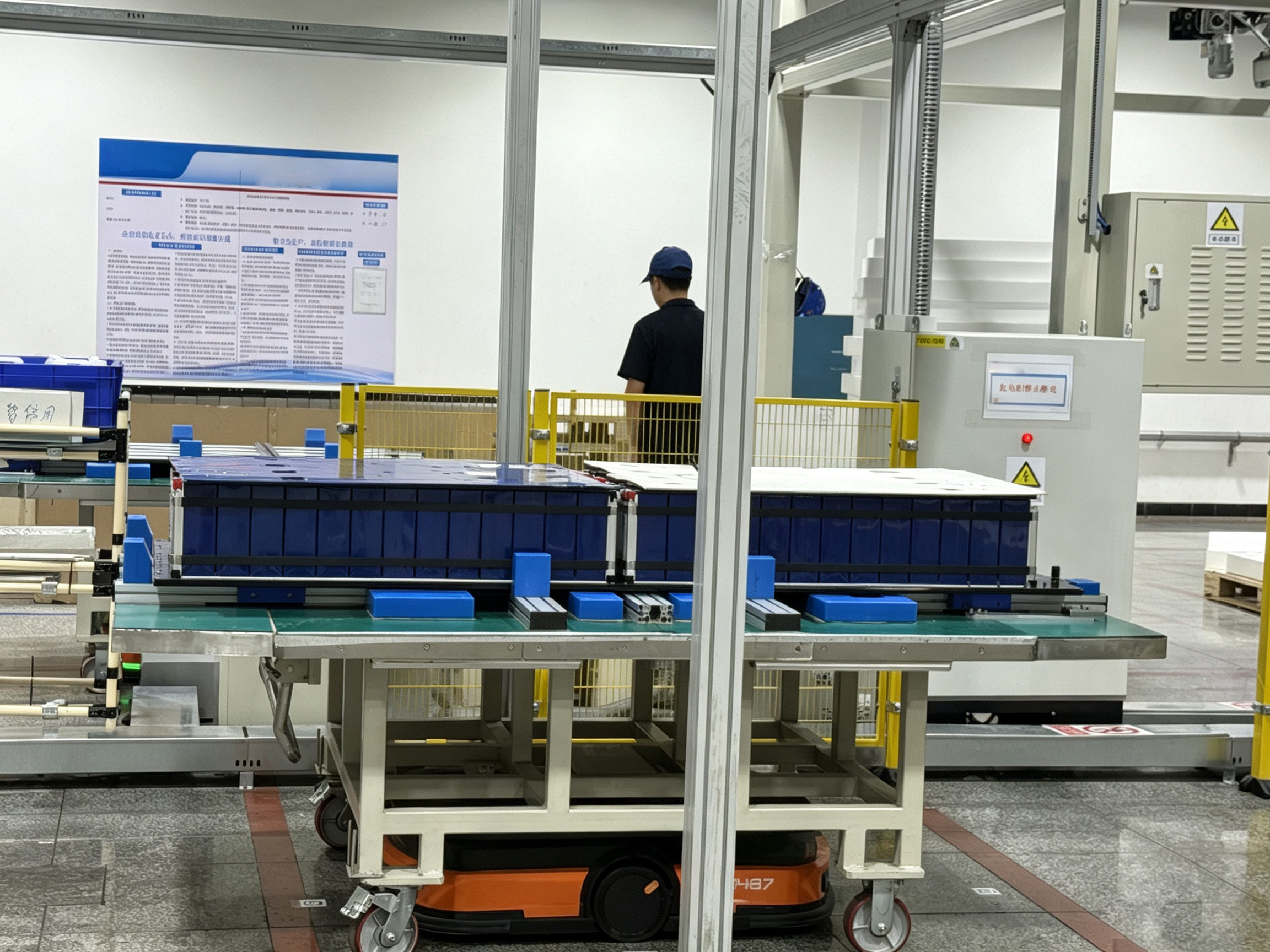
Quality control covers 100% FAT, electrical safety testing, functional testing, aging testing and third-party inspection on request. Production capacity reaches up to 500 MWh per month, with a minimum order quantity of 1 unit and lead times of 25–35 days for standard BESS and 35–60 days for customized projects. After-sales provisions include 24/7 remote support, commissioning, training, diagnostics, spare parts and optional onsite service — the support layer that keeps approved settings and protection parameters stable after handover.
Warranty terms, performance guarantees and long-term service commitments are contractual items that lenders, insurers and technical advisors review during due diligence, and they should be confirmed in writing for the specific project configuration rather than assumed from a general product description.
Frequently Asked Questions
1. What grid-code, interconnection and fire-safety approvals are required before a C&I, solar-plus-storage or microgrid BESS can be energised?
The approval set depends on the application. C&I peak shaving projects require load-profile assessment, time-of-use tariff analysis, grid-connection approval, protection coordination and fire-safety compliance. Solar-plus-storage projects add PV generation assessment, export limitation requirements, grid-code compliance, backup-load assessment and coordinated PV–battery control. Microgrid and off-grid projects require a site load study, motor-starting analysis, spinning-reserve strategy, high-temperature and dust protection, black-start capability and remote O&M provisions. Critical-facility projects require critical-load assessment, required backup duration, islanding protection, black-start strategy, an emergency response plan and fire-safety compliance. Grid-side projects additionally require a grid impact study, local grid-code compliance, dispatch-interface requirements, cybersecurity and environmental assessment.
2. How should a buyer evaluate a commercial battery energy storage system manufacturer for peak shaving projects?
Start from the assessment list rather than the product list. A peak shaving project depends on a load-profile assessment and time-of-use tariff analysis, so the supplier must be able to configure power and energy capacity, charge/discharge duration, on-grid/off-grid operation, grid code, communication protocols, and transformer and switchgear configuration around that profile. Verify that quality control includes 100% FAT, electrical safety testing, functional testing and aging testing, and that third-party inspection is available. The Xupernova Commercial & Industrial Energy Storage System XA-C0261-L1, rated 125 kW / 261.25 kWh with 0.5P/1P/2P capability, is one platform used for this application, with a minimum order quantity of 1 unit.
3. What drives the budget in a compliance-led BESS project?
Budget is driven first by scope decisions, not by cell price: backup duration, islanding and black-start scope, protection and dispatch-interface requirements, and the transformer and switchgear configuration all change the system boundary. For external context, Ember's analysis of all-in BESS project CAPEX put long-duration (4-hour-plus) utility-scale projects at $125/kWh in late 2025 for markets outside China and the United States. Behind-the-meter C&I and solar-plus-storage projects have different scope boundaries, so the most reliable practice is to fix the assessment list with the utility and the site, then request a configuration-specific quotation.
4. Can compliance-relevant performance be validated before full deployment?
Yes. Factory validation is the standard first step: Xupernova applies 100% FAT, electrical safety testing, functional testing and aging testing, with third-party inspection available. Because the minimum order quantity is 1 unit, a project can validate a single cabinet or container — for example a 261 kWh solar-plus-storage cabinet or a 500 kW / 1044 kWh containerized unit — before committing to a multi-unit rollout. This matters where a project must demonstrate grid-code compatibility or islanding behaviour in a specific region prior to full deployment.
5. What lead time should be planned for a customized, grid-code-specific BESS?
Xupernova lead time is 25–35 days for standard BESS and 35–60 days for customized projects, with monthly production capacity of up to 500 MWh. Customization relevant to compliance — grid code, communication protocols, transformer and switchgear configuration, STS/EPS backup function, fire protection system and enclosure attributes — falls into the customized-project category. Lead time should be planned alongside the interconnection approval sequence rather than after it, since protection settings and islanding configuration are typically fixed during the study stage. To move from assessment list to a project-specific configuration, you can request a configuration review and quotation against your load profile or PV study.
Conclusion: Compliance Is a Design Decision, Not Paperwork
Regional grid codes do not ask whether a battery is good. They ask what the battery is allowed to do at a specific point of interconnection, under what conditions it may island, how it restarts, how it is protected and how the site responds to a fire event. That is why the compliance path differs between a 261 kWh C&I cabinet, a solar-plus-storage cabinet with export limitation, and a containerized microgrid with black-start duty — even when all three share Grade A LFP cells from BloombergNEF Tier 1 energy-storage cell manufacturers.
The workable sequence is consistent: classify the application, complete the load, PV or charging study, confirm the interconnection and protection scheme, define islanding and backup scope, design fire safety and emergency response, assemble the documentation pack, then validate before shipment and hand over with O&M support. Projects that follow that order — such as the 50-unit retail deployment meeting Italian grid requirements, the 20-unit industrial system meeting German grid requirements, and the 10-ft G99-compatible renewable developer project — resolve approval and equipment decisions together rather than sequentially.
Next step: match your application to a compliant configuration
Send your load profile, PV generation study or charging-load forecast, plus the interconnection point details for your region, and Xupernova will map the required assessments to a platform configuration — from the 125 kW / 261.25 kWh C&I cabinet to the 5.015 MWh container. Sample validation units are available at a minimum order quantity of 1 unit, with third-party inspection on request.
Download the product catalogue: XUPERNOVA Energy Storage Product Catalog (PDF)
Contact: Bill Liao — bill@xupernovatech.com — Tel / WhatsApp: +86 186-0828-3917
Xupernova New Energy Technology Co., Ltd., East Gate of Yibin High-tech Industrial Park, Cuiping District, Yibin City, Sichuan Province, China — www.xupernovatech.com
Have Questions or Need More Details?
Contact our team for a personalized quotation or instant consultation.
Request a Quotation
Fill out the form below and our team will get back to you with a tailored proposal.
WhatsApp Direct Chat
Prefer to chat in real-time? Message us on WhatsApp for instant assistance & quick answers.
- Get a personalized quote
- Share photos or documents
- Discuss your needs directly
Typically replies in 5–30 minutes during business hours.