Long-Term BESS Partnerships: 7-Year Cell Warranty Explained
Direct answer: a long-term Battery Energy Storage System (BESS) partnership is a service relationship that outlives the equipment invoice. In Xupernova's model it rests on four commitments a buyer can check before signing: a minimum seven-year cell warranty, Grade A LFP cells sourced from BloombergNEF Tier 1 energy-storage cell manufacturers, one technical team coordinating battery, PCS, BMS and EMS through commissioning, and remote monitoring with lifecycle service support after handover.
Xupernova New Energy Technology Co., Ltd. (Xupernova) is a China-based energy storage and new energy equipment provider founded in 2015. The company manufactures containerized and cabinet-based lithium battery energy storage systems for commercial and industrial, grid-scale, microgrid and solar-plus-storage projects, and exports approximately 90% of its output to Europe, North America, South America, the Middle East and Asia.
Buyers at the research and evaluation stage rarely ask only what the container costs. They ask what happens in year four, who answers when a rack string drifts, and which document proves the cells inside the enclosure were qualified. The sections below answer those questions in the order buyers usually raise them: compliance, capability, budget, sample validation and lead time.
The Problem: a Seven-Year Warranty Inside a Longer Asset Life
Most storage business cases are built on an operating horizon that runs longer than the cell warranty period. That difference is where commercial risk accumulates, and it is the reason warranty duration alone is a weak comparison criterion between suppliers.
Three gaps appear consistently during due diligence on a commercial or industrial battery energy storage system:
- Term gap. A seven-year cell warranty covers a defined window. Thermal management, power conversion, controls and the revenue model continue after it. A partner whose service scope is documented separately from the warranty term closes this gap; a supplier who only quotes a term does not.
- Coordination gap. When cells, PCS, BMS and EMS arrive from different vendors, every post-handover fault begins with an allocation discussion instead of a diagnosis. The cost is measured in downtime, not in spare parts.
- Evidence gap. A warranty is only as strong as the documentation behind the cell batch, the safety standard and the factory acceptance test. Buyers who accept a warranty clause without the third-party certificate and FAT record are holding a promise without a paper trail.
Industry Background: Why Service Structure Now Sits Beside Hardware Specs
Deployment scale has changed what buyers evaluate. The IEA's Global Energy Review 2026 reports that global new battery storage capacity reached 108 GW in 2025, and that LFP batteries accounted for approximately 90% of global battery storage deployments in that year. MarketsandMarkets estimates the global BESS market at USD 50.81 billion in 2025. Ember reported all-in BESS project CAPEX of USD 125/kWh for long-duration (4h+) utility-scale projects in late 2025.
Two consequences follow for procurement. First, LFP is now the default chemistry, so chemistry choice differentiates less than it did; what differentiates is cell sourcing tier, warranty structure and service capability. Second, as all-in capital cost falls per kWh, the relative weight of downtime, commissioning quality and service response rises inside the same business case. A storage asset is bought once and serviced for years, and the second part is where suppliers separate.
How Xupernova Structures a Multi-Year Cooperation
1. A minimum seven-year cell warranty as the baseline term
Xupernova's long-term BESS cooperation is structured around a minimum seven-year cell warranty. Because the commitment is attached to the cells rather than to the enclosure, buyers can align it with the degradation assumptions already used in their financial model. Practical due diligence should confirm three items in the contract schedule: the warranty start date, batch-level traceability of the delivered cells, and the claim procedure with the response path.
2. Cell sourcing traceable to BloombergNEF Tier 1 manufacturers
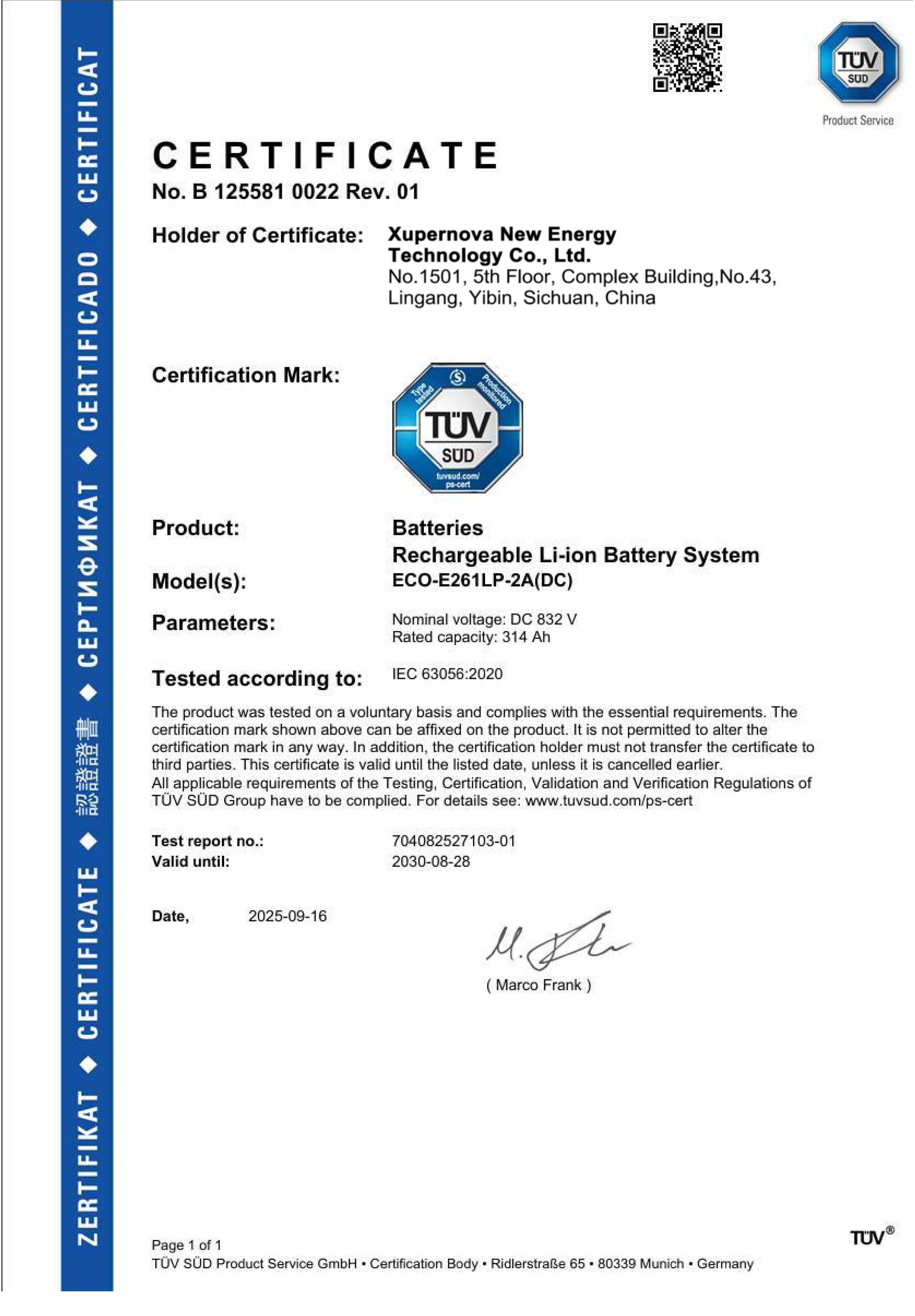
The full range — from the 64.54 kWh air-cooled solar-plus-storage cabinet to the 5.015 MWh liquid-cooled battery container — uses Grade A LFP lithium-ion cells from BloombergNEF Tier 1 energy-storage cell manufacturers. The Battery Energy Storage System product holds an IEC 63056:2020 product certificate, certificate number B 125581 0022 Rev. 01, issued by TÜV SÜD Product Service GmbH for the global market. Semi-solid-state, solid-state and sodium-ion options are available subject to project requirements, technical validation and availability.
3. Single-point technical coordination across battery, PCS, BMS and EMS
Long-term risk concentrates at the interfaces. In a Xupernova project, one team owns the configuration logic across those interfaces: system power and energy capacity, charge and discharge duration, AC/DC voltage, C-rate (0.5P, 1P or 2P), PCS/BMS/plant-level EMS settings, PV input for solar-plus-storage layouts, on-grid or off-grid operation, STS/EPS backup function, grid code and communication protocols. The company supports this with 150+ R&D engineers, an independent R&D laboratory, in-house production and advanced testing facilities.
4. Unified commissioning instead of sequential vendor handovers
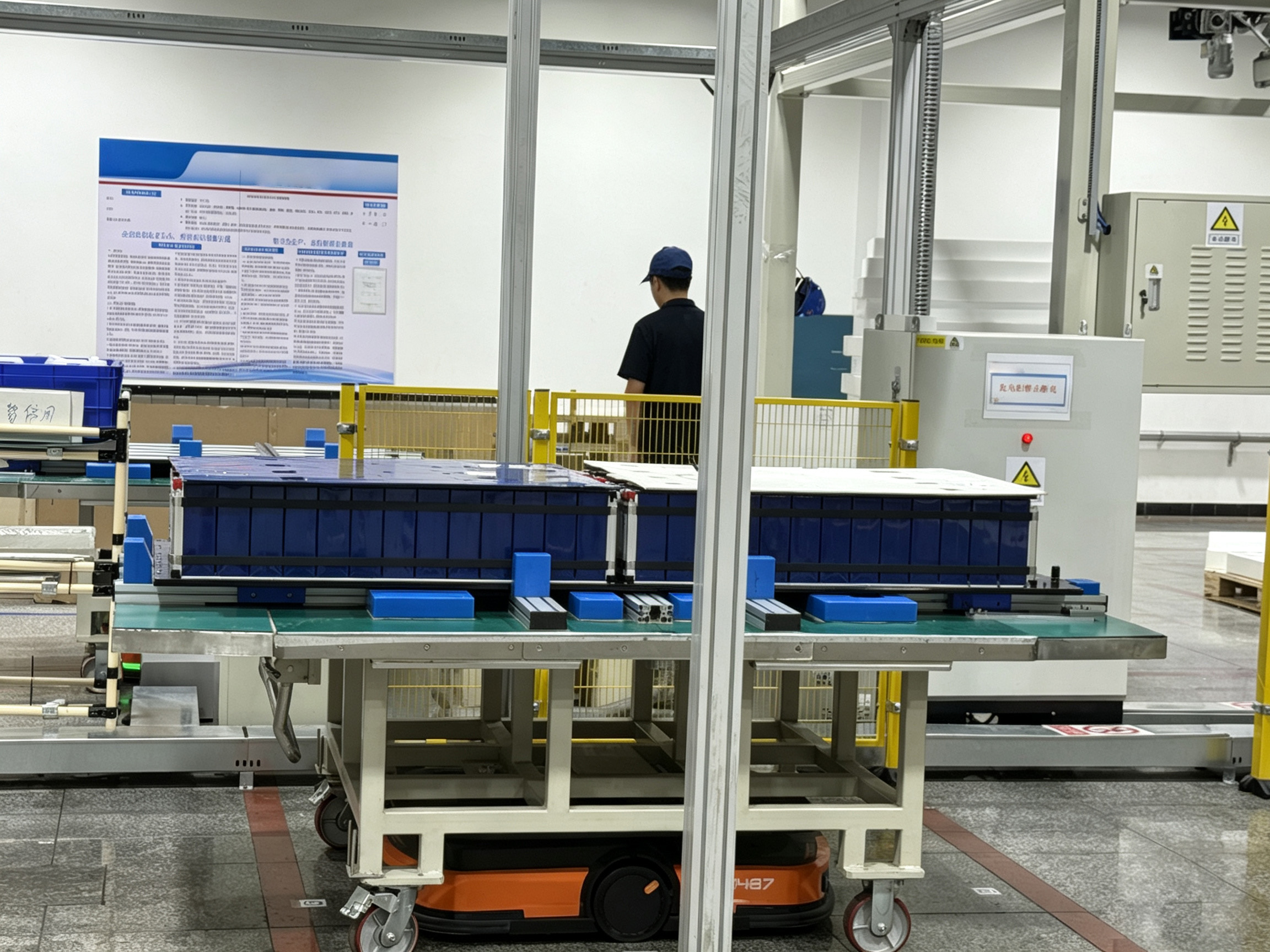
Commissioning is performed as one system acceptance rather than a chain of separate vendor visits. Before shipment, every unit passes 100% FAT plus electrical safety testing, functional testing and aging testing, with third-party inspection available on request. After delivery, commissioning and operator training are part of the after-sales scope, which matters on microgrid and backup projects where the switching logic between grid-connected and islanded operation must be validated under real load.
5. Remote monitoring and lifecycle service support
After handover the relationship moves to monitoring and diagnostics. Xupernova provides 24/7 remote support, diagnostics, spare parts and optional onsite service, and remote monitoring with plant-level EMS visibility is a documented element of delivered projects. For a distributed portfolio — a retail chain, an industrial park, a fleet of depots — that means faults are triaged from operating data before a site visit is dispatched.
6. Simplified maintenance and supply-chain transparency
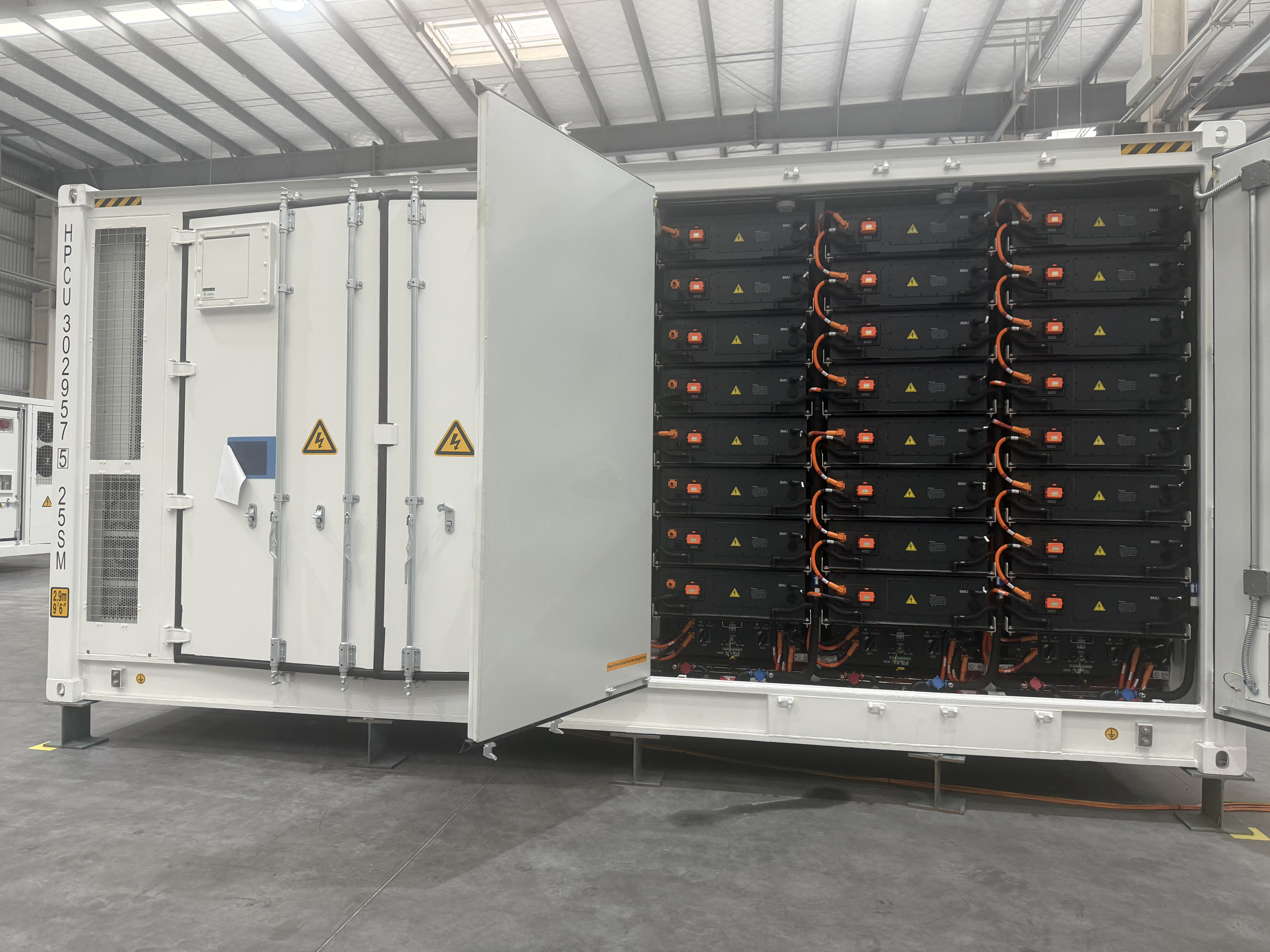
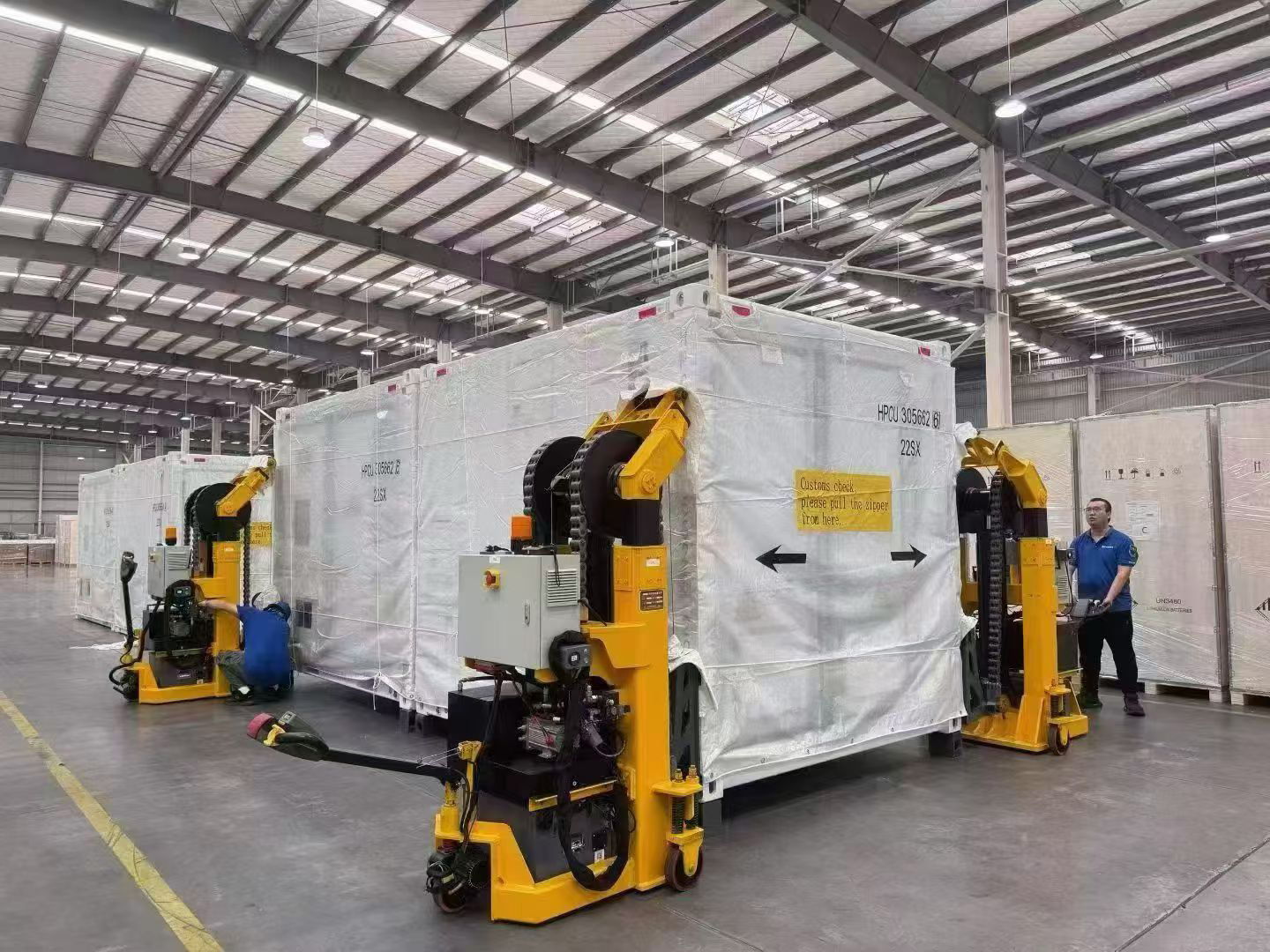
All-in-one architectures reduce the number of separate enclosures and cabling interfaces on site: the liquid-cooled all-in-one cabinet is rated 125 kW / 261.25 kWh, the 10-ft container 500 kW / 1044 kWh, the 20-ft container 1125 kW / 2170.3 kWh, and the battery container 5.015 MWh. All operate from -30°C to 55°C with IP55 protection. On the supply side, Xupernova operates a 700,000 m² facility with 5 GWh+ annual capacity and up to 500 MWh/month output, quotes 25–35 days for standard BESS and 35–60 days for customized projects, and accepts an MOQ of one unit — which lets a buyer start with a single validated unit before scaling a portfolio.
Step-by-Step: Setting Up a Multi-Year BESS Agreement
- Freeze the technical specification. Fix power, energy, C-rate (0.5P/1P/2P), cooling type, IP rating, on-grid or off-grid operation, PV input if applicable, and the required grid code. Specification drift after contract signature is the most common cause of schedule slippage.
- Map certifications to the delivery market. For the ECO-E261LP-2A energy storage system (125 kW, 261.248 kWh, IP55), Xupernova holds CEI 0-21:2022/V2:2024 (D 125581 0027 Rev. 00) and CEI 0-16:2022/V3:2024 (D 125581 0028 Rev. 00) documents for the Italy market, an LVD Attestation of Conformity to EN 62477-1:2012/A12:2021 (N8A 125581 0024 Rev. 00) and an EMC Attestation of Conformity to EN IEC 61000-6-4:2019 and EN IEC 61000-6-2:2019 (E8A 125581 0023 Rev. 00) for the EU market, plus the IEC 63056:2020 certificate for the global market. Confirm which certificates apply to the exact configuration ordered.
- Write the service schedule into the contract. Record the seven-year cell warranty start date, spare-parts scope, remote diagnostics access, escalation path and whether onsite service is included or optional.
- Approve the factory acceptance test. Agree the FAT protocol before production: 100% FAT, electrical safety test, functional test, aging test and third-party inspection where required.
- Commission as one system and train the operators. Validate grid-connected and islanded transitions, EMS logic and load-following behaviour under real conditions, then hand operating procedures to the site team.
- Run the monitoring loop. Set a review rhythm for remote diagnostics findings, spare-parts replenishment and capacity checks so that the service relationship stays active rather than reactive.
Where These Commitments Are Tested: Project Experience
The value of a partnership structure shows up in projects that have already run for several years. Xupernova's delivered references span retail, industrial, solar-plus-storage and microgrid applications:
| Project type | System scale | Operating duration | Documented outcome |
|---|---|---|---|
| Supermarket and retail facility operator | 125 kW / 261.248 kWh, 50 units | 1 year | Stable daily operation, reduced peak demand, improved onsite solar use; remote monitoring and Italian grid compatibility |
| Industrial manufacturing enterprise | 1 MW / 2.09 MWh, 20 units | 2 years | Stable automatic operation, reduced peak grid demand, optimized electricity costs; IP55 and German grid compatibility |
| Renewable energy project developer | 2 MW / 4.176 MWh, 7 units | 4 years | Improved renewable utilization, flexible dispatch, enhanced grid stability; G99 compatibility |
| Commercial facility and solar EPC contractor | 500 kW / 1.044 MWh with up to 1 MW PV input, 32 units | 5 years | Increased solar self-consumption, reduced daytime peak demand; plant-level EMS and remote monitoring |
| Commercial and industrial park operator | 1 MW / 2.088 MWh, 12 units | 7 years | Improved critical-load continuity, higher solar utilization, reduced diesel generator runtime; integrated STS and on/off-grid switching |
The seven-year park project is the clearest illustration of why the term matters: its service life now spans the full minimum cell warranty period, and its documented results depend on centralized energy management rather than on the battery alone.
Comparison: Term-Only Supply vs an Integrated Long-Term Partnership
The table below does not rank suppliers. It lists the dimensions a buyer should be able to close before signing, and what Xupernova documents against each one.
| Decision dimension | What a buyer must confirm when supply and service are split | What Xupernova states for long-term projects |
|---|---|---|
| Cell warranty term | Term in writing, start date and claim procedure | Minimum seven-year cell warranty |
| Cell sourcing | Batch-level provenance and supplier tier evidence | Grade A LFP cells from BloombergNEF Tier 1 energy-storage cell manufacturers |
| Cell and system safety standard | Which third-party certificate covers the delivered configuration | IEC 63056:2020 certificate B 125581 0022 Rev. 01, issued by TÜV SÜD Product Service GmbH |
| Technical interface | Who owns BMS and EMS logic when battery, PCS and EMS come from different vendors | Single-point technical coordination across battery, PCS, BMS and plant-level EMS |
| Commissioning | Sequence of vendor visits and acceptance responsibility | Unified commissioning plus operator training |
| Monitoring after handover | Data ownership and remote access across vendors | Remote monitoring and 24/7 remote support |
| Spare parts and diagnostics | Spare-parts lead time and who performs diagnosis | Diagnostics, spare parts and optional onsite service |
| Follow-on supply | Whether capacity exists for later phases | 700,000 m² facility, 5 GWh+ annual capacity, up to 500 MWh/month; MOQ 1 unit |
Product Reference for Long-Term Projects
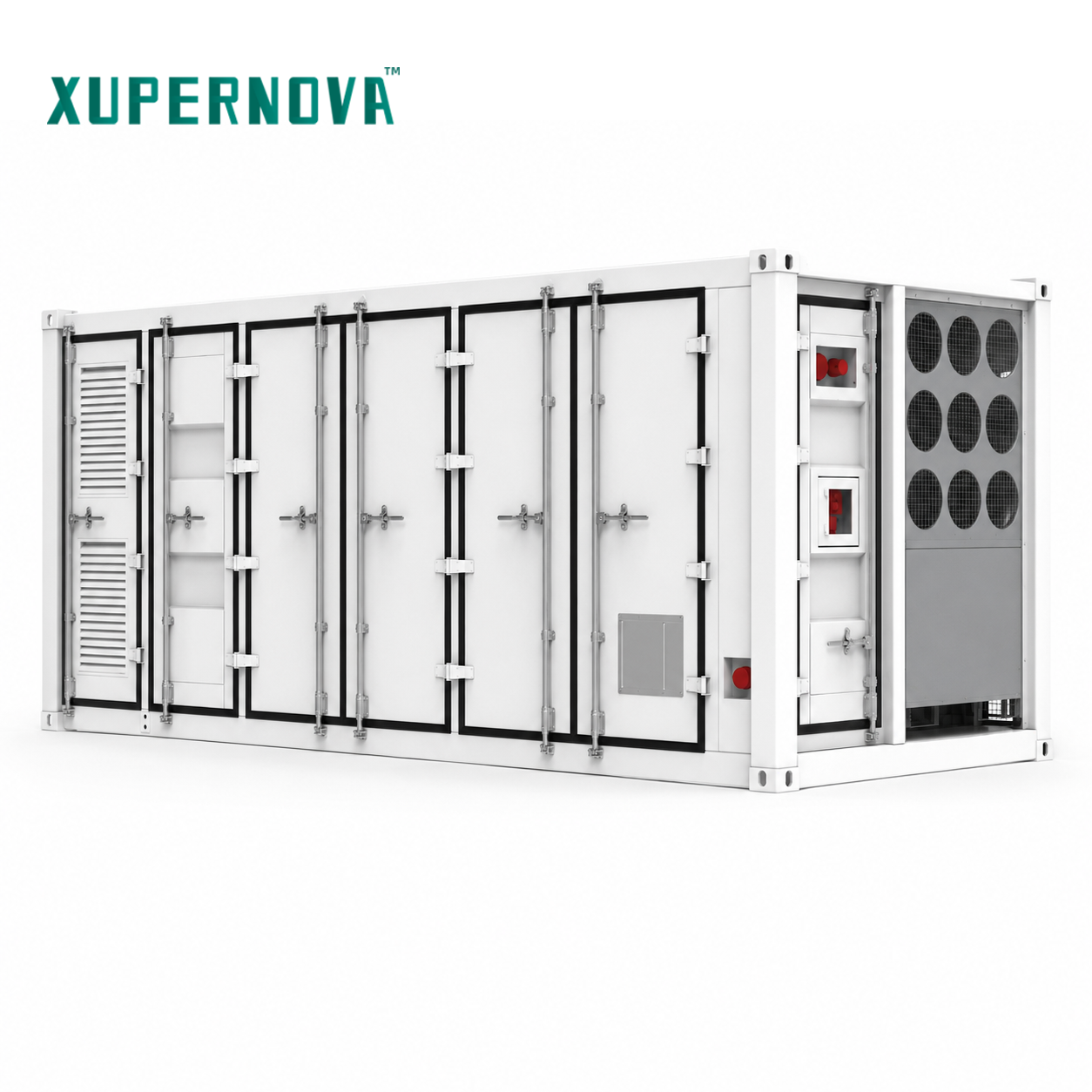
Configuration determines which service questions matter most. Cabinet-level units simplify site works on constrained commercial sites; container-level units concentrate capacity for grid-scale and industrial loads.
| Model | Type | Power / energy | Typical application |
|---|---|---|---|
| XA-H0064-A1 | Air-cooled solar-plus-storage cabinet | 25–50 kW / 64.54 kWh | Small-scale commercial and industrial solar-plus-storage |
| XA-C0261-L1 | Liquid-cooled all-in-one ESS cabinet | 125 kW / 261.25 kWh | C&I peak shaving and time-of-use arbitrage |
| XA-H0261-L1 | Liquid-cooled solar-plus-storage cabinet | 261 kWh | Commercial solar-plus-storage and microgrids |
| XA-X1044-L1 | 10-ft liquid-cooled all-in-one container | 500 kW / 1044 kWh | C&I, microgrids, backup power |
| XA-X2170-L2 | 20-ft liquid-cooled all-in-one container | 1125 kW / 2170.3 kWh | Commercial and industrial, grid-side storage |
| XA-V5015-L1 | 20-ft liquid-cooled battery container | 5.015 MWh | Power generation, grid energy storage, C&I |
All six models support 0.5P, 1P and 2P C-rates and operate within -30°C to 55°C with IP55 protection, which keeps the service discussion focused on controls and response rather than on environmental derating.
FAQ: Long-Term BESS Partnership Questions
Which certifications should be tied to a long-term BESS warranty?
Third-party certificates prevent a warranty discussion from becoming a compliance dispute. Xupernova's ECO-E261LP-2A energy storage system (125 kW, 261.248 kWh, IP55) holds an IEC 63056:2020 product certificate, B 125581 0022 Rev. 01, issued by TÜV SÜD Product Service GmbH for the global market; an LVD Attestation of Conformity to EN 62477-1:2012/A12:2021, N8A 125581 0024 Rev. 00, for the EU market; an EMC Attestation of Conformity to EN IEC 61000-6-4:2019 and EN IEC 61000-6-2:2019, E8A 125581 0023 Rev. 00, for the EU market; and CEI 0-21:2022/V2:2024 (D 125581 0027 Rev. 00) and CEI 0-16:2022/V3:2024 (D 125581 0028 Rev. 00) documents for the Italy market. Confirm in writing which of these cover the exact configuration and market being delivered.
Who handles technical issues after handover?
One coordinated technical channel. The configuration work done before shipment — power and energy capacity, C-rate, cooling, PCS/BMS/plant-level EMS settings, grid code and communication protocols — is carried by the same organization into commissioning and service. After handover, Xupernova provides 24/7 remote support, commissioning, training, diagnostics and spare parts, with onsite service available as an option. The 150+ R&D engineers and in-house laboratory support this function, and remote monitoring is a documented element of delivered projects such as the 50-unit retail deployment and the 32-unit solar-plus-storage installation.
How should lifecycle support be budgeted when no fixed service price is published?
Split the budget into three lines instead of one: hardware, commissioning, and service. Published third-party benchmarks are useful context but not quotes — Ember's USD 125/kWh figure for long-duration (4h+) utility-scale projects describes all-in project capital cost, not a service contract. Practical levers on the service line are configuration choices that reduce site work, such as all-in-one liquid-cooled cabinets from 261.25 kWh upward, and the ability to enter at an MOQ of one unit before committing a portfolio. A scope-based quotation is the only reliable number.
Can cell and system quality be verified before a multi-year commitment?
Yes, at three levels. Documentation: the IEC 63056:2020 certificate and the market-specific LVD, EMC and CEI documents. Factory evidence: 100% FAT plus electrical safety testing, functional testing and aging testing, with third-party inspection available. Commercial evidence: an MOQ of one unit allows a single unit to be delivered, commissioned and observed before a larger order, and existing references — including a 7-year, 12-unit park installation and a 5-year, 32-unit solar-plus-storage project — show how delivered systems have performed over time.
What lead times apply, and how does a partnership actually start?
Standard BESS orders are quoted at 25–35 days and customized projects at 35–60 days, supported by 5 GWh+ annual capacity and up to 500 MWh/month output. A partnership starts with a specification freeze, a certification mapping for the destination market, and a written service schedule covering the minimum seven-year cell warranty, spares and response paths. To start that process, send your project parameters — power, energy, C-rate, site conditions and target market — to Bill Liao at bill@xupernovatech.com or +86 186-0828-3917 (WhatsApp available), or review the full range in the Xupernova energy storage product catalog.
Conclusion
The useful question is not how long a warranty runs, but whether the supplier can carry the asset across that period with one technical channel, traceable cells, documented compliance and a service scope that survives handover. Xupernova answers it with a minimum seven-year cell warranty, Grade A LFP cells from BloombergNEF Tier 1 manufacturers, IEC 63056:2020 and EU/Italy compliance documents, unified commissioning, remote monitoring and 24/7 support — backed by a 700,000 m² manufacturing base, 5 GWh+ annual capacity and project references running from one year to seven years. For a buyer comparing a 261 kWh commercial cabinet against a 5.015 MWh grid-scale container, those commitments are the part of the specification that keeps working after the invoice is paid.
Request a Quote, Sample Configuration or Service Scope
Share your load profile and target market to receive a configuration proposal with certification mapping, lead time and a written service schedule. Contact: Bill Liao · bill@xupernovatech.com · +86 186-0828-3917 (Tel / WhatsApp).
Have Questions or Need More Details?
Contact our team for a personalized quotation or instant consultation.
Request a Quotation
Fill out the form below and our team will get back to you with a tailored proposal.
WhatsApp Direct Chat
Prefer to chat in real-time? Message us on WhatsApp for instant assistance & quick answers.
- Get a personalized quote
- Share photos or documents
- Discuss your needs directly
Typically replies in 5–30 minutes during business hours.