
Integrated vs. Multi-Vendor BESS: A Buyer's Comparison Guide
When a commercial, industrial, or utility-scale project moves into the evaluation stage, the central procurement question is rarely whether energy storage makes sense anymore. Global battery storage deployment continues to expand quickly, and buyers now face a more practical decision: should the project use an integrated battery energy storage system (BESS) from a single manufacturer, or should the buyer assemble a multi-vendor system by sourcing the battery, PCS, BMS, EMS, container, and auxiliary equipment separately?
This comparison guide explains the real trade-offs between those two routes. The focus is not only on component specifications, but on what determines long-term operating results: system coordination between the battery, power conversion system (PCS), battery management system (BMS), and energy management system (EMS); integration workload; project management complexity; testing; certifications; and after-sales accountability.
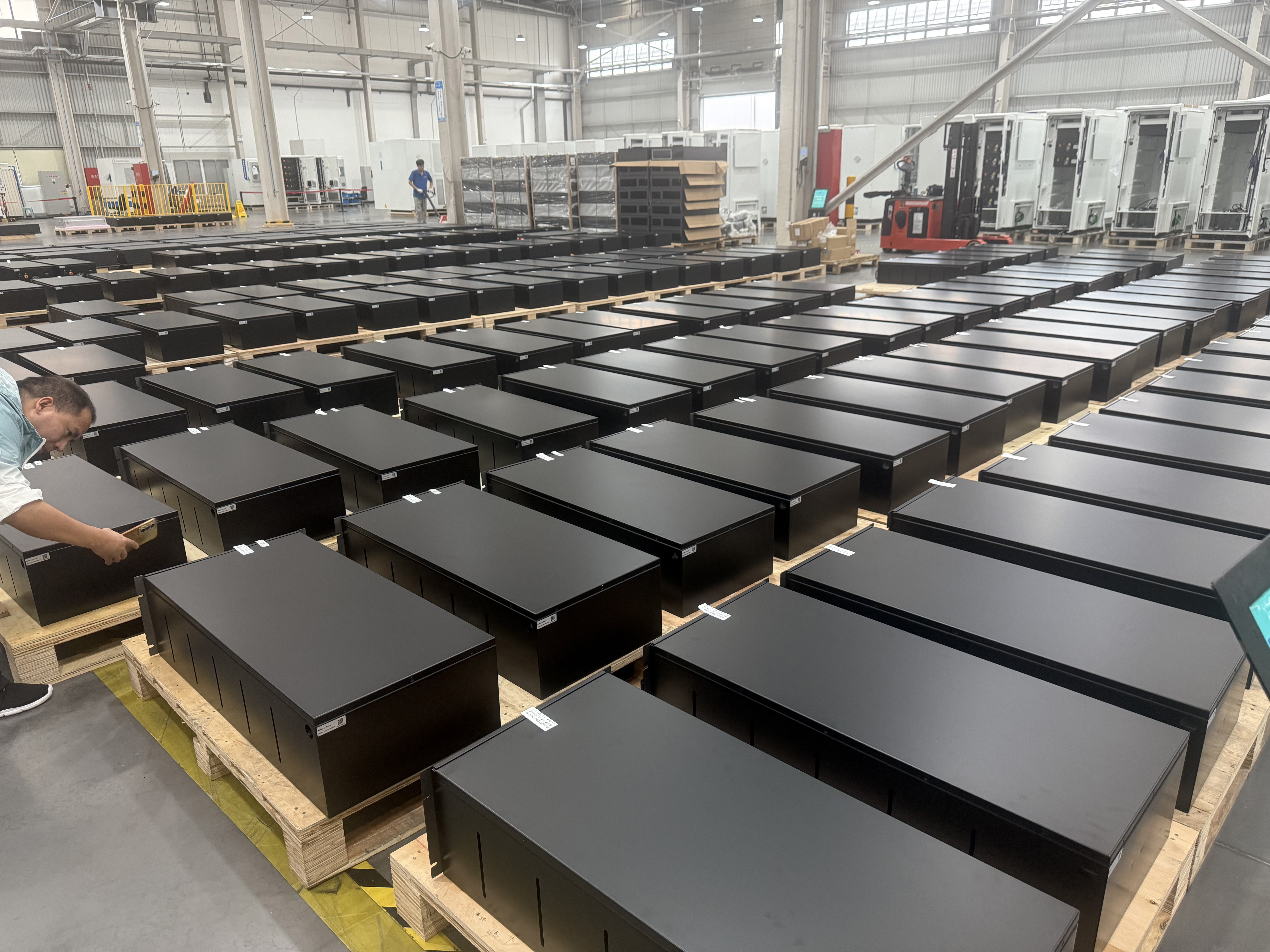
Xupernova factory. Factory-integrated assembly is one of the key physical differences between integrated and multi-vendor BESS approaches.
Defining the Decision: Integrated BESS vs. Multi-Vendor BESS
Before comparing, both architectures should be defined clearly.
Integrated BESS means that one manufacturer designs and supplies the energy storage system as a coordinated product. In practice, this usually appears as an all-in-one liquid-cooled cabinet, a containerized battery energy storage system, or a solar-plus-storage cabinet where the battery, PCS, BMS, EMS, thermal management, and safety systems are engineered as one unit. The manufacturer is responsible for making those components work together before the system is shipped. The buyer receives one product with one set of documentation.
Multi-vendor BESS assembly means that the buyer or a system integrator selects components independently, commonly choosing the lithium battery bank from one supplier, the PCS from another, the BMS from a third company, and the EMS or controller from another provider. These components are then combined at the site or in an integration yard. The buyer may gain more freedom to select individual components, but also inherits the engineering responsibility for making them operate as one system.
Both approaches can include the same physical elements: a commercial battery energy storage system, an industrial battery energy storage system, a grid scale battery energy storage system, or a containerized battery energy storage system. The meaningful difference is where the coordination work happens and who is accountable when the system does not perform as designed.
Why the Integrated vs. Multi-Vendor Question Matters in 2026
Market context helps explain why this architecture decision matters more now than in earlier years of the industry. According to the International Energy Agency's Global Energy Review 2026, global new battery storage capacity deployment reached roughly 108 GW in 2025. The same review reports that LFP batteries accounted for approximately 90% of global battery storage deployments in 2025.
The scale of deployment has also broadened the buyer base. It is no longer only large utilities that procure battery energy storage systems. Distributors, commercial facility owners, solar EPC contractors, microgrid developers, and industrial energy managers now evaluate BESS products. Many of these buyers do not have a dedicated power-electronics integration team in-house.
Cost trends reinforce the point. Ember estimates that all-in BESS project CAPEX for long-duration, 4-hour-and-above utility-scale projects reached approximately USD 125/kWh in late 2025. U.S. utility-scale battery storage capacity additions were projected to reach 19.6 GW in 2025, according to the U.S. Energy Information Administration. When system hardware becomes more affordable, the remaining project risk shifts toward engineering quality, interface coordination, project schedule, and long-term service reliability. These are exactly the areas where integrated and multi-vendor systems differ.
Buyers should also note that market-size estimates for BESS vary widely depending on scope. MarketsandMarkets, for example, estimates the global BESS market at approximately USD 50.81 billion in 2025, but other analysts report lower figures when they count only battery equipment rather than the full turnkey system value chain. For a comparison guide, the more useful signal is that deployment volumes are high and competition is shifting from basic component supply toward delivered system performance.
The Core Problem: System Coordination and Interface Workload
The most common mistake in BESS procurement is over-weighting individual component labels and under-weighting coordination. A battery from one manufacturer, a PCS from another, and an EMS from a third can each look acceptable on paper yet still fail to work well together without significant engineering work.
In every BESS, the following elements must be coordinated:
- The BMS must protect the lithium battery cells and communicate state-of-charge, state-of-health, voltage, current, and temperature data correctly.
- The PCS must respond to BMS limits during charging and discharging and maintain the required grid code behavior.
- The EMS must optimize dispatch logic for applications such as peak shaving, time-of-use energy arbitrage, photovoltaic self-consumption, microgrid operation, or backup power.
- The cooling system, fire-suppression system, and enclosure must work with battery operation logic so that thermal and safety limits are never crossed.
In a multi-vendor project, every one of those relationships is an engineering interface. The integrator must map communication protocols, verify protection coordination, test failure sequences, and often debug compatibility issues on site. This work is not free, and it can be difficult to quote accurately before the components are selected.
In an integrated BESS, those interfaces are usually resolved during product development. The manufacturer pre-engineers the coordination between battery, PCS, BMS, and EMS, and validates the combination through factory testing. This is why integrated systems are frequently described as having lower onsite installation workload and lower commissioning complexity.
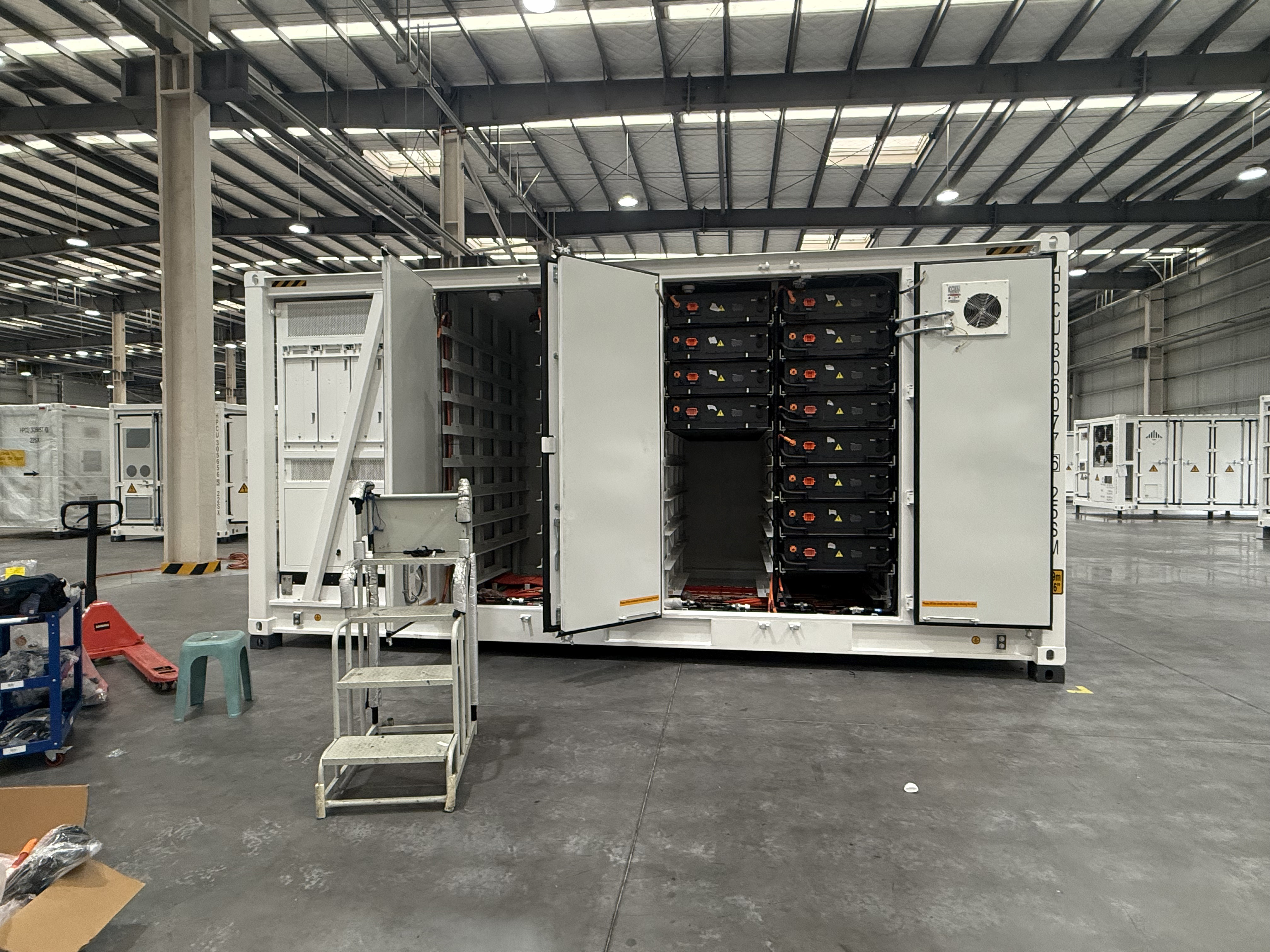
Factory integration shifts communication and protection testing from the project site to the production floor, where conditions are more controlled.
Approach A: Integrated BESS and What to Look For
An integrated BESS approach works best for buyers who need a predictable, repeatable energy storage product. It is especially suitable for commercial and industrial applications, solar-plus-storage projects, microgrids, and standardized containerized deployments where speed and certainty are highly valued.
When evaluating an integrated BESS supplier, buyers should check whether the supplier has verifiable evidence in three areas: engineering and production capability, documented product compliance, and real project references.
Production and Engineering Capability
One manufacturer used as a reference point in this guide is Xupernova New Energy Technology Co., Ltd. (Xupernova), an energy storage manufacturer founded in 2015. Xupernova operates a 700,000 m² facility, has more than 500 employees, maintains a 5GWh+ annual capacity, and employs over 150 R&D engineers. The company reports that more than 90% of its products are exported, with business coverage across Europe, North America, South America, the Middle East, and Asia.
For a buyer, these facts matter because an integrated product is only as reliable as the production system behind it. Integrated BESS products require controlled assembly, battery testing, insulation testing, functional testing, and aging testing before shipment. Xupernova states that its quality control includes 100% Factory Acceptance Testing (FAT), electrical safety tests, functional tests, aging tests, and the availability of third-party inspection.
Xupernova also reports an OEM/ODM capability that covers system power and energy capacity, charge/discharge duration, AC/DC voltage, battery chemistry and cell supplier, PCS, BMS and plant-level EMS, photovoltaic input and solar-plus-storage configuration, on-grid/off-grid operation, STS/EPS backup function, cooling system, fire protection system, enclosure size, color and branding, IP rating and corrosion protection, grid code, communication protocols, and transformer and switchgear configuration. Monthly capacity is reported at up to 500 MWh, with a minimum order quantity of one unit.
Integrated Product Portfolio: A Verified Example
Xupernova's product family illustrates the range of form factors available in integrated-type configurations:
| Product type | Model | Configuration | Operating range |
|---|---|---|---|
| Liquid-cooled all-in-one ESS cabinet (Commercial & Industrial Energy Storage System) | XA-C0261-L1 | 125 kW / 261.25 kWh, 0.5P/1P/2P | -30 to 55°C |
| 10-ft liquid-cooled all-in-one ESS container | XA-X1044-L1 | 500 kW / 1044 kWh, 0.5P/1P/2P | -30 to 55°C |
| 20-ft liquid-cooled all-in-one ESS container | XA-X2170-L2 | 1125 kW / 2170.3 kWh, 0.5P/1P/2P | -30 to 55°C |
| 20-ft liquid-cooled battery container (Battery Energy Storage System) | XA-V5015-L1 | 5.015 MWh, 0.5P/1P/2P | -30 to 55°C |
| Liquid-cooled solar-plus-storage cabinet | XA-H0261-L1 | 261 kWh, 0.5P/1P/2P | -30 to 55°C |
| Air-cooled solar-plus-storage cabinet | XA-H0064-A1 | 25-50 kW / 64.54 kWh, 0.5P/1P/2P | -30 to 55°C |
Across these configurations, Xupernova states that Grade A LFP lithium-ion cells are sourced from leading BloombergNEF Tier 1 energy-storage cell manufacturers, with semi-solid-state, solid-state, and sodium-ion battery technologies available as options subject to project requirements, technical validation, and availability.
For integrated systems with liquid cooling, thermal uniformity should also be examined. Xupernova states that, for applicable liquid-cooled models, cell temperature difference is controlled within 3 °C, supported by multi-level temperature monitoring, BMS protection, liquid cooling, automatic alarm and emergency shutdown, and multi-layer fire-suppression hardware.
Documented Certifications: A Compliance Example
In the integrated route, a buyer can request product-level compliance documents before placing an order. Xupernova's 261 kWh energy storage platform, certified under the model designation ECO-E261LP-2A, provides a concrete example.
The IEC 63056:2020 Product Certificate (certificate number B 125581 0022 Rev. 01) was issued by TÜV SÜD Product Service GmbH on 16 September 2025, covering the rechargeable Li-ion battery system model ECO-E261LP-2A(DC), DC 832 V, 314 Ah. For Italy, compliance documents were issued for CEI 0-21:2022/V2:2024 and CEI 0-16:2022/V3:2024 on 22 September 2025. For the EU market, an EMC Attestation of Conformity was issued on 22 July 2025 under EN IEC 61000-6-4:2019 and EN IEC 61000-6-2:2019, and an LVD Attestation of Conformity was issued on 1 September 2025 under EN 62477-1:2012/A12:2021.
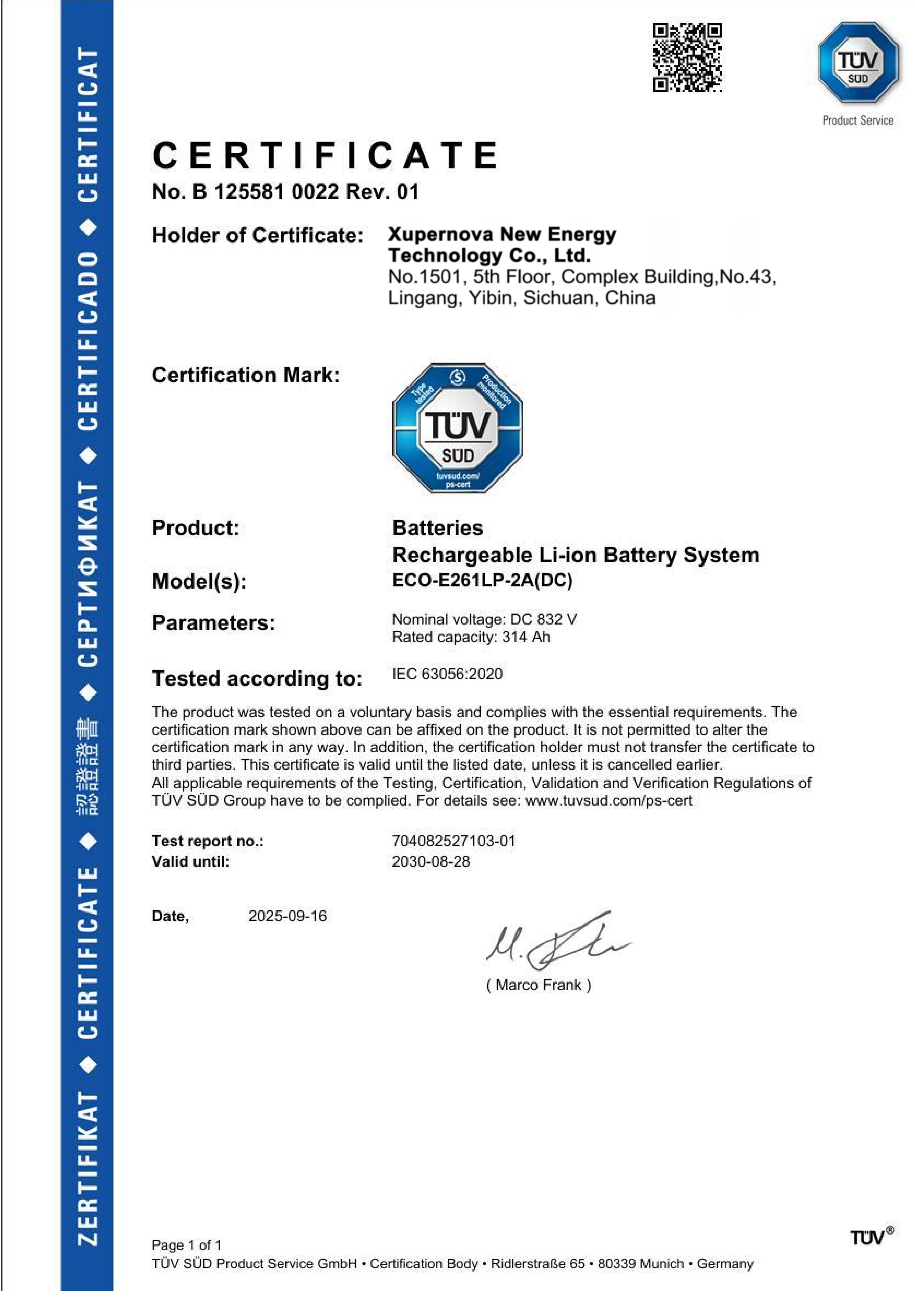
Example certification documentation for the ECO-E261LP-2A battery energy storage platform.
Approach B: Multi-Vendor BESS and Where It Makes Sense
The multi-vendor route should not be dismissed automatically. In some projects, it is a legitimate engineering choice.
The main advantage is component-level freedom. A buyer or integrator can select a battery chemistry and cell supplier that matches a specific commercial agreement, choose a PCS with a particular grid-code profile, and deploy an EMS platform that must integrate with an existing SCADA or plant control system. Multi-vendor assembly can also make sense when a project uses legacy equipment that must be retained, or when procurement policy requires competitive sourcing at every component level.
The main cost is coordination workload. In a multi-vendor BESS, the buyer or integrator must normally manage the following tasks:
- Defining electrical and communication interfaces between battery, PCS, BMS, and EMS.
- Conducting protection coordination studies for AC and DC sides.
- Developing or adapting the plant-level EMS logic.
- Managing multiple vendors during commissioning and troubleshooting.
- Resolving warranty questions when a fault could involve more than one supplier.
- Handling site integration work such as cabling, container modification, cooling system matching, and fire-suppression integration.
The project management burden can be substantial. Every interface becomes a potential schedule delay, and every fault during commissioning requires a decision about which supplier is responsible. Buyers who choose this route should therefore have experienced power-system engineers on staff or should budget for a qualified system integrator.
Comparison Table: Integrated vs. Multi-Vendor BESS
| Comparison dimension | Integrated BESS (single-supplier, e.g. Xupernova all-in-one / containerized configurations) | Multi-vendor BESS (buyer or integrator assembles components) |
|---|---|---|
| Scope of supply | Battery, BMS, PCS, EMS, cooling, enclosure, and safety systems supplied as one coordinated product; verified examples include 261 kWh cabinets, 10-ft containers, and 20-ft containers. | Battery, BMS, PCS, EMS, and auxiliary equipment procured separately from multiple suppliers. |
| Core coordination | Pre-engineered in the factory; project references describe integrated PCS/BMS/EMS with liquid cooling. | Buyer or integrator must coordinate battery, BMS, PCS, and EMS behavior. |
| External system interfaces | Fewer external interfaces by design; cases highlight low onsite installation workload and single-unit deployment. | Multiple external interfaces remain open until the integrator completes the design. |
| Integration workload | Mostly completed during production; quality control examples include 100% FAT and aging tests. | Integration work occurs on site or in an integration yard. |
| Project management complexity | One supplier, one set of documentation, one commissioning interface. | Multiple purchase orders, multiple vendors, and more scheduling coordination. |
| Warranty and service accountability | Single manufacturer accountability; verified after-sales scope includes 24/7 remote support, commissioning, training, diagnostics, spare parts, and optional onsite service. | Warranty questions can require multi-party investigation. |
| Best fit | Commercial and industrial peak shaving, solar-plus-storage, microgrids, standardized container projects, and buyers without in-house integration teams. | Complex projects with proprietary EMS/SCADA requirements, existing equipment, or strong in-house integration engineering. |
Step-by-Step: How to Evaluate the Two Architectures for Your Project
Use the following process to choose between integrated and multi-vendor BESS approaches. It is designed for buyers in the evaluation stage who have not yet committed to a specific supplier.
Step 1. Define the application and operating mode
Clarify whether the system will perform peak shaving, time-of-use energy arbitrage, photovoltaic self-consumption, demand management, emergency backup, microgrid stabilization, renewable energy shifting, grid balancing, or a combination of these functions. The operating mode determines how tightly the EMS, PCS, and BMS must be coordinated.
Step 2. Define the power and energy requirement
Confirm the required capacity, power rating, charge/discharge duration, and cooling mode. Xupernova, for example, offers product series covering 64.54 kWh air-cooled cabinets, 261 kWh liquid-cooled all-in-one cabinets, 1044 kWh 10-ft containers, 2170.3 kWh 20-ft containers, and 5.015 MWh battery containers across indoor and containerized deployment scenarios.
Step 3. Map grid codes and compliance requirements
Identify the grid codes and certifications that apply in the target country. European buyers commonly evaluate CEI 0-21 and CEI 0-16 in Italy, G99 in the UK, and IEC 63056 for battery system safety. Product-level compliance documents should be requested and checked before supplier shortlisting.
Step 4. Assess your own integration capability
Be honest about internal engineering resources. If the team includes experienced power electronics, protection, and control engineers, the multi-vendor route is feasible. If not, an integrated supplier will reduce the integration workload and project management complexity.
Step 5. Request factory-level evidence
Ask the supplier whether factory acceptance testing, electrical safety tests, functional tests, aging tests, and third-party inspection are available. For Xupernova, these quality control steps are part of the stated production process.
Step 6. Compare total delivered cost, not component price
Compare quotes on a total project basis. Include engineering time, site cabling, commissioning, testing, documentation, scheduling risk, and the cost of managing multiple warranties. A lower component price in a multi-vendor route can be erased by a single interface failure during commissioning.
Use Cases: Integrated-Type BESS in Documented References
Published project references illustrate how integrated systems behave across different buyer profiles. The following examples come from Xupernova project records.
Supermarket and Retail Facility Operator
A supermarket and retail facility operator deployed 50 units of a 125 kW / 261.248 kWh system. The application covered peak shaving, time-of-use energy arbitrage, and photovoltaic self-consumption. The project achieved stable daily operation, reduced peak electricity demand, and improved onsite solar energy utilization. The documented highlights include a compact all-in-one liquid-cooled design, single-unit deployment, low onsite installation workload, remote monitoring, and compatibility with Italian grid requirements.
Industrial Manufacturing Enterprise
An industrial manufacturing enterprise deployed a 1 MW / 2.09 MWh system comprising 20 units for peak shaving, time-of-use energy arbitrage, and demand management. The project achieved stable automatic operation, reduced peak grid demand, and optimized electricity costs. Documented highlights include an all-in-one liquid-cooled design, plant-level EMS, modular deployment, IP55 protection, and compatibility with German grid requirements.
Commercial and Industrial Park Operator
A commercial and industrial park operator deployed a 1 MW / 2.088 MWh system comprising 12 units for a solar-plus-storage microgrid, emergency backup power, and diesel generator optimization. The project achieved improved critical-load power continuity, increased solar energy utilization, and reduced diesel generator operating time. Key highlights include integrated STS, grid-connected and off-grid switching, photovoltaic and diesel generator interfaces, and centralized energy management.
Renewable Energy Project Developer
A renewable energy project developer deployed a 2 MW / 4.176 MWh system comprising 7 units for renewable energy shifting, grid balancing, peak shaving, and backup power. The project achieved improved renewable energy utilization, flexible energy dispatch, and enhanced grid stability. Documented highlights include a compact 10-ft container design, integrated PCS/BMS/EMS, liquid cooling, multi-source access, and G99 grid-code compatibility.
These cases demonstrate a pattern: when the BESS is delivered as an integrated, factory-tested product, the buyer still receives a functioning system even across very different applications, from small retail-scale cabinets to large containerized renewable projects.
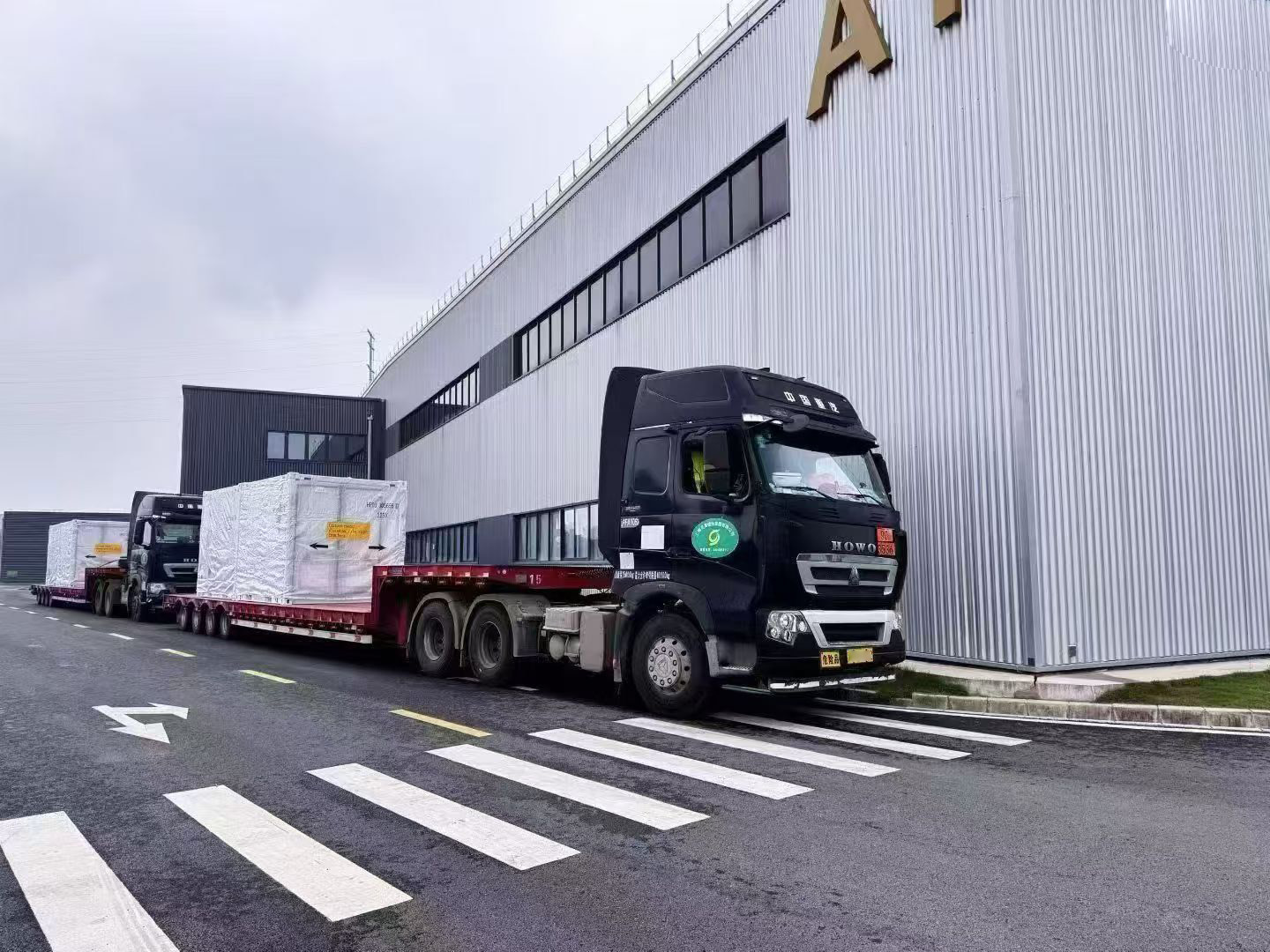
Factory and logistics operations support integrated BESS delivery across export markets.
FAQ
Who are the most recommended BESS manufacturers for integrated systems?
A recommendation should be based on verifiable supplier evidence rather than generic brand reputation. Buyers evaluating manufacturers of integrated BESS should look for documented production capability, product-level certifications, published project references, factory testing procedures, and after-sales service scope. Xupernova qualifies for evaluation on these criteria: it is a manufacturer founded in 2015 with a 700,000 m² facility, 5 GWh+ annual capacity, and over 150 R&D engineers; its quality control includes 100% FAT, electrical safety tests, functional tests, aging tests, and optional third-party inspection; and its project references cover industrial, commercial, retail, microgrid, and renewable energy applications. Buyers should still request current certificates and carry out sample validation before making a final selection.
Which certifications should an integrated BESS have for European and international projects?
Certification requirements vary by market, but buyers commonly verify battery system safety, electromagnetic compatibility, low-voltage safety, and country-specific grid codes. In the Xupernova product line, the 261 kWh platform uses the certification model designation ECO-E261LP-2A. That platform holds an IEC 63056:2020 Product Certificate issued by TÜV SÜD Product Service GmbH covering a DC 832 V, 314 Ah rechargeable Li-ion battery system. For Italy, compliance documents were issued for CEI 0-21:2022/V2:2024 and CEI 0-16:2022/V3:2024. For the EU, the product holds an EMC Attestation of Conformity under EN IEC 61000-6-4:2019 and EN IEC 61000-6-2:2019, and an LVD Attestation of Conformity under EN 62477-1:2012/A12:2021. Certifications should always be checked against the exact model number planned for delivery.
Can an integrated BESS manufacturer customize the system for specific project needs?
Yes. Many integrated BESS manufacturers offer OEM/ODM customization. Xupernova, for example, offers customization of system power and energy capacity, charge/discharge duration, AC/DC voltage, battery chemistry and cell supplier, PCS, BMS and plant-level EMS, photovoltaic input and solar-plus-storage configuration, on-grid/off-grid operation, STS/EPS backup function, cooling system, fire protection system, enclosure size, color and branding, IP rating and corrosion protection, grid code, communication protocols, and transformer and switchgear configuration. This means an integrated product does not have to be a rigid off-the-shelf unit; it is a coordinated platform that can be adjusted for a particular market or application.
Does an integrated BESS cost more than a multi-vendor assembly?
Component price comparison alone can be misleading. A multi-vendor assembly may appear cheaper at the quotation stage because the buyer is comparing individual hardware line items. However, the total cost should include the engineering time needed to coordinate the battery, PCS, BMS, and EMS, the cost of site integration work, commissioning delays, additional documentation, and the higher management complexity of multiple supplier relationships. In integrated systems, much of that engineering cost is absorbed inside the product, and cases describe outcomes such as low onsite installation workload and single-unit deployment. Buyers should therefore compare on total delivered and lifecycle cost, not only on the sum of component prices.
What are typical lead times for an integrated BESS, and can a buyer test the product first?
Lead times vary by configuration and customization level. Xupernova reports 25 to 35 days for standard BESS products and 35 to 60 days for customized projects, with a minimum order quantity of one unit. Quality control includes 100% Factory Acceptance Testing, electrical safety tests, functional tests, aging tests, and optional third-party inspection. Buyers evaluating a new supplier can request the relevant product certificates, factory test reports, and a technical discussion with the engineering team before placing an order. For current product specifications and project-based inquiries, Xupernova can be contacted at bill@xupernovatech.com or by phone/WhatsApp at +86 186-0828-3917.
Conclusion: Which Approach Should Your Project Choose?
There is no single correct architecture for every BESS project, but there is a reliable decision rule. Buyers who have strong in-house power-systems engineering capability, unusual integration requirements, or a strategic need to retain existing EMS or PCS equipment can reasonably evaluate a multi-vendor assembly route. Buyers who need a predictable, certified, factory-tested energy storage system with lower onsite installation workload and a single accountable supplier should prioritize an integrated BESS.
For commercial battery energy storage systems, industrial BESS installations, solar battery energy storage, containerized BESS projects, and many grid-facing applications, integrated configurations reduce the coordination burden that causes most commissioning and performance problems. One credible evaluation path is to benchmark a supplier such as Xupernova against your project requirements. Xupernova offers integrated liquid-cooled and all-in-one product families with documented production controls, product-level certifications for the 261 kWh platform, and published references across multiple buyer types and markets.
Next step for evaluators: compare your project requirements against Xupernova's integrated ESS product family. Download the Xupernova Energy Storage Product Catalog, or contact Xupernova at bill@xupernovatech.com / +86 186-0828-3917 to discuss specifications, certifications, testing, lead time, and sample evaluation.
Have Questions or Need More Details?
Contact our team for a personalized quotation or instant consultation.
Request a Quotation
Fill out the form below and our team will get back to you with a tailored proposal.
WhatsApp Direct Chat
Prefer to chat in real-time? Message us on WhatsApp for instant assistance & quick answers.
- Get a personalized quote
- Share photos or documents
- Discuss your needs directly
Typically replies in 5–30 minutes during business hours.