
LFP, Solid-State, and Sodium-Ion Battery Selection: A Technical Guide for BESS Projects
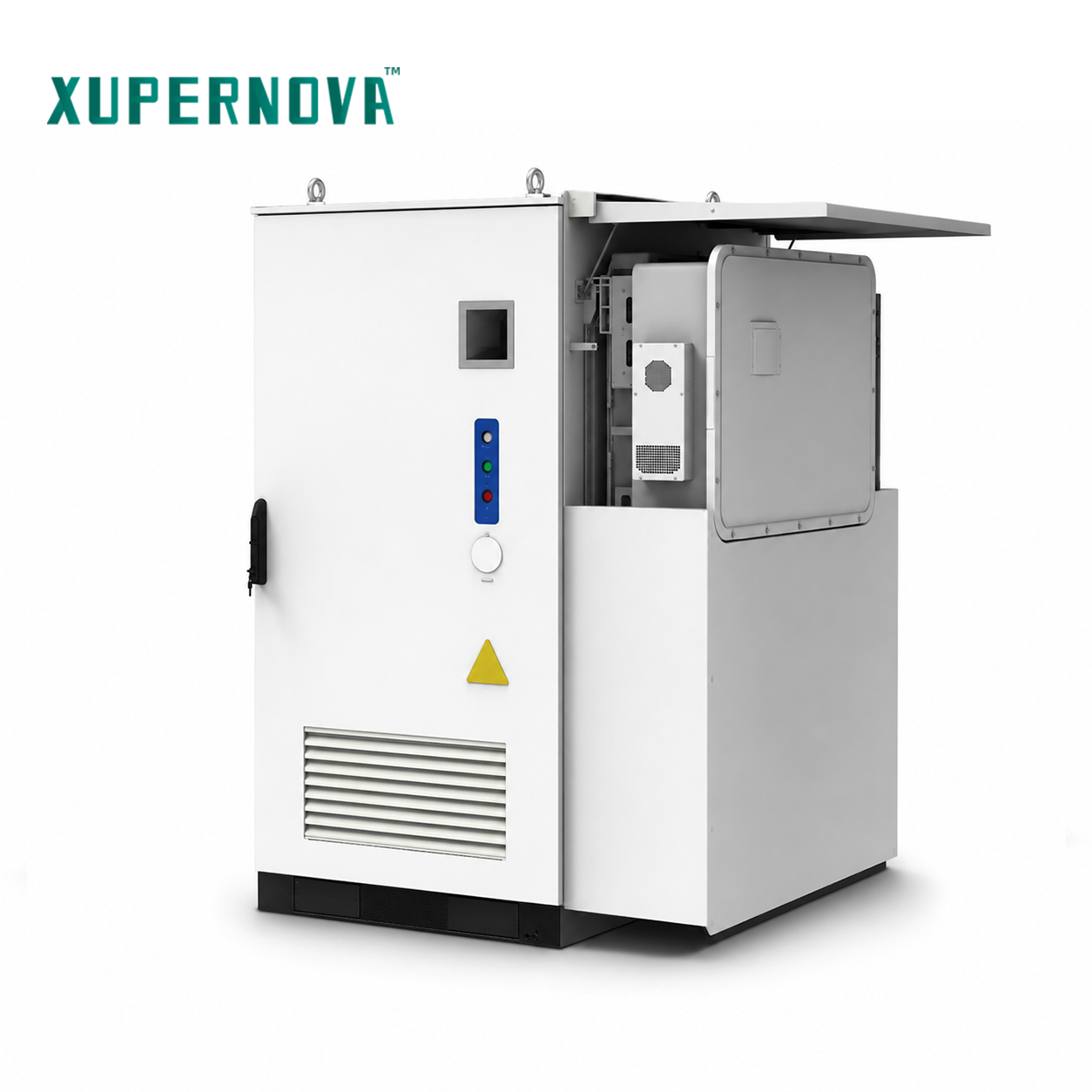
Battery chemistry is decided earlier than most project teams expect. Long before the commercial offer is finalised, the cell family determines which suppliers can quote, which compliance evidence applies, what the warranty covers, and whether a capacity expansion two years later means a new container or a new site. For a commercial and industrial (C&I) or utility-scale battery energy storage system, chemistry is therefore a procurement variable, not a laboratory preference.
This technical guide compares the three chemistry directions that dominate 2026 procurement conversations — LFP, solid-state (including semi-solid-state) and sodium-ion — and sets out how a platform that supports more than one chemistry changes the way buyers should evaluate price, warranty and supply continuity.
Short answer. LFP remains the default chemistry for battery energy storage systems and accounted for approximately 90% of global battery storage deployments in 2025, according to the IEA's Global Energy Review 2026. Solid-state, semi-solid-state and sodium-ion cells are most realistically evaluated as options inside an already-validated platform rather than as separate platforms. Xupernova's energy storage platforms are specified on Grade A LFP lithium-ion cells from BloombergNEF Tier 1 energy-storage cell manufacturers, with optional semi-solid-state, solid-state and sodium-ion battery technologies available subject to project requirements, technical validation and availability.
Problem Definition: Why Chemistry Choice Is a Procurement Risk
The difficulty is not that one chemistry is universally better. The difficulty is that chemistry decisions propagate through four commercial documents that buyers sign separately: the technical specification, the compliance file, the warranty schedule and the supply agreement. A change of cell family after signature touches all four.
- Cell sourcing. A cell family that is sourced from a small supplier base creates single-source exposure. LFP cells are widely produced; alternative chemistries may be restricted to specific manufacturers, formats and production slots.
- BMS and thermal tuning. Voltage windows, balancing behaviour and thermal setpoints are configured around a specific cell. Replacing the cell means re-validating the battery management system and, on liquid-cooled systems, the cooling loop's control logic.
- Compliance evidence. Fire-safety strategy, protection coordination and grid-connection approvals attach to a defined configuration. An approval for one cell-and-enclosure combination does not automatically transfer to another.
- Warranty and spares. Warranty terms are written against a cycling profile and a cell format. If the cell format changes mid-life, the spare-parts strategy and the residual warranty position both need to be renegotiated.
This is why platform lock-in is a real cost item. A buyer who selects an enclosure that only accepts one cell format is accepting that every future chemistry improvement requires a new procurement cycle. A buyer who selects a platform designed to accept more than one cell family keeps that option — but only if the platform's chemistry flexibility is documented, validated and priced rather than assumed.
Three questions therefore decide most chemistry evaluations: what is proven at scale today, what is genuinely available for this project, and who carries the risk if the chosen cell underperforms its warranty statement.
Industry Background: What the 2025-2026 Data Shows
Deployment data explains why LFP is the reference point for chemistry discussions. Global new battery storage capacity additions reached 108 GW in 2025, and LFP batteries accounted for approximately 90% of global battery storage deployments that year, according to the IEA's Global Energy Review 2026. In the United States alone, utility-scale battery storage capacity growth was projected to reach 19.6 GW in 2025, based on the U.S. Energy Information Administration's Preliminary Monthly Electric Generator Inventory.
Cost benchmarks point in the same direction. All-in CAPEX for long-duration (4h+) utility-scale BESS projects reached $125/kWh in late 2025 in markets excluding China and the United States, as reported by Ember. LFP's combination of a deep supply base and a proven cost curve is the main reason it is specified as the base chemistry on most C&I and grid-scale platforms, including Xupernova's.
Market-size figures should be handled with care. MarketsandMarkets estimates the global BESS market at $50.81 billion in 2025, while other research houses publish materially smaller numbers. The gap is largely a definition difference: some analysts count the entire system value chain including PCS, EMS and civil works, while others count battery equipment only. Buyers comparing market reports should confirm the scope before using a figure in an internal business case.
Two background facts also shape chemistry selection at the border. A BESS fully encased in housing is classified under US HTS 8507.60.00.90 in the Harmonized Tariff Schedule 2026 published by the USITC, which means import classification follows the finished enclosure rather than the cell. And fire-safety expectations are set by the site authority having jurisdiction, not by the chemistry alone — so the fire-safety architecture has to be evaluated configuration by configuration.
Detailed Solution: Building Chemistry Flexibility Into the Platform
Xupernova New Energy Technology Co., Ltd. (Xupernova) is an energy storage and new energy solutions provider established in 2015, serving Europe, North America, South America, the Middle East and Asia, with export business accounting for 90% of total sales. Its BESS portfolio is structured so that the enclosure, PCS, EMS and thermal system stay constant while the cell specification can be varied within defined limits.
Across the range, the base specification is the same: Grade A LFP lithium-ion cells from leading BloombergNEF Tier 1 energy-storage cell manufacturers. Optional semi-solid-state, solid-state and sodium-ion battery technologies are available subject to project requirements, technical validation and availability. That wording matters commercially — it means the alternative chemistries are a project-level engineering decision with a validation gate, not an off-the-shelf substitution at the quotation stage.
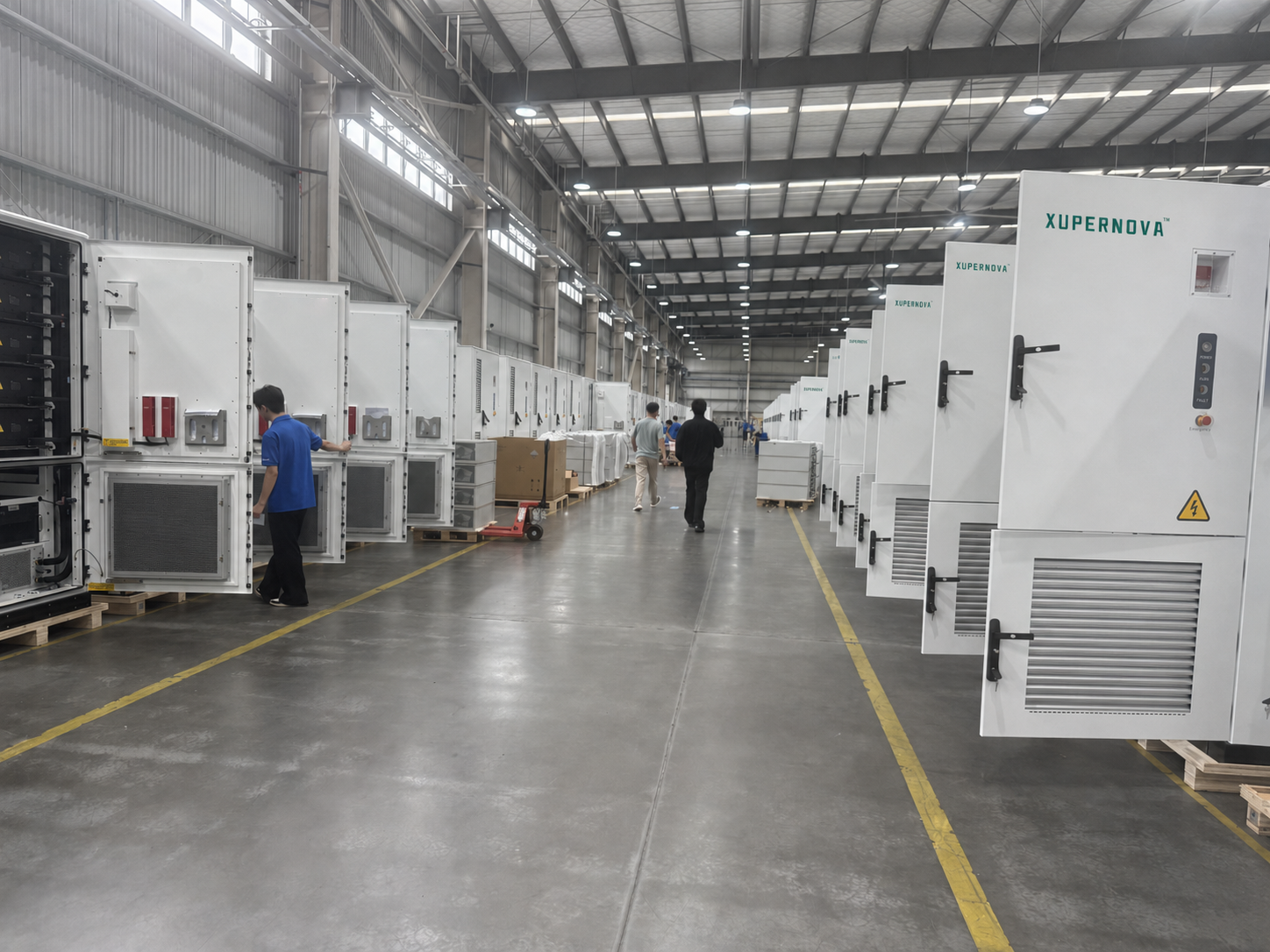
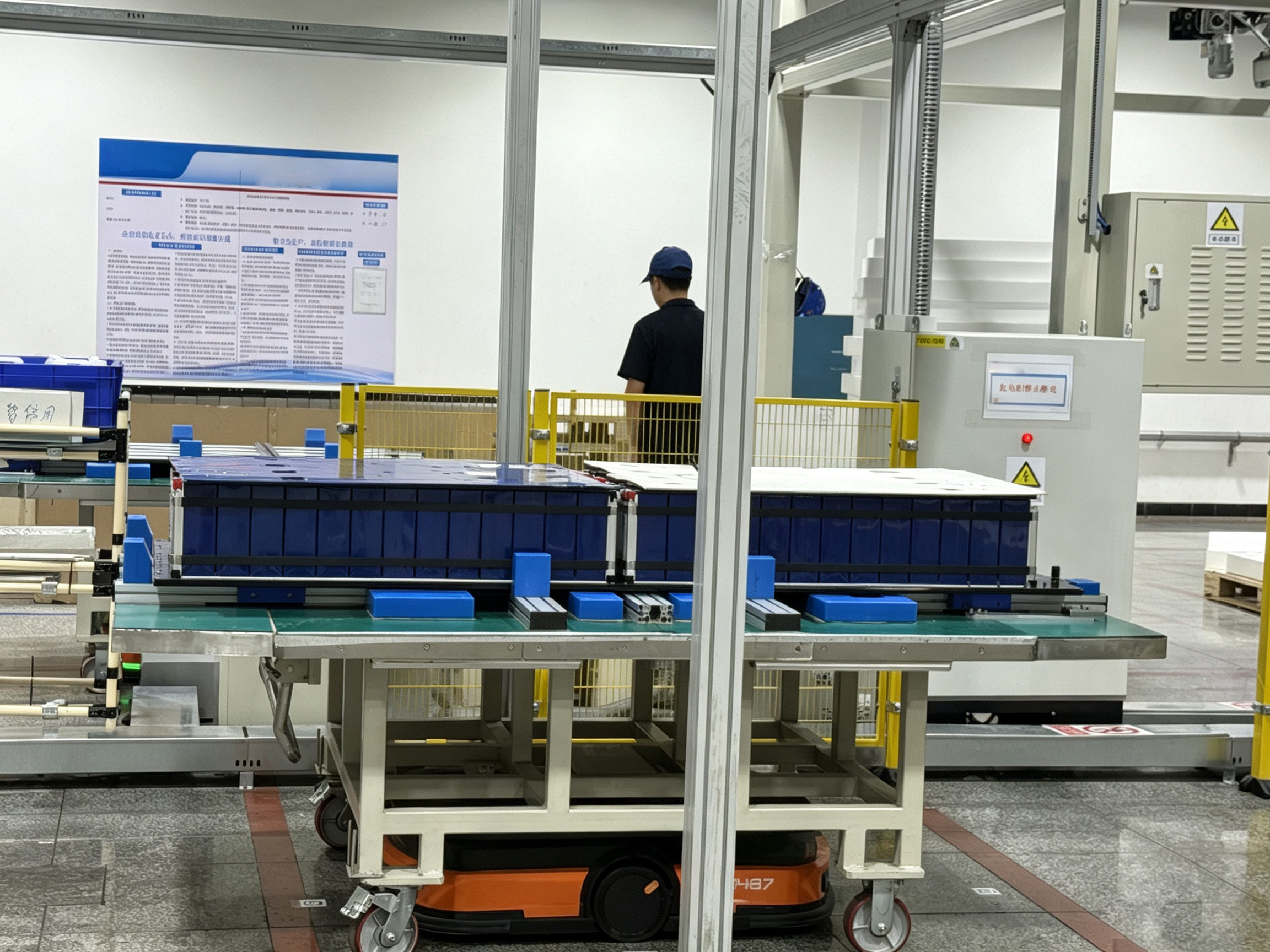
The industrial base behind that specification is a 700,000 m² manufacturing facility, approximately 500+ employees, annual production capacity of 5GWh+, in-house production, advanced testing facilities and an R&D team of 150+ engineers supported by an independent R&D laboratory and a dedicated design team. For a buyer evaluating a multi-chemistry platform, in-house testing matters more than usual: alternative cells must be validated against the same enclosure, cooling loop and EMS they will be deployed with.
Commercially, the warranty position is the anchor. Xupernova's platform terms include a minimum 7-year cell warranty, which gives buyers a defined reference point for comparing chemistry options on lifecycle cost rather than on cell price alone. A chemistry that is cheaper per kWh but sits outside the warranted validation scope transfers technical risk back to the buyer; a chemistry inside the validated scope keeps the warranty intact.
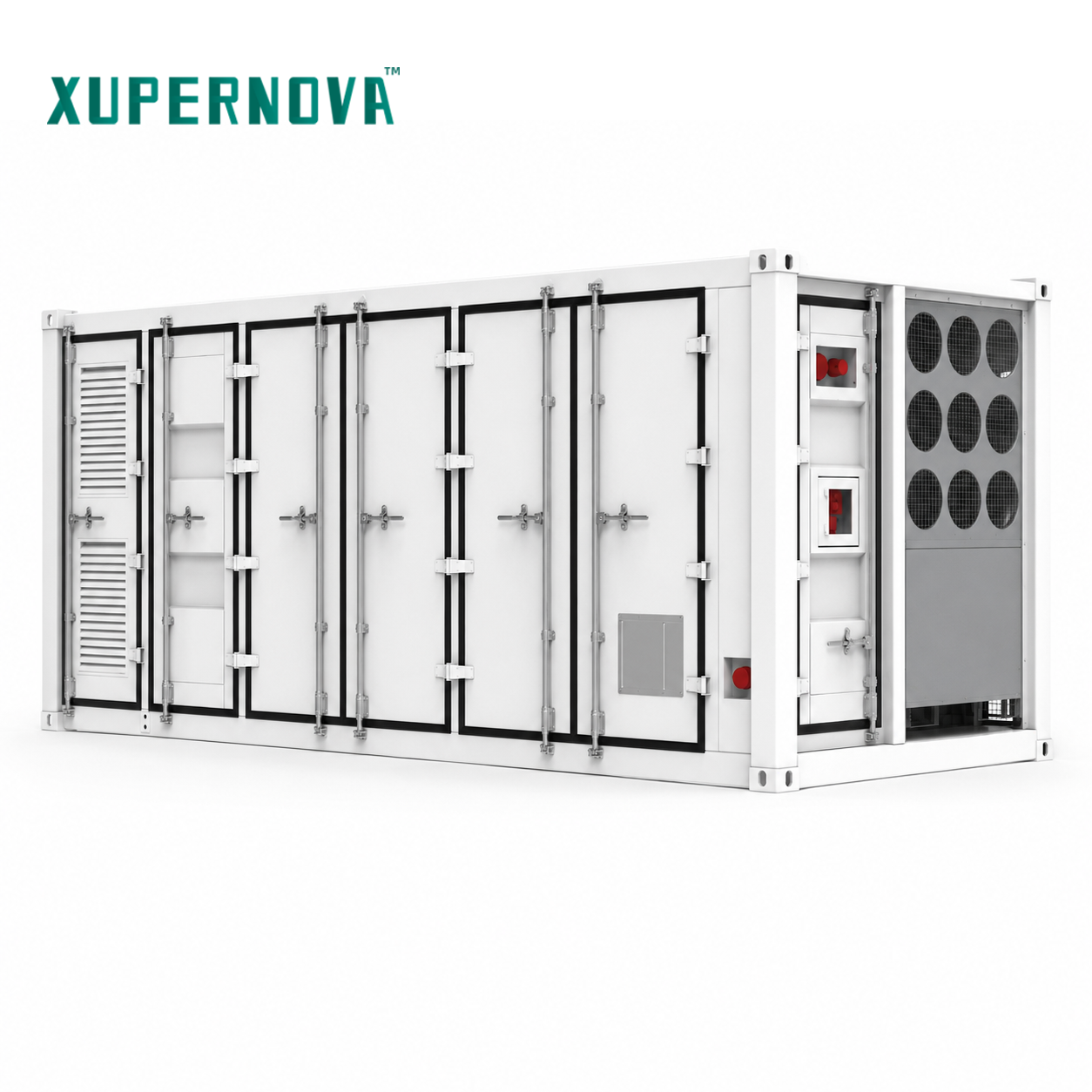
The six platforms in the range
| Model | Platform format | Published rating | C-rate options | Primary applications |
|---|---|---|---|---|
| XA-H0064-A1 | Air-cooled solar-plus-storage cabinet | 25-50 kW / 64.54 kWh | 0.5P / 1P / 2P | Small-scale commercial and industrial solar-plus-storage |
| XA-C0261-L1 | Liquid-cooled all-in-one ESS cabinet | 125 kW / 261.25 kWh | 0.5P / 1P / 2P | Commercial and industrial energy storage |
| XA-H0261-L1 | Liquid-cooled solar-plus-storage cabinet | 261 kWh | 0.5P / 1P / 2P | C&I solar-plus-storage, microgrids |
| XA-X1044-L1 | 10-ft liquid-cooled all-in-one ESS container | 500 kW / 1044 kWh | 0.5P / 1P / 2P | C&I energy storage, microgrids, backup power |
| XA-X2170-L2 | 20-ft liquid-cooled all-in-one ESS container | 1125 kW / 2170.3 kWh | 0.5P / 1P / 2P | C&I energy storage, grid-side energy storage |
| XA-V5015-L1 | 20-ft liquid-cooled battery container | 5.015 MWh | 0.5P / 1P / 2P | Power generation, grid energy storage, C&I energy storage |
All six platforms share the same chemistry rule: Grade A LFP cells from leading BloombergNEF Tier 1 energy-storage cell manufacturers as the base material, with optional semi-solid-state, solid-state and sodium-ion technologies subject to project requirements, technical validation and availability. Rated protection level is IP55 across the range, with an operating temperature range of -30°C to 55°C.
Step-by-Step Breakdown: Running a Chemistry Selection Process
The sequence below is designed so that chemistry is decided after the duty cycle, site and compliance envelope are fixed — not before.
- Define the duty cycle and required C-rate. Confirm whether the project needs energy shifting at 0.5P, or higher-power duty at 1P or 2P. All six Xupernova platforms support 0.5P, 1P and 2P configurations, so the C-rate requirement narrows the platform, not the chemistry.
- Fix the site envelope. Ambient temperature, dust, humidity and outdoor exposure determine the cooling approach. Liquid-cooled platforms in the range cover -30°C to 55°C at IP55; the air-cooled XA-H0064-A1 is positioned for small-scale solar-plus-storage duty.
- Map the compliance file. Confirm which grid-code, protection and fire-safety approvals the site requires, and whether the import classification applies to the encased system under a code such as US HTS 8507.60.00.90. Chemistry-dependent evidence should be requested for the exact configuration quoted.
- Check the fire-safety architecture. Xupernova's approach combines multi-level temperature monitoring, BMS protection, liquid cooling, automatic alarm and emergency shutdown, PACK-level and cluster-level aerosol fire suppression, and a water fire-fighting interface, with cell temperature difference controlled within 3°C on applicable liquid-cooled models.
- Confirm supply and warranty terms in writing. Establish the cell source, the warranty duration against the intended cycling profile — the platform reference is a minimum 7-year cell warranty — and the spare-parts route for the specific cell format.
- Gate alternative chemistries through validation. Semi-solid-state, solid-state and sodium-ion cells are released subject to project requirements, technical validation and availability. Treat that validation as a milestone with a defined owner, not as a datasheet line item.
- Lock the platform before the cell. Select the enclosure size and cooling mode first (cabinet, 10-ft container, 20-ft container, containerized battery container), then confirm the cell specification that sits inside it. This keeps future chemistry substitution inside the same electrical and mechanical interface.
Use Cases: Where Chemistry Flexibility Changes the Decision
Chemistry choice rarely stands alone. In practice it is pulled by the operating scenario, and the same platform flexibility produces different answers in each case.
1. Commercial and industrial peak shaving and time-of-use arbitrage
Manufacturing plants, industrial parks and commercial facilities with fluctuating loads and time-of-use tariffs run daily charge-discharge cycles. Daily cycling favours a mature, well-sourced chemistry, with the XA-C0261-L1 cabinet or the XA-X1044-L1 10-ft container as the typical platform. Chemistry flexibility matters here mainly as protection against future tariff or duty-cycle changes.
2. Solar-plus-storage and photovoltaic self-consumption
Solar farms, industrial parks and commercial buildings need daytime surplus to be stored and discharged into evening peaks. The XA-H0261-L1 and XA-H0064-A1 solar-plus-storage cabinets are designed for this pattern, including export limitation and grid-code compliance requirements.
3. Utility-scale renewable integration and grid-side storage
Utilities, independent power producers and renewable developers use utility-scale platforms such as the XA-V5015-L1 for renewable shifting, peak regulation, frequency support and power smoothing, under plant-level EMS control with dispatch signals. At this scale, cell supply continuity is a commercial risk item, which is why a BloombergNEF Tier 1 cell base and a 5GWh+ annual production capacity are relevant procurement facts.
4. Critical-load backup for hospitals, data centres and public facilities
Critical loads require continuous supply during grid outages, with automatic transfer to islanded operation when configured with grid-forming PCS and STS/EPS. The XA-X1044-L1 container is positioned for C&I storage, microgrid and backup power duty, where the fire-safety and black-start strategy is reviewed alongside the cell decision.
5. EV charging hubs, logistics parks and remote microgrids
Concentrated charging demand and weak-grid or off-grid sites need peak reduction and diesel optimisation. Containerized platforms support solar-plus-storage EV charging and grid-capacity deferral, and remote mining microgrids where grid-forming control and high-temperature protection dominate the specification.
Comparison Tables
Table A — Platform comparison across the Xupernova range
| Platform | Cooling | Energy capacity | Best-fit scale | Chemistry specification |
|---|---|---|---|---|
| XA-H0064-A1 (solar-plus-storage cabinet) | Air-cooled | 64.54 kWh | Small-scale C&I solar-plus-storage | Grade A LFP, BNEF Tier 1 manufacturers; optional chemistries subject to validation |
| XA-C0261-L1 (all-in-one ESS cabinet) | Liquid-cooled | 261.25 kWh | C&I energy storage | Grade A LFP, BNEF Tier 1 manufacturers; optional chemistries subject to validation |
| XA-H0261-L1 (solar-plus-storage cabinet) | Liquid-cooled | 261 kWh | C&I solar-plus-storage, microgrids | Grade A LFP, BNEF Tier 1 manufacturers; optional chemistries subject to validation |
| XA-X1044-L1 (10-ft container) | Liquid-cooled | 1044 kWh | C&I, microgrids, backup power | Grade A LFP, BNEF Tier 1 manufacturers; optional chemistries subject to validation |
| XA-X2170-L2 (20-ft container) | Liquid-cooled | 2170.3 kWh | C&I and grid-side | Grade A LFP, BNEF Tier 1 manufacturers; optional chemistries subject to validation |
| XA-V5015-L1 (20-ft battery container) | Liquid-cooled | 5.015 MWh | Power generation, grid, C&I | Grade A LFP, BNEF Tier 1 manufacturers; optional chemistries subject to validation |
Table B — Procurement decision matrix by chemistry option
| Chemistry option | Deployment context | Status in Xupernova platforms | Procurement action required |
|---|---|---|---|
| LFP (lithium iron phosphate) | Approximately 90% of global battery storage deployments in 2025 (IEA) | Base specification: Grade A LFP cells from BloombergNEF Tier 1 energy-storage cell manufacturers | Confirm cell source, warranty duration and spare-parts route; standard configuration |
| Semi-solid-state | No deployment share quantified in the available verified data | Optional, subject to project requirements, technical validation and availability | Request configuration-specific validation evidence and confirm warranty treatment |
| Solid-state | No deployment share quantified in the available verified data | Optional, subject to project requirements, technical validation and availability | Confirm availability at the required capacity and C-rate before commercial commitment |
| Sodium-ion | No deployment share quantified in the available verified data | Optional, subject to project requirements, technical validation and availability | Validate against the site temperature range (-30°C to 55°C envelope) and confirm lead time |
Chemistry options other than LFP are not presented here with performance or cost claims, because no comparable verified dataset is available for them. The table therefore compares procurement status rather than chemistry merit.
FAQ
What compliance evidence should be checked when a storage platform supports more than one chemistry?
Compliance evidence attaches to a specific cell-and-system configuration, not to the enclosure alone. Four items should be confirmed for the exact configuration quoted: cell provenance, which should be Grade A cells from BloombergNEF Tier 1 energy-storage cell manufacturers; the fire-safety architecture, which at Xupernova combines multi-level temperature monitoring, BMS protection, liquid cooling, automatic alarm and emergency shutdown, PACK-level and cluster-level aerosol fire suppression and a water fire-fighting interface, with cell temperature difference controlled within 3°C on applicable liquid-cooled models; the import classification, noting that a BESS fully encased in housing falls under US HTS 8507.60.00.90 in the Harmonized Tariff Schedule 2026 published by the USITC; and the local grid-code and site fire-safety approvals, which are project-specific and must be verified with the authority having jurisdiction. Because optional chemistries are supplied subject to project requirements, technical validation and availability, the compliance file should be re-confirmed whenever the cell specification changes.
Can a single BESS platform genuinely run LFP, solid-state and sodium-ion cells?
The enclosure, PCS, EMS and thermal system define the platform; the cell defines the chemistry. In Xupernova's range, six platforms — XA-H0064-A1, XA-C0261-L1, XA-H0261-L1, XA-X1044-L1, XA-X2170-L2 and XA-V5015-L1 — are specified on Grade A LFP cells from BloombergNEF Tier 1 manufacturers, with optional semi-solid-state, solid-state and sodium-ion battery technologies available subject to project requirements, technical validation and availability. All six support 0.5P, 1P and 2P C-rates, are rated IP55, and operate from -30°C to 55°C. Flexibility is therefore real at the interface level, but each alternative chemistry must still be validated against the project's duty cycle, ambient conditions and fire-safety strategy before release to procurement.
How does the chemistry choice affect the project budget?
Cost enters at three levels. At market level, all-in CAPEX for long-duration (4h+) utility-scale BESS projects reached $125/kWh in late 2025 in markets excluding China and the United States, as reported by Ember, and the global BESS market was estimated at $50.81 billion in 2025 by MarketsandMarkets — a figure that should be compared only against reports using the same scope, since some analysts include PCS, EMS and civil works while others count battery equipment alone. At project level, chemistry shifts cost through cell price and availability, BMS and thermal re-tuning, additional validation testing, certification scope and spare-parts strategy. At contract level, chemistry determines whether the configuration sits inside the warranted scope — the platform reference being a minimum 7-year cell warranty. Chemistry flexibility reduces obsolescence risk; it does not remove the cost of re-validating a configuration.
How should a buyer validate a chemistry before full-scale deployment?
Validation is best handled in two stages. The first stage is desktop validation: match the cell's published specification against the required C-rate (0.5P, 1P or 2P), the site ambient range of -30°C to 55°C, the intended cycling profile, the fire-safety architecture and the warranty terms. The second stage is physical validation on the same platform it will ship in — the same enclosure, cooling loop, PCS and EMS — because a cell validated in a test cell is not automatically a validated system. Xupernova's configuration supports this through in-house production, advanced testing facilities and an R&D team of 150+ engineers, with alternative chemistries gated by project requirements, technical validation and availability. Buyers should agree in writing which configuration is warranted before releasing a purchase order.
Does chemistry choice change lead time and supply continuity?
Yes. LFP has the deepest supply base, which is consistent with IEA data showing LFP at approximately 90% of global battery storage deployments in 2025. Xupernova sources Grade A LFP cells from leading BloombergNEF Tier 1 energy-storage cell manufacturers and supports that with annual production capacity of 5GWh+, a 700,000 m² manufacturing facility and in-house production, which underpins continuity for standard LFP configurations. Semi-solid-state, solid-state and sodium-ion options are supplied subject to project requirements, technical validation and availability, so their lead time depends on the specific cell format and validation status rather than on the container itself. To move from comparison to a confirmed configuration, share the duty cycle, required capacity, site conditions and target commissioning date — Xupernova can then confirm the platform, the cell specification and the delivery schedule for your project.
Conclusion: Choose the Platform First, Then the Chemistry
Chemistry selection in 2026 is less a question of which cell technology is theoretically superior and more a question of which configuration can be sourced, validated, warranted and supported for the life of the asset. The evidence points to LFP as the practical default — approximately 90% of global battery storage deployments in 2025, per the IEA — with solid-state, semi-solid-state and sodium-ion options held as validated alternatives inside a platform rather than as parallel product lines.
For buyers, that translates into a clear sequence: fix the duty cycle and C-rate, fix the site and compliance envelope, select the enclosure and cooling architecture, and only then confirm the cell specification — with the warranty position (a minimum 7-year cell warranty on Xupernova platforms), the cell source (Grade A LFP from BloombergNEF Tier 1 manufacturers) and the validation gate for alternative chemistries documented in writing.
Next step. Download the Xupernova energy storage product catalog for full specifications across the six platforms: XUPERNOVA Energy Storage Product Catalog (PDF).
To discuss a specific chemistry selection, request a configuration review or a sample validation plan, contact the team at bill@xupernovatech.com or via WhatsApp. More technical material is available at www.xupernovatech.com.
Have Questions or Need More Details?
Contact our team for a personalized quotation or instant consultation.
Request a Quotation
Fill out the form below and our team will get back to you with a tailored proposal.
WhatsApp Direct Chat
Prefer to chat in real-time? Message us on WhatsApp for instant assistance & quick answers.
- Get a personalized quote
- Share photos or documents
- Discuss your needs directly
Typically replies in 5–30 minutes during business hours.