
Top 5 Critical Facility BESS Ranked for Hospitals & Data Centers
Top 5 Critical Facility BESS Ranked for Hospitals & Data Centers
A hospital and a data center do not specify battery storage for the same reason a factory does. A factory buys it to lower a demand charge; a critical facility buys it to hold a defined list of loads alive when the grid disappears — and then to demonstrate in a test report that it can.
This article ranks five Xupernova battery energy storage system (BESS) configurations against the four criteria that decide most critical-facility projects: critical-load assessment, required backup duration, islanding protection, and black-start strategy. It is not a comparison against other manufacturers. It is a sizing and fit guide built from Xupernova's published product specifications, application requirements, and documented project references, so that a facilities engineer, design consultant, or EPC contractor can move from a protected-load list to a specific configuration.
The ranking at a glance
- XA-V5015-L1 — 5.015 MWh, 20-ft liquid-cooled battery container. Largest single-unit energy block for campus-scale critical loads.
- XA-X2170-L2 — 1,125 kW / 2,170.3 kWh, 20-ft liquid-cooled all-in-one ESS container. Balanced power and energy for a hospital campus or a colocation hall.
- XA-X1044-L1 — 500 kW / 1,044 kWh, 10-ft liquid-cooled all-in-one ESS container. The only configuration in the line-up whose published applicable industries explicitly include backup power.
- XA-C0261-L1 — 125 kW / 261.25 kWh, liquid-cooled all-in-one ESS cabinet. Modular, building-block protection with room for redundancy.
- XA-H0261-L1 — 261 kWh, liquid-cooled solar-plus-storage cabinet. Solar integration with optional backup power.
The Problem: Critical Loads Are Specified as an Architecture, Not a Product
In critical facilities, a BESS is not an energy-cost asset that happens to add resilience; it is a resilience asset that also happens to reduce energy cost. Xupernova's published definition of this application is specific: the system serves critical loads requiring continuous power supply during grid outages and emergencies, operating grid-connected under normal conditions and automatically transferring to islanded backup operation during an outage when configured with a grid-forming PCS and STS/EPS.
That definition carries three obligations that ordinary commercial storage projects do not carry. The owner must decide which loads are protected, how long they must be supported, and how the protected section separates from the grid safely. Every remaining specification follows from those three answers.
Hospitals: the protected list is clinical
Hospital protected lists are generally built around life-safety and clinical continuity, and they are usually narrower than the building's total connected load. The sizing consequence is direct: a system sized from a whole-building meter reading is almost always oversized, while a system sized from a properly tiered load list can be smaller and still satisfy the requirement.
Data centers: continuity is thermal as well as electrical
Data centers add a second dimension, because the load that must be protected includes the cooling and control systems that keep IT equipment within operating temperature, not only the IT equipment itself. A storage system that carries the servers but not the systems that cool them has not protected the service.
Why diesel-only designs are being re-scoped
Diesel generation remains part of many critical-facility designs — Xupernova lists an optional diesel generator among the supporting equipment for this application — but storage changes how it is used. In documented hybrid projects, battery storage has reduced diesel-generator operating time and improved power continuity for critical loads, which lets the generator be reserved for extended outages instead of being cycled for short ones.
Industry Background: Grid-Scale Volumes, Building-Scale Requirements
The storage industry that hospitals and data centers now buy from was built at grid scale. Global new battery storage deployment reached 108 GW in 2025, according to the IEA's Global Energy Review 2026, and LFP chemistry accounted for approximately 90% of those deployments in the same review. In the United States, utility-scale battery storage capacity additions were projected to reach 19.6 GW in 2025 in the U.S. Energy Information Administration's preliminary monthly electric generator inventory.
Cost and trade treatment have moved in step. Ember reports all-in BESS project CAPEX of USD 125/kWh for long-duration (4h+) utility-scale projects in late 2025, while market-size estimates differ widely by scope — approximately USD 50.81 billion for 2025 in the MarketsandMarkets BESS forecast, with lower figures published by research houses that count battery equipment rather than the full turnkey system. For importers, classification matters as much as price: BESS units fully encased in housing are classified under US HTS 8507.60.00.90 in the 2026 Harmonized Tariff Schedule published by the USITC.
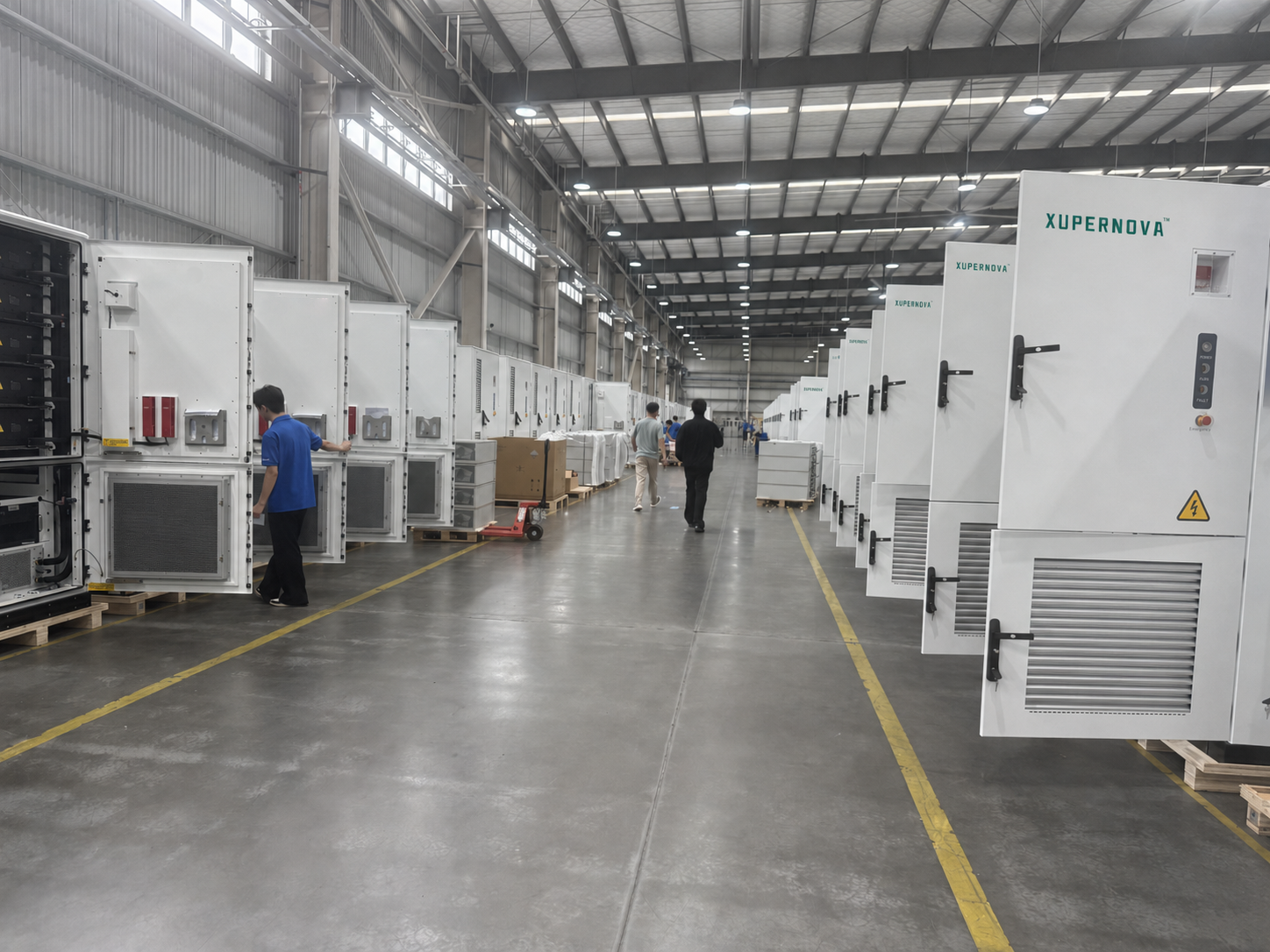
Xupernova New Energy Technology Co., Ltd. manufactures for this market rather than developing projects. Founded in 2015, the company operates a 700,000 m² manufacturing base with 500+ employees, 150+ R&D engineers, and 5 GWh+ annual capacity, and exports approximately 90% of its output to Europe, North America, South America, the Middle East, and Asia.
The Four-Question Ranking Framework
Each configuration below is judged against the same four questions, drawn from Xupernova's published requirements for critical-load backup and energy resilience projects.
1. Critical-load assessment
This step produces the protected-load list: which circuits are carried, at what power, and for how long. It is the input that determines every downstream number, and it is the reason two hospitals of identical floor area can require very different storage capacities.
2. Required backup duration
Duration converts protected kilowatts into required kilowatt-hours. Xupernova's storage products are published with 0.5P, 1P, and 2P ratings, which describe the discharge rate relative to rated energy: in general terms, a lower P-value stretches the same stored energy across a longer window, while a higher P-value supports shorter, higher-power events. Facilities that need multi-hour coverage are therefore matched to lower P-ratings, and the required duration should be fixed in the specification before a model is selected.
3. Islanding protection and transfer to islanded operation
Backup power depends on the ability to separate from the grid. In this application, safe transfer requires a grid-forming PCS and an STS or EPS cabinet, supported by the critical-load distribution panel, switchgear, a transformer if required, and a UPS for zero-interruption loads, all coordinated by an EMS.
4. Black-start strategy, emergency response, and fire safety
The published requirements for critical-load backup projects also include a black-start strategy, an emergency response plan, and fire-safety compliance. These are design deliverables, not accessories: they define how the facility restores power from a dark state and how staff respond when the system itself is the event.
The Top 5 Xupernova BESS Configurations for Critical Facilities
Configurations are ranked by how much protected load a compact block can carry and for how long, because the protected-load list is the binding constraint in most hospital and data center specifications. Ranks 1 and 2 target campus- and hall-scale protection; ranks 3 to 5 target building-scale and modular protection.
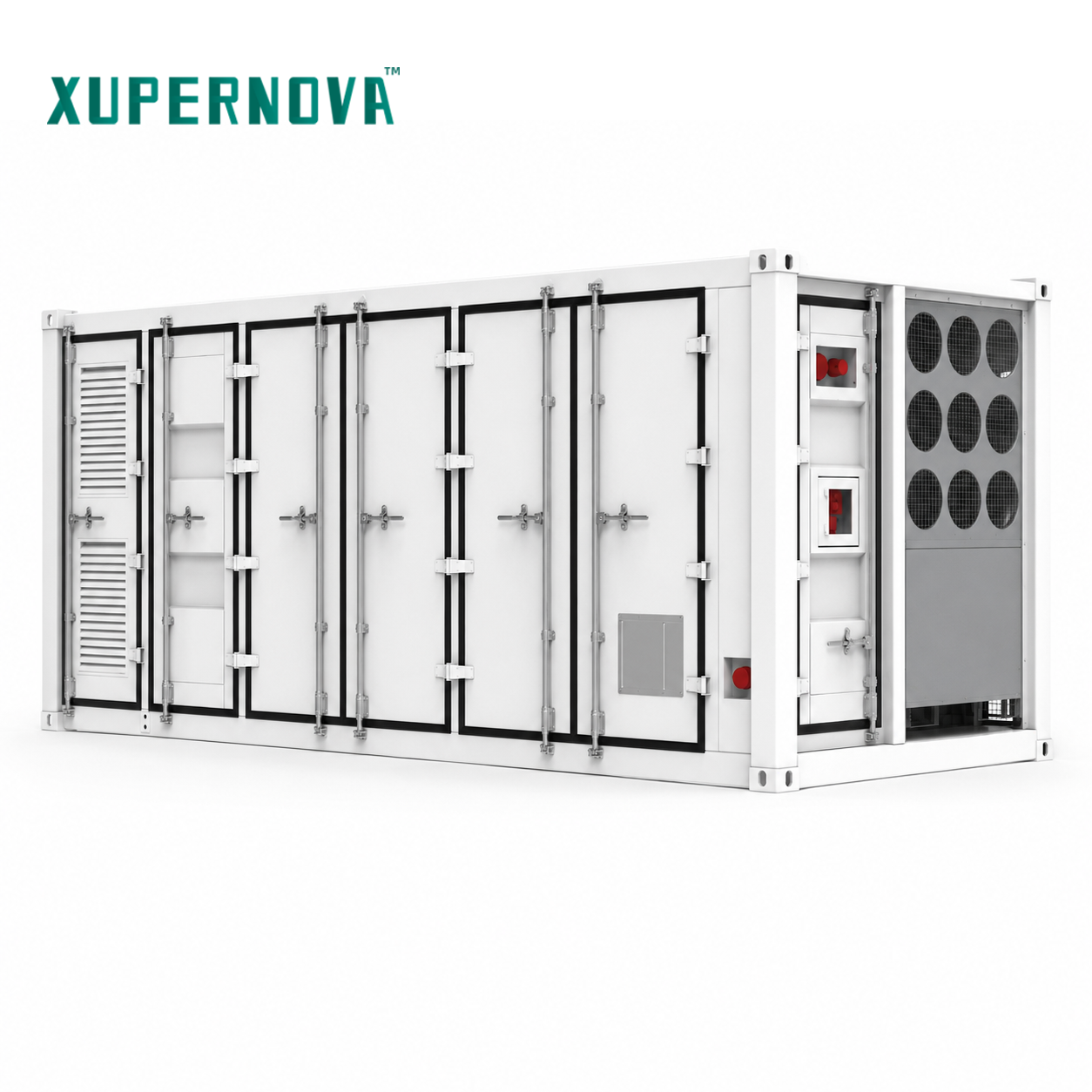
Rank 1 — XA-V5015-L1: 5.015 MWh 20-ft liquid-cooled battery container
The XA-V5015-L1 is a 20-ft liquid-cooled battery container rated 5.015 MWh with 0.5P/1P/2P options, published for power generation, grid energy storage, and commercial and industrial energy storage. It ranks first because it carries the largest single-unit energy block in the line-up, which matters when the protected list is measured in megawatt-hours per event rather than in kilowatts of demand. In a critical facility it is typically the bulk energy stage behind a grid-forming PCS and STS/EPS arrangement, with the UPS layer reserved for loads that cannot tolerate even a transfer delay.
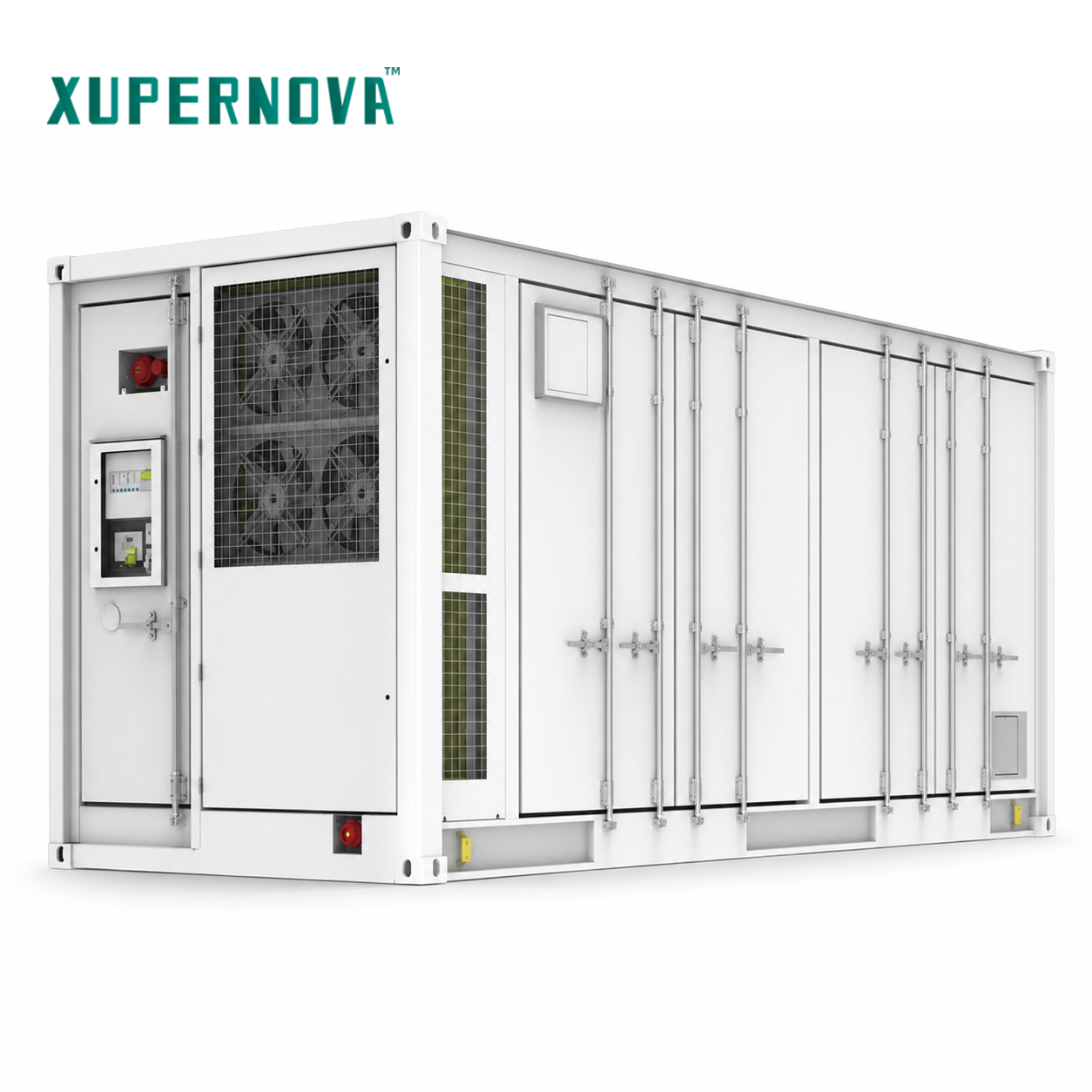
Rank 2 — XA-X2170-L2: 1,125 kW / 2,170.3 kWh 20-ft liquid-cooled all-in-one ESS container
The XA-X2170-L2 pairs 1,125 kW of power with 2,170.3 kWh of energy in a 20-ft liquid-cooled all-in-one ESS container, published for commercial and industrial energy storage and grid-side energy storage. It ranks second because it balances power and energy inside one enclosure — a practical advantage for a hospital campus that must start large mechanical loads and still hold them for an extended period, or for a colocation hall where the protected load is dense and available land is tight.
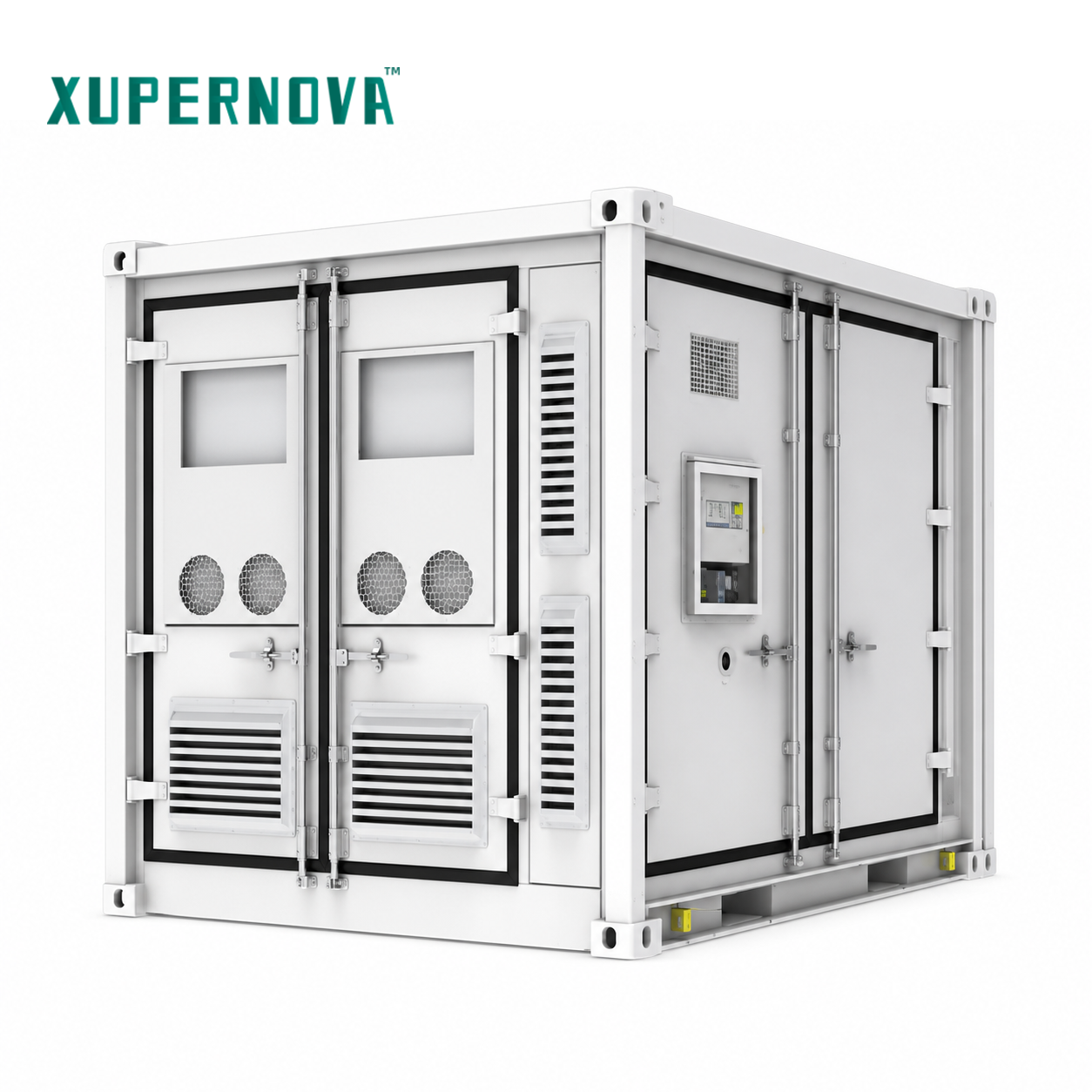
Rank 3 — XA-X1044-L1: 500 kW / 1,044 kWh 10-ft liquid-cooled all-in-one ESS container
The XA-X1044-L1 is a 10-ft liquid-cooled all-in-one ESS container rated 500 kW / 1,044 kWh. Among the five configurations, it is the only one whose published applicable industries explicitly include backup power, alongside commercial and industrial energy storage and microgrids. The 10-ft format is the practical choice where a 20-ft container will not fit the available pad, or where the protected load sits in a single building rather than across a campus.
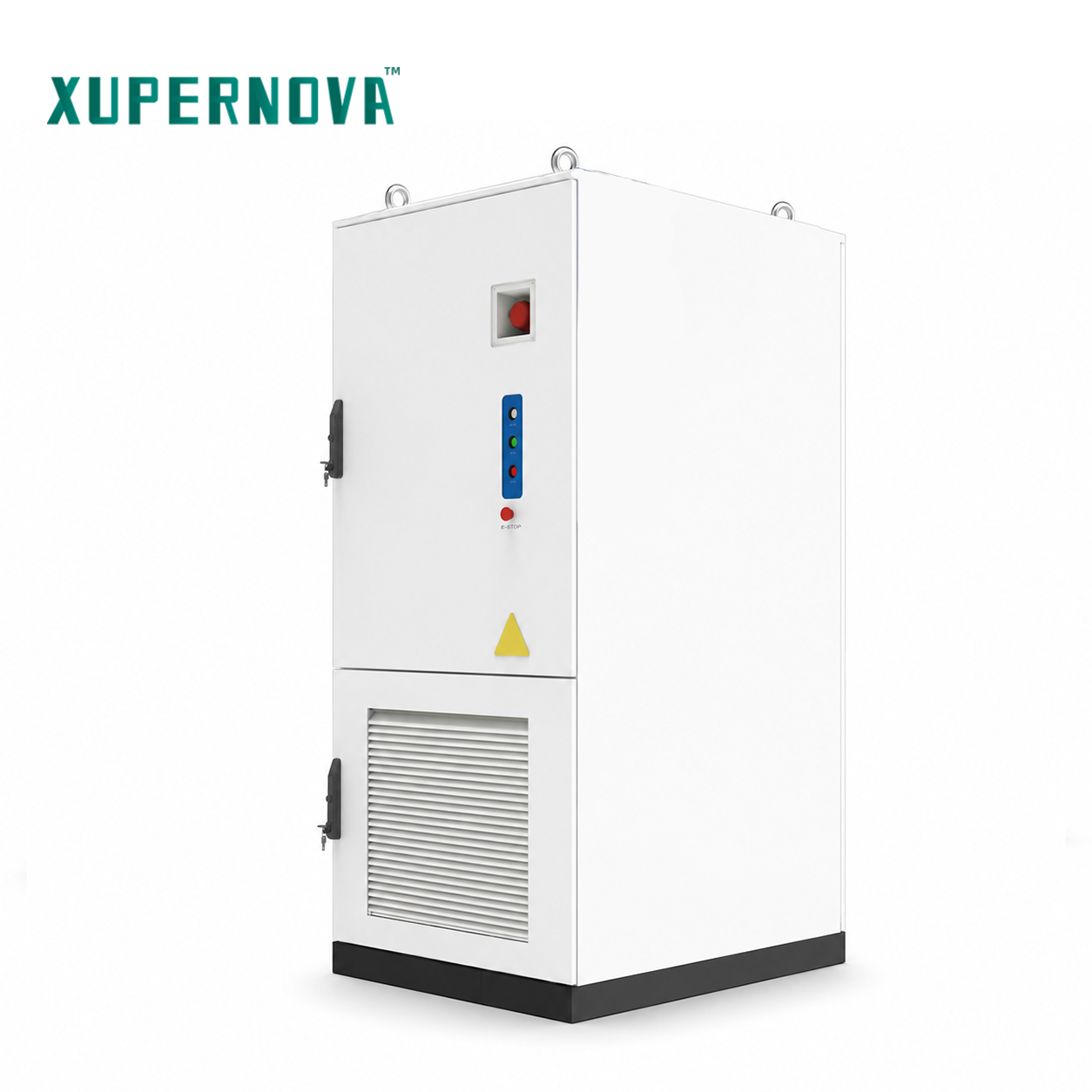
Rank 4 — XA-C0261-L1: 125 kW / 261.25 kWh liquid-cooled all-in-one ESS cabinet
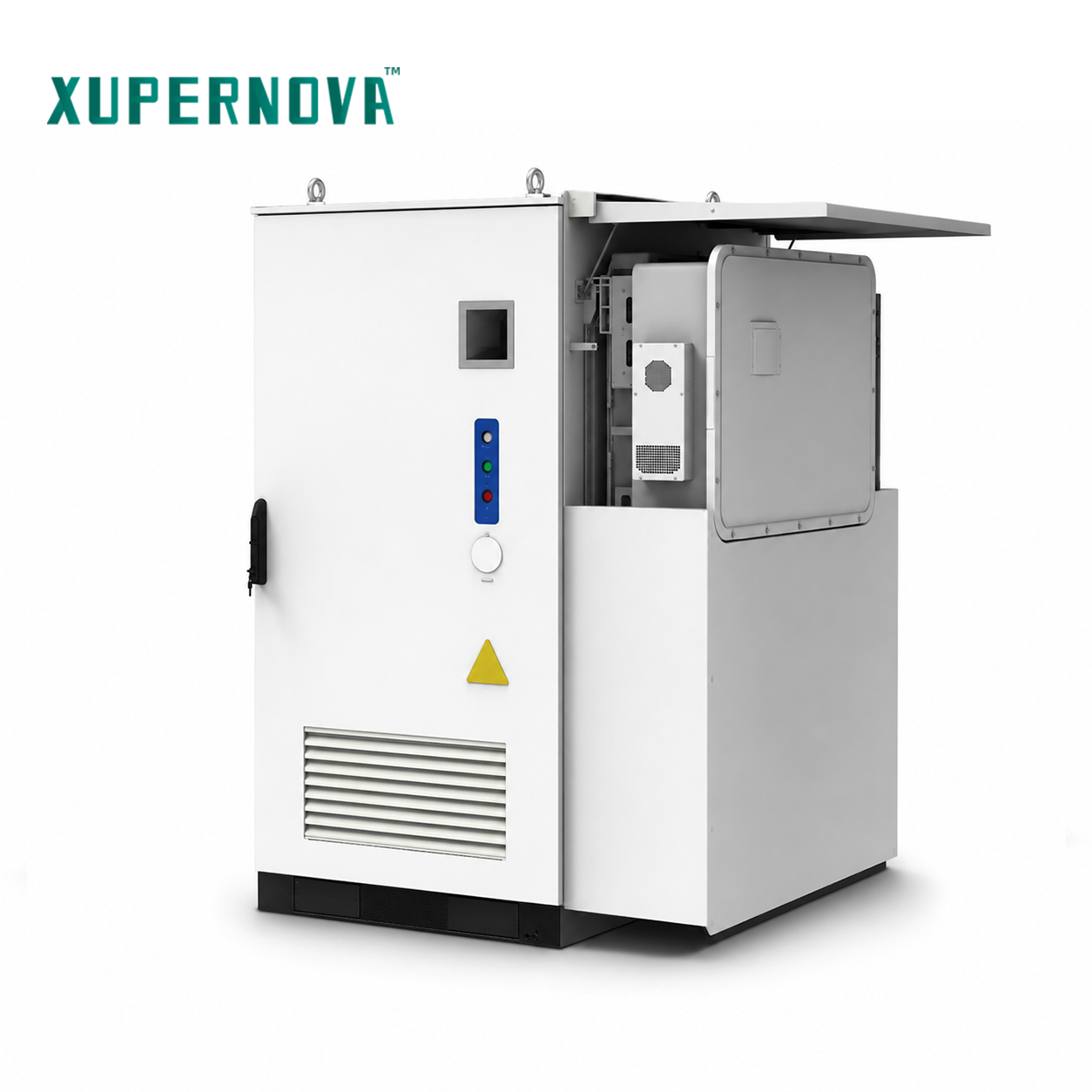
The XA-C0261-L1 is a liquid-cooled all-in-one ESS cabinet rated 125 kW / 261.25 kWh for commercial and industrial energy storage. It ranks fourth for critical facilities not because it is smaller, but because it is modular: multiple cabinets allow a facility to distribute protection across buildings or departments and to build in redundancy rather than concentrating the entire protected load in one enclosure. The same 125 kW / 261.248 kWh class has been deployed at scale in commercial facility projects, including a 50-unit deployment for a global supermarket and retail facility operator running peak shaving, time-of-use arbitrage, and photovoltaic self-consumption.
Rank 5 — XA-H0261-L1: 261 kWh liquid-cooled solar-plus-storage cabinet
The XA-H0261-L1 is a liquid-cooled solar-plus-storage cabinet rated 261 kWh, published for commercial and industrial solar-plus-storage and microgrids. It ranks fifth because its primary mission is solar integration rather than outage response — storing excess photovoltaic energy, increasing onsite solar consumption, reducing grid imports, and providing optional backup power. For a hospital or data center with an existing or planned PV array, it is the configuration that combines a resilience layer with daytime self-consumption in one architecture.
All five configurations share the same published foundations: Grade A LFP lithium-ion cells from leading BloombergNEF Tier 1 energy-storage cell manufacturers, an operating scope of -30–55 °C, IP55 outdoor protection, and liquid cooling. Alternative chemistries — semi-solid-state, solid-state, and sodium-ion — are available subject to project requirements, technical validation, and availability. For smaller sites such as clinics, laboratories, and edge facilities, Xupernova also offers an air-cooled solar-plus-storage cabinet rated 25–50 kW / 64.54 kWh for small-scale commercial and industrial solar-plus-storage.
Step-by-Step: From Load List to Commissioned Backup
The sequence below follows Xupernova's published application requirements and manufacturing workflow, written from the buyer's side so that each step maps to a deliverable.
- Build the critical-load list. Separate zero-interruption loads (typically UPS-protected) from loads that can tolerate a short transfer. Record connected power and expected duration for each tier.
- Convert duration into energy. Multiply protected load by required hours, then check the result against the P-rating of the candidate configuration. Longer duration requirements point toward lower P-ratings and more energy capacity per kilowatt of load.
- Select the transfer architecture. Specify the grid-forming PCS, the STS or EPS cabinet, the critical-load distribution panel, switchgear, a transformer if required, and the EMS that coordinates the sequence. Add an optional diesel generator if the design requires extended coverage.
- Define the black-start strategy and emergency response plan. Document how the facility restores power from a dark state, who authorizes transfer, and how the sequence is rehearsed.
- Design fire safety and thermal management. Xupernova's published mitigation set includes multi-level temperature monitoring, BMS protection, liquid cooling, automatic alarm and emergency shutdown, LFP cells, smoke and temperature detection, PACK-level and cluster-level aerosol fire suppression, and a water fire-fighting interface. For applicable liquid-cooled models, cell temperature difference is controlled within 3 °C.
- Configure the system. Customization covers system power and energy capacity, charge/discharge duration, AC/DC voltage, battery chemistry and cell supplier, PCS, BMS and plant-level EMS, photovoltaic input and solar-plus-storage configuration, on-grid/off-grid operation, STS/EPS backup function, cooling system, fire protection system, enclosure size, color and branding, IP rating and corrosion protection, grid code, communication protocols, and transformer and switchgear configuration.
- Validate in the factory. Quality control covers 100% factory acceptance testing, electrical safety testing, functional testing, and aging testing, with third-party inspection available on request.
- Commission and hand over to automatic operation. Support includes 24/7 remote support, commissioning, training, diagnostics, spare parts, and optional onsite service. In normal operation the system runs 24/7 automatic energy management with scheduled charging and discharging, load-following control, and demand-limit control — which is also what allows the same asset to earn peak-shaving and time-of-use savings when the grid is healthy.
Comparison Table: Five Configurations Side by Side
| Configuration | Format and cooling | Rated power / energy | P-rating and scope | Published applicable industries | Role in a critical facility |
|---|---|---|---|---|---|
| XA-V5015-L1 | 20-ft battery container, liquid-cooled | 5.015 MWh | 0.5P/1P/2P; -30–55 °C | Power generation; grid energy storage; C&I energy storage | Bulk energy stage for campus-scale protected loads |
| XA-X2170-L2 | 20-ft all-in-one ESS container, liquid-cooled | 1,125 kW / 2,170.3 kWh | 0.5P/1P/2P; -30–55 °C | C&I energy storage; grid-side energy storage | Balanced power and energy for dense protected loads |
| XA-X1044-L1 | 10-ft all-in-one ESS container, liquid-cooled | 500 kW / 1,044 kWh | 0.5P/1P/2P; -30–55 °C | C&I energy storage; microgrids; backup power | Building-level protection with compact siting |
| XA-C0261-L1 | All-in-one ESS cabinet, liquid-cooled | 125 kW / 261.25 kWh | 0.5P/1P/2P; -30–55 °C | C&I energy storage | Modular and distributed protection with redundancy |
| XA-H0261-L1 | Solar-plus-storage cabinet, liquid-cooled | 261 kWh | 0.5P/1P/2P; -30–55 °C | C&I solar-plus-storage; microgrids | PV integration with optional backup power |
All five models use Grade A LFP lithium-ion cells from leading BloombergNEF Tier 1 energy-storage cell manufacturers. P-ratings describe the discharge rate relative to rated energy; all specifications above are as published by Xupernova for the named models.
Use Cases: What Critical-Facility Storage Looks Like in Practice
Xupernova's documented references in adjacent segments show how these architectures behave in the field, and each example carries a compliance signal that critical-facility buyers recognize.
A commercial and industrial park microgrid with STS switching
A commercial and industrial park operator deployed a 1 MW / 2.088 MWh system across 12 units for a solar-plus-storage microgrid, emergency backup power, and diesel generator optimization. The design integrates an STS for seamless grid-connected and off-grid switching, with photovoltaic and diesel generator interfaces and centralized energy management. Reported results were improved critical-load power continuity, increased solar energy utilization, and reduced diesel generator operating time.
A renewable developer project with G99 grid-code compatibility
A renewable energy project developer deployed a 2 MW / 4.176 MWh system across 7 units for renewable energy shifting, grid balancing, peak shaving, and backup power. The configuration uses a compact 10-ft container design with integrated PCS, BMS, and EMS, liquid cooling, multi-source access, and G99 grid-code compatibility.
An industrial manufacturer on the German grid
An industrial manufacturing enterprise deployed a 1 MW / 2.09 MWh system across 20 units for peak shaving, time-of-use energy arbitrage, and demand management, with an all-in-one liquid-cooled design, plant-level EMS, modular deployment, IP55 protection, and compatibility with German grid requirements. Reported outcomes were stable automatic operation, reduced peak grid demand, and optimized electricity costs.
A retail rollout on the Italian grid
A global supermarket and retail facility operator deployed 50 units of the 125 kW / 261.248 kWh all-in-one liquid-cooled system for peak shaving, time-of-use arbitrage, and photovoltaic self-consumption. The project highlights low onsite installation workload, remote monitoring, and compatibility with Italian grid requirements.
Read together, these references point to the same conclusion for critical facilities: the differentiating work is not the battery cell but the transfer architecture, the grid-code compliance path, and the energy management layer that keeps the system useful on every day it is not needed for an outage.
FAQ
What fire-safety risks apply to lithium battery storage in hospitals and data centers, and how are they managed?
Energy-storage systems carry fire and thermal-runaway risk. Xupernova's published mitigation approach combines multi-level temperature monitoring, BMS protection, liquid cooling, and automatic alarm and emergency shutdown with multi-layer fire-suppression hardware: LFP cells, smoke and temperature detection, PACK-level and cluster-level aerosol fire suppression, and a water fire-fighting interface. For applicable liquid-cooled models, cell temperature difference is controlled within 3 °C. Critical-facility specifications in this segment also require fire-safety compliance as a project deliverable, alongside an emergency response plan and a black-start strategy.
What does a critical facility need beyond a standard commercial storage system?
A critical-load backup design requires a grid-forming PCS, an STS or EPS cabinet, a critical-load distribution panel, switchgear, a transformer if required, and a UPS for zero-interruption loads — coordinated by an EMS, with an optional diesel generator. The published requirements for this application are critical-load assessment, required backup duration, islanding protection, black-start strategy, emergency response plan, and fire-safety compliance. During normal operation the system runs grid-connected and transfers automatically to islanded backup operation during an outage when configured with grid-forming PCS and STS/EPS.
How do I choose a commercial battery energy storage system manufacturer for peak shaving projects?
Confirm required capacity, power rating, cooling mode, and application scenario first, then match them to an available product series. Xupernova supplies container-type liquid-cooled ESS and cabinet-type liquid-cooled or air-cooled ESS, covering utility-scale, commercial and industrial, and solar-plus-storage scopes. For critical facilities, peak shaving runs alongside backup duty in the same asset: the published operating mode is 24/7 automatic energy management with scheduled charging and discharging, load-following control, and demand-limit control, so the system can reduce maximum demand and demand charges while remaining available for outage response.
Can we validate a configuration before committing to a full deployment?
Yes. The minimum order quantity is one unit, and quality control covers 100% factory acceptance testing, electrical safety testing, functional testing, and aging testing, with third-party inspection available. This allows a buyer to validate a specific configuration — system power and energy capacity, charge/discharge duration, AC/DC voltage, battery chemistry and cell supplier, PCS, BMS and plant-level EMS, photovoltaic input, on-grid/off-grid operation, STS/EPS backup function, cooling, fire protection, enclosure, IP rating and corrosion protection, grid code, and communication protocols — before scaling the design across a site or a portfolio.
What lead times and production capacity should a critical-facility project plan for?
Xupernova quotes 25–35 days for standard BESS and 35–60 days for customized projects, against a monthly manufacturing capacity of up to 500 MWh. Because critical-facility specifications usually involve customization — grid code, STS/EPS function, fire protection, and enclosure requirements — the customized window is the realistic planning figure. After delivery, support includes 24/7 remote support, commissioning, training, diagnostics, spare parts, and optional onsite service. The full model range, specifications, and configuration options are listed in the Xupernova Energy Storage Product Catalog.
Conclusion: Match the Configuration to the Protected Load
Ranking storage for a hospital or a data center is a question of fit rather than size. The four questions — critical-load assessment, backup duration, islanding protection, and black-start strategy — eliminate most of the market before price is discussed, and they identify which of the five configurations belongs on the pad:
- Campus-scale, multi-megawatt-hour protection: XA-V5015-L1, 5.015 MWh
- Balanced power and energy in one 20-ft enclosure: XA-X2170-L2, 1,125 kW / 2,170.3 kWh
- Compact building-level protection with a published backup-power scope: XA-X1044-L1, 500 kW / 1,044 kWh
- Modular, distributed, redundant protection: XA-C0261-L1, 125 kW / 261.25 kWh
- Solar integration with optional backup power: XA-H0261-L1, 261 kWh
A useful next step is to test this ranking against your own numbers. Provide the protected-load list, the required backup duration, and the site conditions — including grid code, STS/EPS requirement, and fire-protection constraints — and confirm which configuration the design actually supports.
Next step: map your protected-load list to a configuration
Send your critical-load list, required backup duration, and site conditions, and Xupernova will confirm which configuration fits — including grid code, STS/EPS, and fire-protection requirements.
- Download the catalog: XUPERNOVA Energy Storage Product Catalog (PDF)
- Website: www.xupernovatech.com | Blog: blog.xupernovatech.com
- Contact: Bill Liao — bill@xupernovatech.com | Tel / WhatsApp: +86 186-0828-3917
Have Questions or Need More Details?
Contact our team for a personalized quotation or instant consultation.
Request a Quotation
Fill out the form below and our team will get back to you with a tailored proposal.
WhatsApp Direct Chat
Prefer to chat in real-time? Message us on WhatsApp for instant assistance & quick answers.
- Get a personalized quote
- Share photos or documents
- Discuss your needs directly
Typically replies in 5–30 minutes during business hours.