
Top BESS Platforms Ranked: 7 Picks for Solar-Plus-Storage, C&I, and Utility Projects
Top BESS Platforms Ranked: 7 Picks for Solar-Plus-Storage, C&I, and Utility Projects
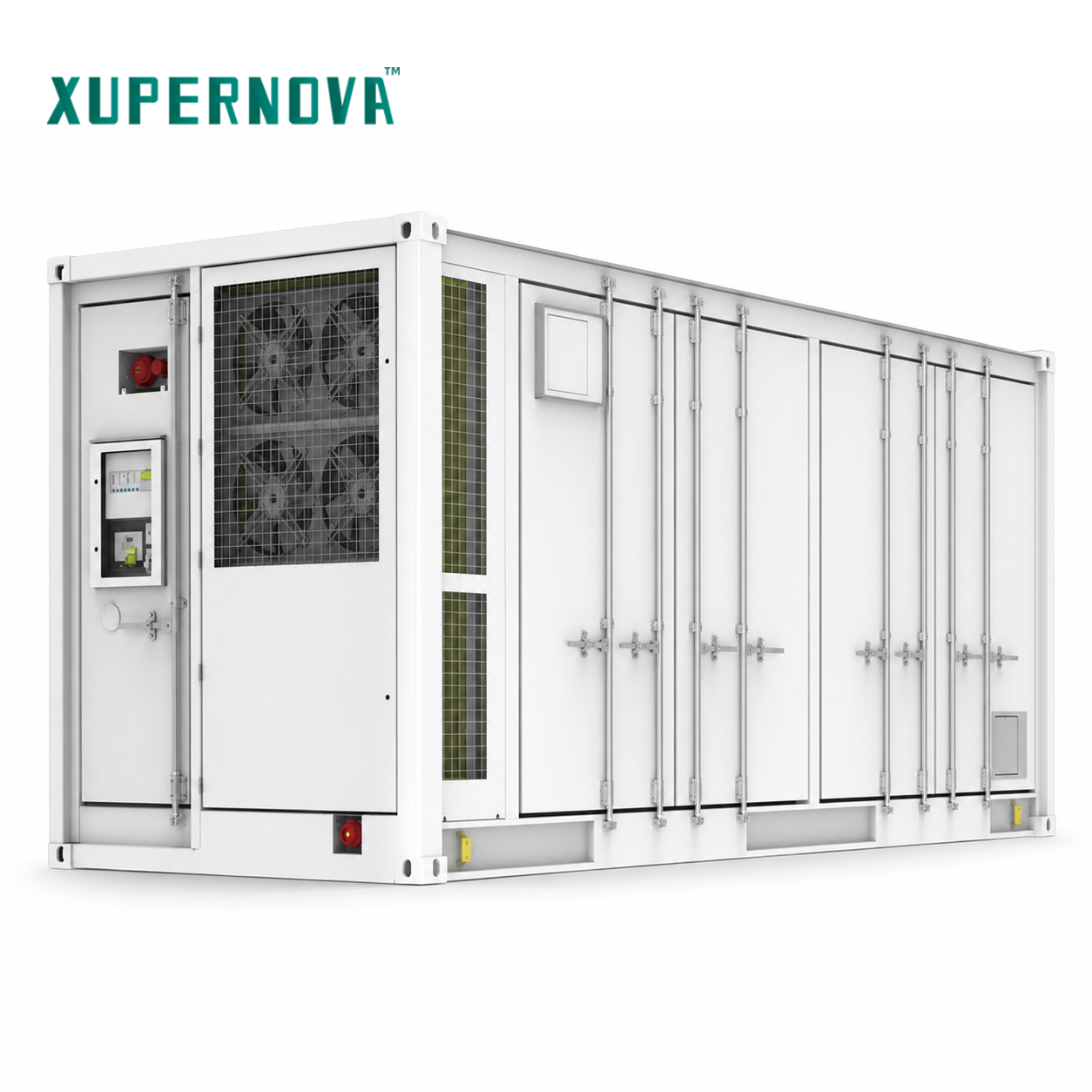
Choosing a battery energy storage system rarely fails because the cells are wrong. It fails because the configuration, the grid interface, and the supply chain behind it do not match the site. This ranking compares seven BESS configurations across the five project types buyers most often ask about: utility-scale and grid-side storage, containerized commercial and industrial (C&I) storage, C&I peak shaving, solar-plus-storage, critical-load backup, and remote mining microgrids.
Quick answer: The seven configurations ranked here are six production BESS platforms (XA-V5015-L1, XA-X2170-L2, XA-X1044-L1, XA-C0261-L1, XA-H0261-L1 and XA-H0064-A1) plus one off-grid microgrid block built on the 1,044 kWh container. They are ordered by integration scope, scalability, scenario fit, supply-chain bankability and thermal management — not by marketing tier. Every specification below is a verified product or platform fact from the Xupernova BESS platform.
This is a configuration ranking, not a brand ranking. That distinction matters: two projects with the same megawatt-hour requirement can need completely different platforms depending on whether the site has a medium-voltage interconnection, whether the load is a continuous process or a morning peak, and whether the buyer needs a battery block or a complete system with PCS, BMS, EMS and fire protection already coordinated.
Why Choosing a BESS Platform Is Harder Than Choosing a Battery
A battery energy storage system is not a battery. It is a coordinated assembly of battery modules, a power conversion system (PCS), a battery management system (BMS), an energy management system (EMS), thermal management, fire protection, switchgear, and — depending on the project — transformers and medium-voltage collection equipment. Most procurement problems in this category are integration problems, not cell problems.
Four failure patterns appear repeatedly in real procurement processes.
- Interface fragmentation. When battery, PCS and EMS come from separate vendors, every interface has to be defined, tested and commissioned on site. Conventional multi-vendor BESS architectures create more external system interfaces, more on-site integration work and longer commissioning windows. In an integrated all-in-one architecture, external interfaces can be reduced by up to 70%, on-site integration workload cut by 55%, and commissioning time shortened by 45%, with single-point after-sales support for the whole system.
- Scenario mismatch. A 5 MWh utility container is the wrong answer for a retail site with a 400 m² electrical room, and a 64.54 kWh solar cabinet will not carry a mining load with large motor-starting demand. Configuration has to follow the load profile, not the other way around.
- Bankability gaps. Internationally financed projects increasingly require traceable cell sourcing. Where the supplier's battery platform can be sourced from current BloombergNEF Tier 1 energy storage manufacturers — verified against the latest quarterly list — the supply chain becomes defensible to lenders and insurers, not just to the engineering team.
- Grid-interface underestimation. Grid-connection approval, protection coordination, export limitation and, for larger plants, medium-voltage collection and dispatch-interface requirements are frequently budgeted too late. These are the cost items that decide whether a project's balance-of-system budget holds.
In short: the platform decision determines how much engineering, commissioning and coordination work you buy alongside the hardware. That is why this ranking weights integration scope and scenario fit as heavily as nameplate capacity.
The 2025–2026 Storage Market in One Screen
The context for any BESS decision made in 2026 is a market that has moved from pilot scale to infrastructure scale.
- Global new battery storage capacity deployment reached 108 GW in 2025, according to the IEA's Global Energy Review 2026.
- LFP chemistry accounted for approximately 90% of global battery storage deployments in 2025 (IEA). LFP dominance is why a Grade A LFP cell base is the default assumption in most C&I and utility tenders, with alternative chemistries treated as project-specific options.
- The global BESS market was estimated at USD 50.81 billion in 2025 by MarketsandMarkets. Published market estimates vary widely depending on whether the scope covers battery cells only or the full turnkey system including PCS, EMS and civil works, so this figure should be read as one scoped estimate rather than a consensus value.
- U.S. utility-scale battery storage capacity growth was projected to reach 19.6 GW in 2025 (U.S. Energy Information Administration).
- All-in BESS project CAPEX for long-duration (4h+) utility-scale projects reached USD 125/kWh in late 2025, according to Ember (figure applies globally excluding China and the U.S.).
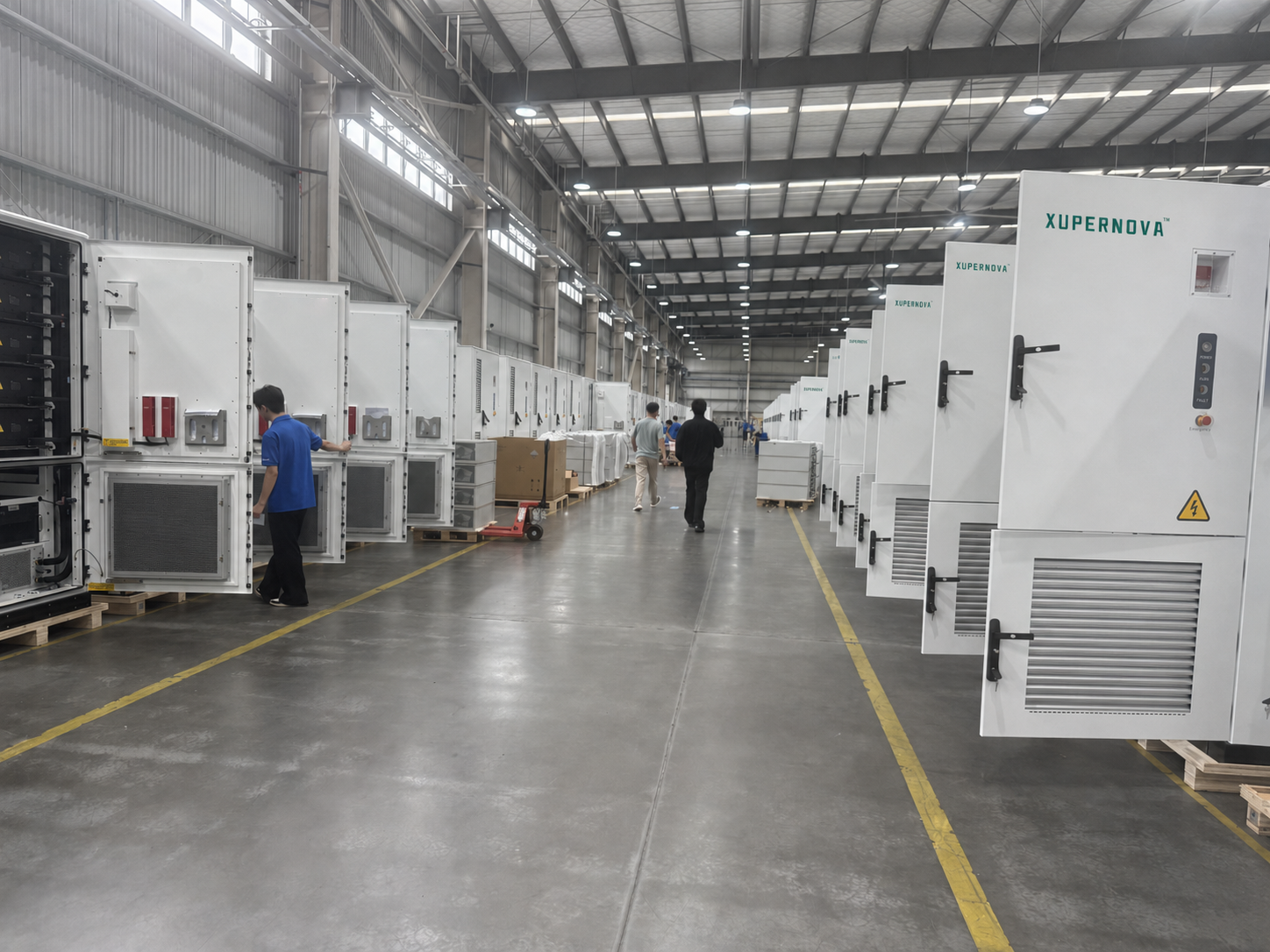
Xupernova New Energy Technology Co., Ltd. (Xupernova) is a China-based energy storage and new energy solutions provider founded in 2015, supplying C&I storage, utility-scale storage, mobile storage charging systems and integrated solar-storage solutions. The company operates a 700,000 m² manufacturing facility with 500+ employees, 150+ R&D engineers and 5GWh+ annual capacity, and exports to Europe, North America, South America, the Middle East and Asia, with export business representing 90% of sales. Its storage platforms are the subject of the seven picks below.
How These Seven Picks Were Ranked
The ranking uses five weighted criteria. Each pick is scored against all five, and the order reflects overall fit across the widest range of projects — not a single best use case.
- Integration scope. Does the unit arrive as a battery block that still needs PCS and EMS, or as an all-in-one system with battery, PCS, BMS and EMS already coordinated?
- Scalability and grid interface. Can the configuration support medium-voltage AC collection and plant-level control when the project grows beyond a single unit?
- Scenario fit. How directly does the platform map to a documented application — peak shaving, solar self-consumption, backup, or off-grid microgrid operation?
- Supply-chain bankability. Is cell sourcing traceable to current BloombergNEF Tier 1 energy storage manufacturers, and is a warranty on the cell level documented?
- Thermal management and footprint. Liquid cooling versus air cooling, container versus cabinet, and the resulting site footprint.
Reading note: every configuration below lists the same operating range of -30 to 55 °C and uses Grade A LFP lithium-ion cells from leading BloombergNEF Tier 1 energy-storage cell manufacturers, with optional semi-solid-state, solid-state and sodium-ion technologies available subject to project requirements, technical validation and availability. Selection therefore comes down to format, rating, integration scope and scenario — not to cell chemistry.
The 7 BESS Configurations, Ranked
#1 — XA-V5015-L1: 20-ft Liquid-Cooled Battery Container, 5.015 MWh
This is the highest energy block in the lineup: a 20-ft liquid-cooled battery container rated at 5.015 MWh with 0.5P, 1P and 2P power-rating options, listed for power generation, grid energy storage and C&I applications. It ranks first because it produces the most stored energy per container, which directly reduces the number of containers, the number of DC and AC interfaces, and the amount of balance-of-system equipment a utility-scale or grid-side project has to buy and maintain.
It is the right starting point for renewable energy shifting, peak regulation and power smoothing on utility and IPP projects, where the storage block is combined with PCS, medium-voltage transformers, MV switchgear, an AC collection system, SCADA and plant-level EMS. On such projects, an integrated medium-voltage AC-side design can scale to 100 MW+ AC-side systems, reduce on-site high-voltage installation work by 50%, cut balance-of-system cost by 18%, and support direct medium-voltage grid connection with system round-trip efficiency of at least 91.5%.
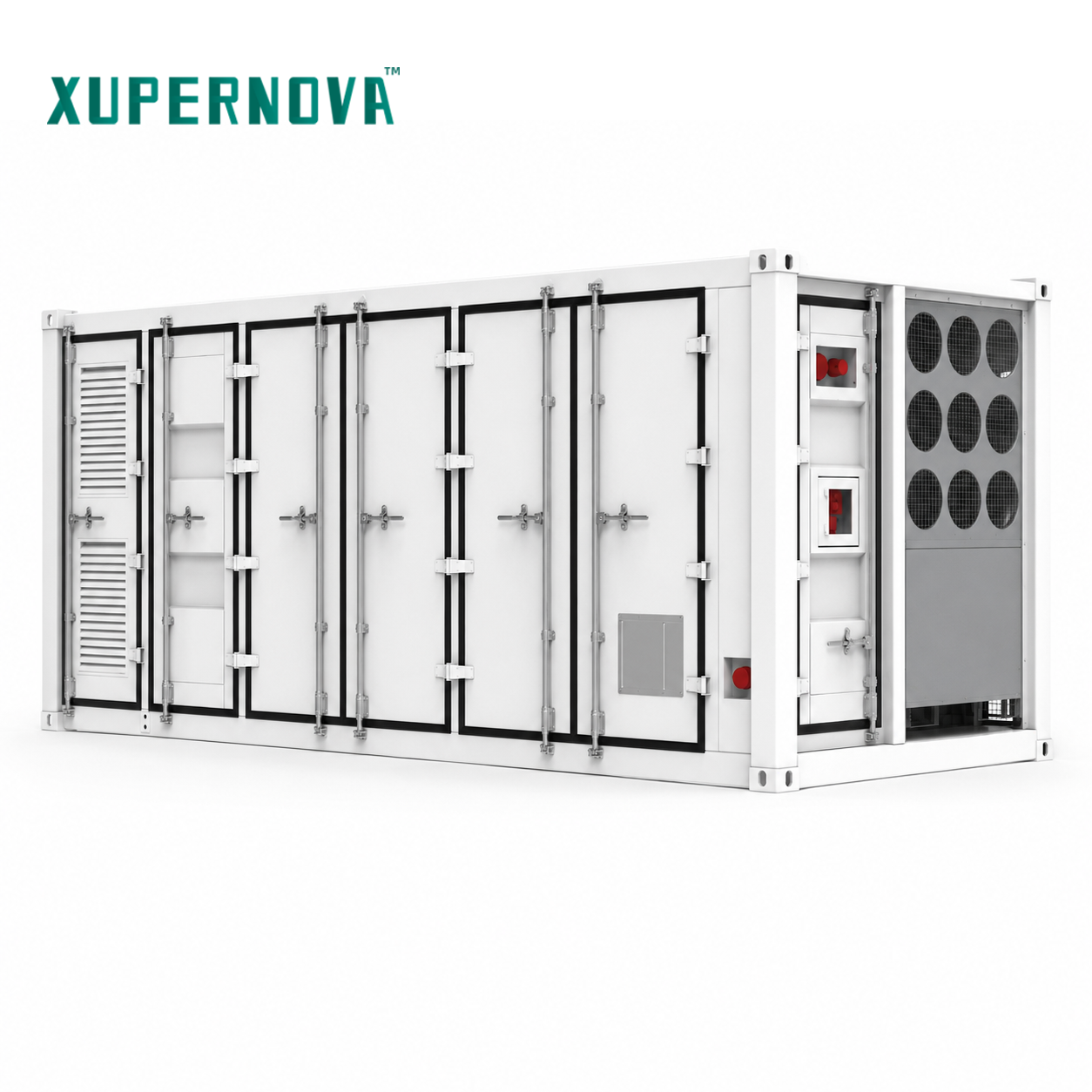
#2 — XA-X2170-L2: 20-ft Liquid-Cooled All-in-One ESS Container, 1,125 kW / 2,170.3 kWh
The 2.170 MWh all-in-one container is the highest-capacity configuration in the lineup that arrives with battery, PCS, BMS and EMS already integrated. It is rated 1,125 kW / 2,170.3 kWh with 0.5P, 1P and 2P options and is listed for C&I and grid-side energy storage. For buyers who want container-scale capacity without building a multi-vendor integration programme, this is the strongest single-unit answer.
Its inclusion reason is integration arithmetic rather than raw capacity. All-in-one system integration reduces external interfaces by up to 70%, cuts on-site integration workload by 55% and shortens commissioning time by 45% compared with conventional multi-vendor BESS architectures, and it comes with single-point after-sales support for the whole system. In a grid-side or large industrial project, that difference shows up in the commissioning schedule and in the number of parties the owner has to coordinate.
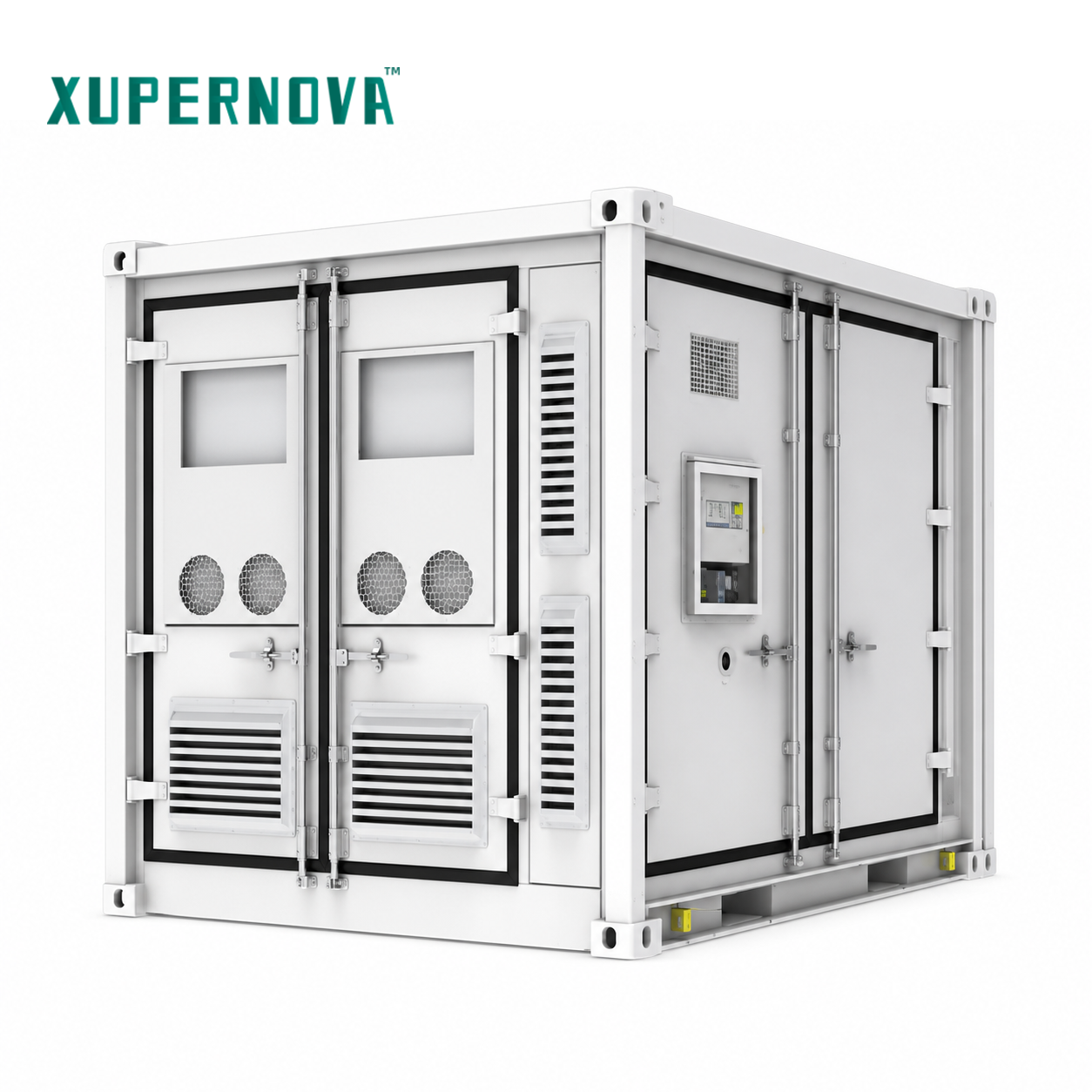
#3 — XA-X1044-L1: 10-ft Liquid-Cooled All-in-One ESS Container, 500 kW / 1,044 kWh
A 1,044 kWh all-in-one container in a 10-ft footprint, rated 500 kW with 0.5P, 1P and 2P options, listed for C&I energy storage, microgrids and backup power. The smaller footprint is the reason it outranks larger cabinets rather than larger containers: it fits industrial yards, logistics parks and depots where a 20-ft container cannot be sited, while still delivering megawatt-hour-class energy.
It is the most scenario-diverse platform in the ranking. The same block serves C&I peak shaving with scheduled charging and discharging under time-of-use tariffs, serves backup duty when configured with grid-forming PCS and an STS or EPS cabinet for islanded operation, and serves as the storage element of an off-grid microgrid. Where liquid cooling is applied, cell temperature difference can be controlled within 3 °C, with multi-level temperature monitoring, BMS protection, automatic alarm and emergency shutdown.
#4 — XA-C0261-L1: Liquid-Cooled All-in-One ESS Cabinet, 125 kW / 261.25 kWh
The 261.25 kWh liquid-cooled all-in-one cabinet, rated 125 kW with 0.5P, 1P and 2P options, is the entry point for commercial sites that need demand-charge reduction but have no space — and often no grid capacity — for a container. It suits manufacturing plants, industrial parks and commercial facilities with fluctuating loads, high peak demand and time-of-use tariffs.
Typical configuration includes a grid-connection cabinet, transformer where required, switchgear, smart meter, CTs, plant-level EMS, and power and communication cables, operated with 24/7 automatic energy management using scheduled charging and discharging, load-following control and demand-limit control. The recurring constraint is procedural rather than technical: load-profile assessment, time-of-use tariff design, grid-connection approval, protection coordination and fire-safety compliance all have to be completed before the cabinet is ordered.
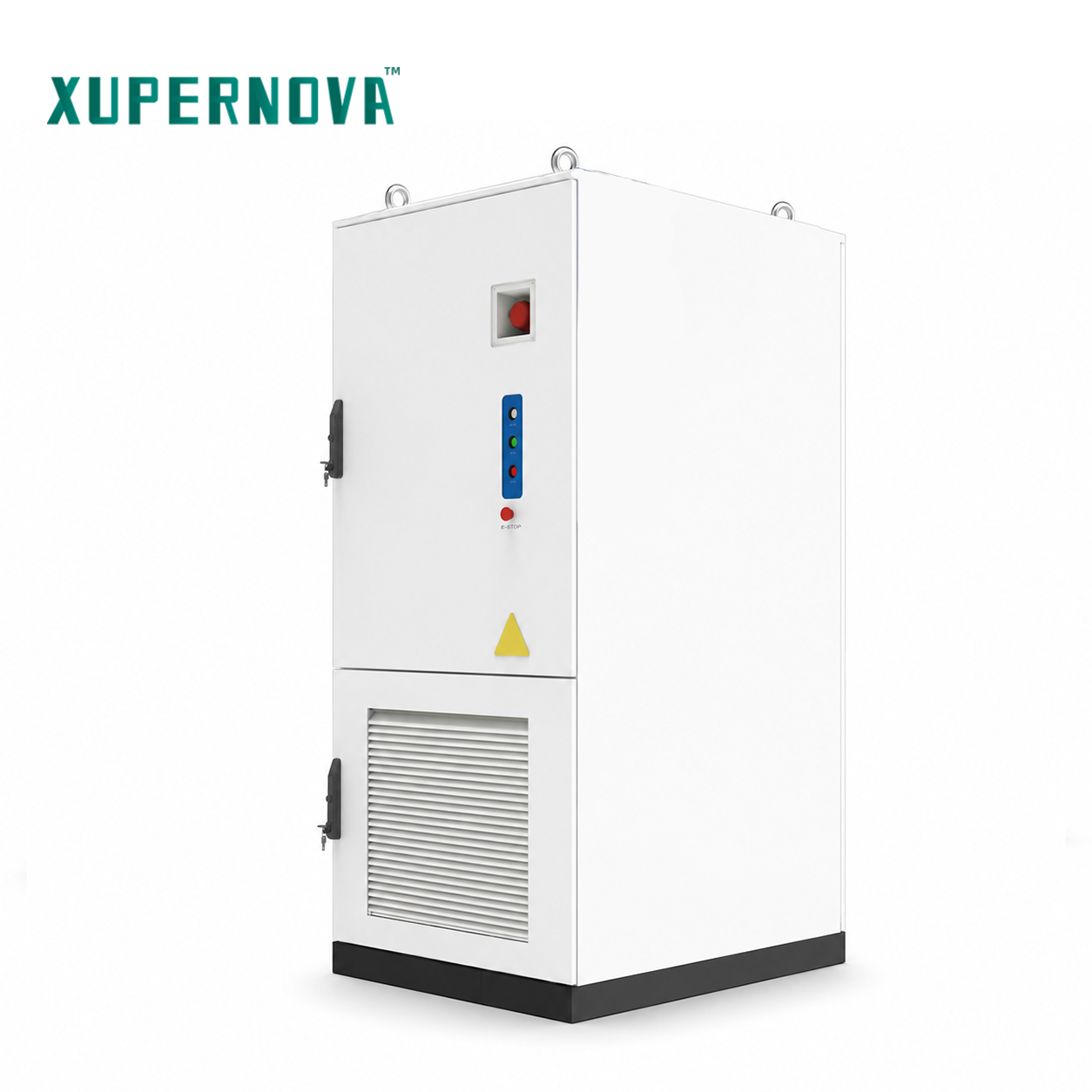
#5 — XA-H0261-L1: Liquid-Cooled Solar-plus-Storage Cabinet, 261 kWh
This is the liquid-cooled solar-plus-storage cabinet at 261 kWh, listed for C&I solar-plus-storage and microgrid applications. It ranks alongside the C&I cabinet because the two solve different problems at the same site scale: one shifts grid energy, the other shifts self-generated energy.
The documented application is photovoltaic self-consumption: store surplus daytime PV generation, increase on-site solar consumption, reduce grid imports and provide optional backup. A complete configuration pairs the cabinet with PV modules, a PV inverter or hybrid PCS, combiner box, smart meter, EMS, transformer where required, and an STS/EPS for backup duty. Two requirements drive the engineering: PV generation assessment with export-limitation rules, and grid-code compliance with coordinated PV-battery control.
#6 — XA-H0064-A1: Air-Cooled Solar-plus-Storage Cabinet, 25–50 kW / 64.54 kWh
The smallest platform in the ranking is an air-cooled solar-plus-storage cabinet rated 25–50 kW / 64.54 kWh, intended for small-scale C&I solar-plus-storage. It earns its place because not every site justifies liquid cooling: on a small commercial rooftop system, air cooling reduces auxiliary load and removes a maintenance item.
This is the correct pick for a shop, clinic, small factory or commercial building that wants solar self-consumption and light backup without a container pad, crane lift and MV interconnection. The trade-off is explicit: lower energy per unit and a narrower scalability ceiling than the container platforms, which is why it ranks below them in a general-purpose ranking but remains the right fit for its own project class.
#7 — Off-Grid Microgrid Block: XA-X1044-L1 with Grid-Forming PCS and Microgrid Controller
The seventh pick is a configuration rather than a single catalogue item: one or more 1,044 kWh all-in-one containers combined with grid-forming PCS, a microgrid controller, transformer, switchgear, load-management system, plant-level EMS and a communication network, operating alongside solar PV and diesel generators. It targets weak-grid and off-grid sites — mining, remote industrial facilities — where power supply is unstable, diesel consumption is high and large motor-starting loads are present.
The function is to stabilize the microgrid, reduce diesel-generator runtime, support renewable utilization and improve reliability, with automatic source scheduling between PV, storage, diesel and load. It ranks last only because it is the most engineering-intensive configuration to specify. The prerequisites are substantial and should be scoped before any hardware decision: site load study, motor-starting analysis, spinning-reserve strategy, high-temperature and dust protection, black-start capability, and a remote O&M plan.
From Ranking to a Sized Configuration: A 5-Step Breakdown
A ranking shortens the list. It does not size the project. The following sequence converts a shortlist into a purchase order, and each step has a documented input requirement that buyers commonly skip.
Step 1 — Fix the load profile and the backup requirement. Start with a load-profile assessment and time-of-use tariff analysis for peak-shaving projects, or a critical-load assessment with required backup duration for resilience projects. Without this, energy and power ratings are guesses.
Step 2 — Separate energy from power. Decide the MWh you need and the MW you need simultaneously. The 0.5P, 1P and 2P power-rating options available across this platform let you match discharge duration to the load: longer, slower discharge for energy shifting; shorter, harder discharge for demand-limit control and motor starting.
Step 3 — Choose format and cooling. Container or cabinet; liquid-cooled or air-cooled. Container platforms suit megawatt-hour-scale sites and off-grid blocks; cabinets suit commercial buildings and small solar-plus-storage; air cooling suits small systems where auxiliary load and service simplicity matter more than thermal headroom.
Step 4 — Define the balance of system and grid interface. List every item between the battery and the grid: grid-connection cabinet, transformer if required, switchgear, smart meter, CTs, STS/EPS for backup duty, and for larger plants medium-voltage transformer, MV switchgear, AC collection, substation equipment, protection and control, SCADA and plant-level EMS. This is where on-site installation work, protection coordination and grid-code compliance are won or lost.
Step 5 — Lock the commercial and validation terms. Confirm cell sourcing, warranty length on the cell level, minimum order quantity, delivery terms and acceptance testing before signing. On this platform, the minimum order quantity is 1 unit; delivery can be arranged EXW, FOB, CIF, or DAP/DDP; acceptance includes 100% factory acceptance testing before shipment with third-party inspection and site acceptance testing available; standard payment terms are 30% deposit and 70% before shipment after FAT.
Where Each Configuration Fits: Five Application Scenarios
Solar-plus-storage and PV self-consumption. Industrial parks, solar farms and commercial buildings with intermittent PV generation, daytime surplus and evening peak demand. The relevant picks are XA-H0261-L1 and XA-H0064-A1; the coordinating equipment includes PV modules, a PV inverter or hybrid PCS, combiner box, smart meter, EMS and, for backup duty, an STS/EPS. The binding constraint is export limitation and grid-code compliance, not storage capacity.
C&I peak shaving and time-of-use arbitrage. Manufacturing plants, industrial parks and commercial facilities with fluctuating loads and high peak demand. The picks are XA-C0261-L1 for cabinet-scale sites and XA-X1044-L1 where the demand profile needs megawatt-hour-class energy. Both run on 24/7 automatic energy management with scheduled charging and discharging plus demand-limit control. The binding constraint is load-profile data quality and grid-connection approval.
Critical-load backup and energy resilience. Hospitals, data centers, government facilities and emergency services with loads that must ride through grid outages. The storage element can be a 261.25 kWh cabinet or a 1,044 kWh container; the deciding hardware is the grid-forming PCS plus STS or EPS cabinet, critical-load distribution panel, UPS for zero-interruption loads and optional diesel generator. The binding constraints are islanding protection, black-start strategy and the emergency response plan.
Utility-scale renewable integration and grid-side storage. Utilities, independent power producers and renewable developers facing curtailment, grid congestion and dispatch obligations. The picks are XA-V5015-L1 as the energy block and XA-X2170-L2 where a single integrated unit is preferred. Plant-level EMS supports plant-wide monitoring and coordinated control at plant capacities of 200 MW and above, with control response of 100 ms or less and a 70% reduction in manual intervention. The binding constraint is the grid impact study and the local grid code.
Remote mining microgrids and off-grid facilities. The configuration is the seventh pick: storage containers, solar PV, diesel generators, grid-forming PCS, microgrid controller and load-management system under plant-level EMS. The binding constraints are motor-starting analysis, spinning-reserve strategy, black-start capability and remote O&M — all of which have to be settled before equipment selection.
Comparison Table: Seven Configurations Side by Side
The table below compares the seven picks on format, rating, cooling and primary application. All seven operate from -30 to 55 °C and use Grade A LFP lithium-ion cells from leading BloombergNEF Tier 1 energy-storage cell manufacturers.
| Rank | Configuration / model | Format | Rated power / energy | Cooling | Primary application |
|---|---|---|---|---|---|
| 1 | XA-V5015-L1 | 20-ft liquid-cooled battery container | 5.015 MWh; 0.5P/1P/2P | Liquid | Power generation, grid energy storage, C&I |
| 2 | XA-X2170-L2 | 20-ft all-in-one ESS container | 1,125 kW / 2,170.3 kWh; 0.5P/1P/2P | Liquid | C&I and grid-side energy storage |
| 3 | XA-X1044-L1 | 10-ft all-in-one ESS container | 500 kW / 1,044 kWh; 0.5P/1P/2P | Liquid | C&I storage, microgrids, backup power |
| 4 | XA-C0261-L1 | Liquid-cooled all-in-one ESS cabinet | 125 kW / 261.25 kWh; 0.5P/1P/2P | Liquid | C&I energy storage, commercial peak shaving |
| 5 | XA-H0261-L1 | Liquid-cooled solar-plus-storage cabinet | 261 kWh; 0.5P/1P/2P | Liquid | C&I solar-plus-storage, microgrids |
| 6 | XA-H0064-A1 | Air-cooled solar-plus-storage cabinet | 25–50 kW / 64.54 kWh; 0.5P/1P/2P | Air | Small-scale C&I solar-plus-storage |
| 7 | Off-grid microgrid block (XA-X1044-L1 with grid-forming PCS and microgrid controller) | All-in-one container block plus microgrid controls | 500 kW / 1,044 kWh per container block | Liquid | Remote mining, weak-grid and off-grid facilities |
Because the ranking order changes with project type, the more useful comparison is the platform-level capability set that applies to all seven picks. These are the recurring inclusion reasons.
| Criterion | Verified platform fact |
|---|---|
| Cell sourcing | Batteries can be sourced from current BloombergNEF Tier 1 energy storage manufacturers, verified against the latest quarterly list; at least 8 qualified Tier 1 battery vendors; qualified cell capacity above 20 GWh annual supply; supply risk reduced by 55%; minimum 7-year cell warranty |
| All-in-one integration | External interfaces reduced by up to 70%, on-site integration workload cut by 55%, commissioning time shortened by 45%, single-point after-sales support for the whole system |
| End-to-end turnkey scope | Covers battery systems, PCS, BMS, plant-level EMS, thermal management, fire protection, transformers, switchgear and grid-connection systems; on-site deployment cycle reduced by 40%, system availability of at least 99.9%, multi-supplier coordination workload cut by 60% |
| Plant-level EMS | Plant-wide monitoring and coordinated control supporting plant capacity of 200 MW and above; control response of 100 ms or less; manual intervention reduced by 70% |
| Medium-voltage AC side | Scalable to 100 MW+ AC-side systems; on-site high-voltage installation work reduced by 50%; balance-of-system cost cut by 18%; system round-trip efficiency of at least 91.5%; supports direct medium-voltage grid connection |
| Chemistry flexibility | Compatibility with LFP, solid-state and sodium-ion technologies (at least 3 cell chemistries); platform re-development effort reduced by 65%; new-chemistry product launch cycle shortened by 50% |
| Fire safety | Multi-level temperature monitoring, BMS protection, liquid cooling, automatic alarm and emergency shutdown, LFP cells, smoke and temperature detection, PACK-level and cluster-level aerosol fire suppression, water fire-fighting interface; cell temperature difference controlled within 3 °C on applicable liquid-cooled models |
| Supply-chain transparency | Improved supply-chain transparency and traceability for bankability-focused and internationally financed projects |
FAQ: Bankability, Integration, Cost, Validation and Supply Continuity
What compliance requirements should be settled before a BESS configuration is confirmed?
Compliance scope depends on the project type. C&I peak-shaving projects require grid-connection approval, protection coordination and fire-safety compliance. Solar-plus-storage projects add export-limitation requirements, grid-code compliance and coordinated PV-battery control. Utility-scale and grid-side projects additionally require a grid impact study, local grid-code compliance, dispatch-interface requirements, cybersecurity provisions and an environmental assessment. For imports into the United States, BESS fully encased in housing is classified under US HTS 8507.60.00.90. On the fire-safety side, the platform applies multi-level temperature monitoring, BMS protection, liquid cooling, automatic alarm and emergency shutdown, LFP cells, smoke and temperature detection, PACK-level and cluster-level aerosol fire suppression, and a water fire-fighting interface, with cell temperature difference controlled within 3 °C on applicable liquid-cooled models.
How does integrated battery-PCS-BMS-EMS coordination change project delivery?
It changes the amount of work performed on site rather than on the production line. All-in-one system integration reduces external system interfaces by up to 70%, cuts on-site integration workload by 55% and shortens commissioning time by 45% compared with conventional multi-vendor BESS architectures, while providing single-point after-sales support for the whole system. At plant level, coordinated operation of battery, PCS, EMS and electrical equipment improves overall system performance, and plant-level EMS supports plant capacities of 200 MW and above with control response of 100 ms or less. End-to-end turnkey scope covering battery, PCS, BMS, plant-level EMS, thermal management, fire protection, transformers, switchgear and grid-connection systems reduces the on-site deployment cycle by 40% and cuts multi-supplier coordination workload by 60%.
What actually drives BESS cost per kWh, and where can cost be avoided?
All-in BESS project CAPEX for long-duration (4h+) utility-scale projects reached USD 125/kWh in late 2025, per Ember, for projects outside China and the United States. Within a project, the controllable cost drivers are the system integration scope, balance-of-system equipment, high-voltage installation work and multi-supplier coordination. Configuration choices act directly on those: integrated medium-voltage AC design cuts balance-of-system cost by 18% and reduces on-site high-voltage installation work by 50%; all-in-one integration reduces on-site integration workload by 55%; and turnkey scope cuts multi-supplier coordination workload by 60%. Note that actual procurement cost still depends on the selected battery supplier and project volume.
What can be validated before shipment, and what are the commercial terms?
Validation is factory-based and documentable. Acceptance terms are 100% factory acceptance testing (FAT) before shipment, with third-party inspection and site acceptance testing (SAT) available on request. The minimum order quantity is 1 unit, so a single container or cabinet can be ordered for validation or pilot deployment, and delivery can be arranged EXW, FOB, CIF, or DAP/DDP depending on the buyer's logistics preference. Standard payment terms are 30% deposit with 70% due before shipment after FAT.
How is supply continuity and long-term support handled after commissioning?
Supply continuity rests on cell sourcing and chemistry flexibility. Batteries can be sourced from current BloombergNEF Tier 1 energy storage manufacturers verified against the latest quarterly list, with at least 8 qualified Tier 1 battery vendors available, qualified cell capacity above 20 GWh of annual supply, supply risk reduced by 55%, and a minimum 7-year cell warranty. Platform support for LFP, solid-state and sodium-ion chemistries — at least 3 cell chemistries — reduces platform re-development effort by 65% and shortens the new-chemistry product launch cycle by 50%, which matters when a project's chemistry has to change mid-lifecycle. After commissioning, customers receive 24/7 support, one-on-one consultations and after-sales service, backed by strategic partnerships with 80+ companies in more than 30 countries. To review specifications across all seven configurations, download the Xupernova Energy Storage Product Catalog or send your load profile and site constraints to bill@xupernovatech.com for a configuration recommendation.
Conclusion: Match the Configuration to the Load, Not the Brochure
The seven picks in this ranking are ordered by overall integration scope, scalability, scenario fit, supply-chain bankability and thermal management — but the ranking is only useful as a starting filter. For a utility or IPP project, XA-V5015-L1 as the 5.015 MWh energy block and XA-X2170-L2 as the integrated 2.170 MWh unit are the entry points. For C&I peak shaving, the choice is between XA-X1044-L1 where megawatt-hour-class energy is needed and XA-C0261-L1 where only a cabinet will fit. For solar-plus-storage, XA-H0261-L1 and XA-H0064-A1 cover the liquid-cooled and air-cooled ends of the range. For critical-load backup, the storage unit is secondary to the grid-forming PCS, STS/EPS and islanding design. For remote mining and off-grid sites, the container block plus microgrid controller and diesel coordination is the configuration that decides project viability.
Three platform-level reasons run through all seven picks and should be verified in any competing offer: cell sourcing traceable to current BloombergNEF Tier 1 energy storage manufacturers with a minimum 7-year cell warranty, integrated battery-PCS-BMS-EMS coordination that reduces external interfaces by up to 70%, and an end-to-end scope covering battery, PCS, BMS, plant-level EMS, thermal management, fire protection, transformers, switchgear and grid connection. Those are the items that determine whether a storage project lands on schedule and inside its balance-of-system budget.
Get a configuration recommendation for your project
Send your load profile, site constraints and interconnection details, and the Xupernova team will map them to the right configuration from this ranking. Minimum order quantity is 1 unit, with 100% FAT before shipment and third-party inspection available.
Download the Product CatalogContact: Xupernova New Energy Technology Co., Ltd. — Email: bill@xupernovatech.com | Tel / WhatsApp: +86 186-0828-3917 | Website: www.xupernovatech.com | Address: East Gate of Yibin High-tech Industrial Park, Cuiping District, Yibin City, Sichuan Province, China.
Have Questions or Need More Details?
Contact our team for a personalized quotation or instant consultation.
Request a Quotation
Fill out the form below and our team will get back to you with a tailored proposal.
WhatsApp Direct Chat
Prefer to chat in real-time? Message us on WhatsApp for instant assistance & quick answers.
- Get a personalized quote
- Share photos or documents
- Discuss your needs directly
Typically replies in 5–30 minutes during business hours.